The ink on the two-week ceasefire between Washington and Tehran was barely dry before the crude markets began their predictable, violent descent from the $120 peak. By Wednesday, Brent futures had shed nearly 15 percent, bottoming out near $94. Traders, always the first to gamble on a return to normalcy, reacted to the news as if the mere absence of bombs meant the immediate presence of barrels. They are mistaken.
While the "relief rally" dominates the headlines, the physical reality of global energy supply remains fractured beyond the repair of a diplomatic timeout. The core premise that a ceasefire solves the $120 oil crisis ignores a brutal truth. The Strait of Hormuz is not a light switch that can be flipped back on, and the infrastructure sustaining the world’s most critical energy corridor has been physically compromised in ways that will haunt the consumer for years.
The Hormuz Chokepoint Myth
For decades, analysts treated the "closure of the Strait" as a theoretical doomsday scenario. In March 2026, it became a tactical reality. When Iran effectively blockaded the waterway, they didn't just stop tankers; they shattered the insurance and logistical framework that allows the global fleet to operate.
Even with a temporary truce, the Strait remains a graveyard of maritime confidence. Commercial shipowners are not rushing back into a 21-mile-wide neck of water where sea mines may still drift and shore-to-ship missiles remain tucked in coastal caves. To understand why prices won't return to the $70 baseline, look at the "war risk" premiums. These costs have spiked to levels that make most transit economically unviable for independent operators.
Furthermore, the ceasefire did not address the physical damage to Qatar’s Ras Laffan Industrial City or the drone strikes on Saudi Arabia’s East-West pipeline. This pipeline was the only viable bypass for 4 million barrels per day. With that artery leaking and under repair, the world is essentially holding its breath, waiting for a single Houthi drone or a rogue IRGC commander to reignite the bonfire.
Force Majeure is a Long Game
When QatarEnergy declared force majeure in early March, it wasn't a temporary administrative hiccup. It was a signal that the sophisticated machinery of LNG liquefaction was being powered down.
Restarting these facilities is a process measured in weeks, not hours. If a plant has been shuttered due to a lack of export outlets—because tankers literally could not leave the Gulf—the technical risk of a rapid "hot start" is immense. Industry insiders know that the global market is currently running a deficit of roughly 6 million barrels per day. Even if the ceasefire holds, the backlog of "stranded" oil in Kuwait, Iraq, and the UAE will take months to clear.
We are seeing a structural shift where "energy security" has finally replaced "just-in-time delivery." Countries like China and India, which absorb 75 percent of the region’s exports, are no longer looking for the cheapest barrel. They are paying a "certainty premium" for Atlantic Basin crude, driving up prices in the US and Europe regardless of what happens in the Persian Gulf.
The Washington Disconnect
The White House is desperate to frame this ceasefire as a victory before the midterm elections. From their perspective, a drop below $100 is a political lifeline. However, their optimism ignores the "rocket and feather" effect of retail pricing.
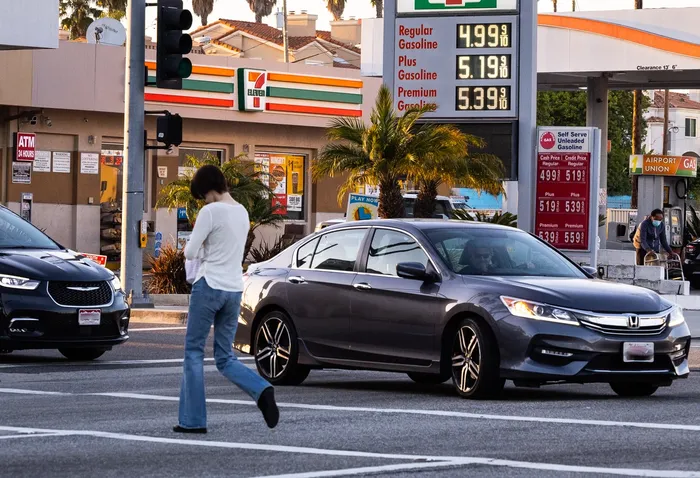
Gasoline prices in the US rose like a rocket as the conflict escalated, but they will fall like a feather. Retailers are currently sitting on high-priced inventory purchased when Brent was screaming toward $120. They are in no hurry to pass on savings to consumers until they are certain they won't have to buy the next batch at a premium.
There is also the matter of the Strategic Petroleum Reserve (SPR). The US entered this conflict with SPR levels already at historic lows. Any "cooling" of prices will likely be met by the Department of Energy entering the market as a massive buyer to replenish those stocks, creating an artificial floor that prevents oil from ever seeing $80 again in the near term.
The Red Sea Shadow
The market is currently ignoring the secondary risk: the Bab al-Mandeb. While the world watches Iran, the Houthis in Yemen remain the wildcard. If Saudi Arabia continues to use the Yanbu-Red Sea route as its primary export bypass, that route becomes the next logical target for anyone wishing to keep global energy prices high.
A ceasefire in the Gulf does not equate to peace in the Red Sea. We are operating in a multi-polar conflict where a truce between two parties does not bind the proxies of a third. The volatility we see today is the new baseline. The era of $70 oil ended not because of a temporary war, but because the trust required to move 20 percent of the world's energy through a 21-mile gap has been permanently liquidated.
The current price drop is a breather, not a recovery. Those betting on a steady decline toward pre-war levels are ignoring the scorched earth left behind by six weeks of total disruption. The physical barrels aren't coming back as fast as the spreadsheets suggest.