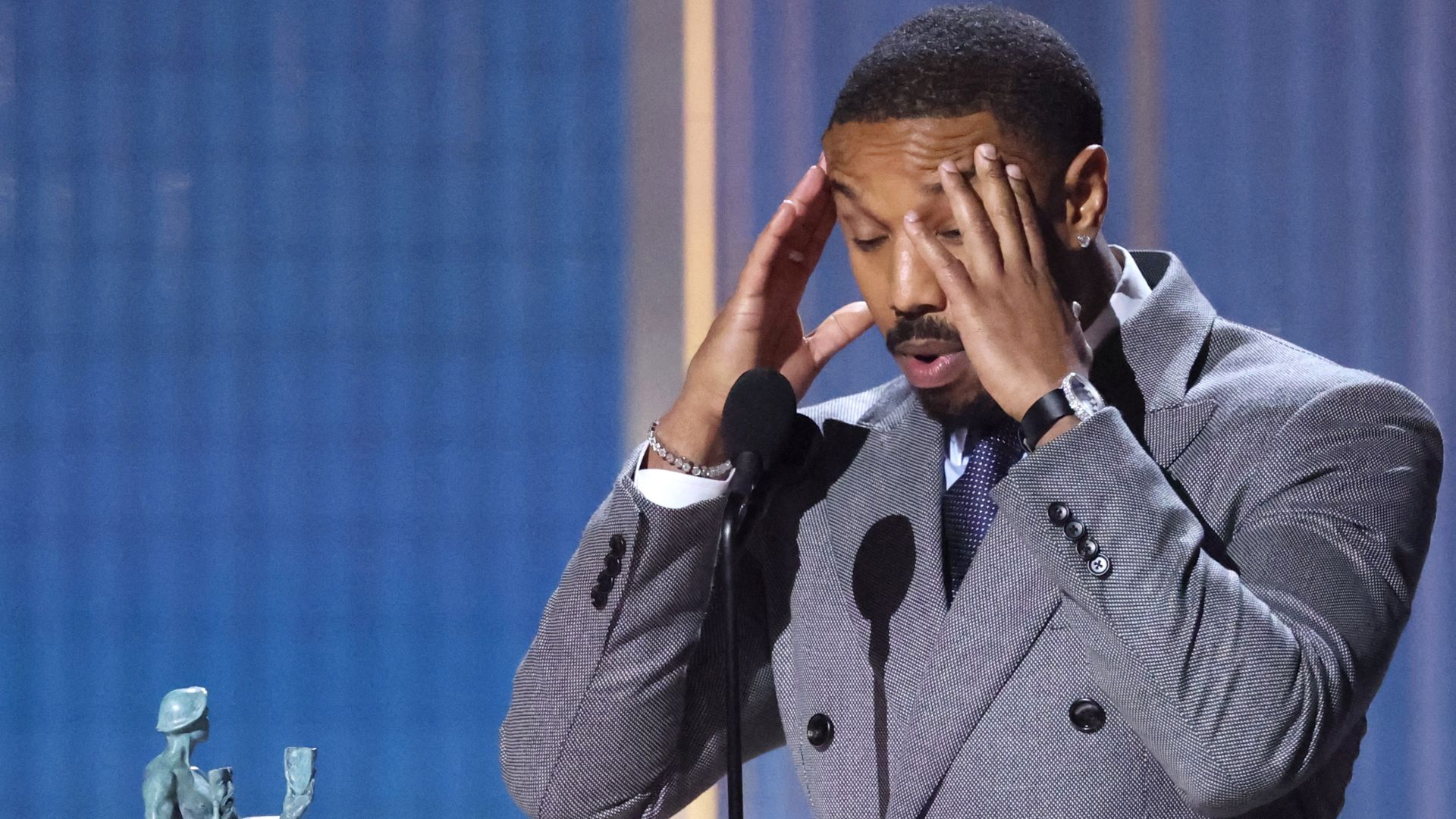
The flashing bulbs at the 2026 Actor Awards didn't capture glamour. They captured a hostage situation.
If you scrolled through the "Best Dressed" galleries this morning, you were fed a lie. You saw high-definition captures of curated safety. You saw "timeless" silhouettes that are actually just recycled templates from 1994. You saw a sea of black ties and mermaid cuts that screamed one thing: fear.
The modern red carpet has become a stagnant pond of risk-mitigation. Actors are no longer showing up as artists; they are showing up as insurance liabilities for luxury conglomerates. While the "top photos" articles praise the "regal elegance" of the night, they are ignoring the fact that the soul of celebrity style is currently on life support.
The Death of the Individualist
We used to have icons. Now we have "placements."
In the early 2000s, an actor might actually walk into a boutique or collaborate with a fringe designer to make a statement. Today, every single look you saw on that carpet was the result of a multi-million dollar contractual obligation. When you see a "stunning" custom gown from a major French house, you aren't seeing a creative choice. You are seeing a 36-month brand ambassadorship being fulfilled.
This corporate colonization of the red carpet has created a homogenized aesthetic.
- The "Old Money" Trap: Every stylist is currently obsessed with "quiet luxury." On a red carpet, quiet luxury is just code for "boring." It’s a suit that fits perfectly but says absolutely nothing.
- The Gender-Bending Fatigue: We’ve reached a point where "subversive" menswear—a sequined harness here, a slightly wide-leg trouser there—has become its own predictable uniform. It’s no longer a rebellion when it’s been approved by a board of directors.
- The Archival Obsession: Wearing a vintage dress from 1996 isn't a personality trait. It’s a flex of your stylist’s connections, not your own taste. It’s safe because it’s already been "pre-approved" by history.
I’ve sat in the rooms where these deals happen. I’ve seen stylists reject incredible, avant-garde pieces because they might "alienate a mid-market demographic" or "interfere with the perfume contract." We are watching the death of the eccentric.
The Logic of the "Best Dressed" Lie
Standard entertainment outlets love "Best Dressed" lists because they are easy. They require zero critical thought. You pick the person with the most symmetrical face in the most expensive-looking clothes and call it a win.
But true style requires the possibility of failure.
If there is no risk of being on a "Worst Dressed" list, you aren't actually dressed; you’re just covered. The 2026 Actor Awards lacked the glorious train wrecks that make fashion human. Give me Björk in a swan; give me Cher in a mohawk. Give me something that makes half the internet angry.
The "Top Photos" you’re being told to admire are socially engineered to be inoffensive. Inoffensiveness is the enemy of art.
The Algorithm of the Outfit
Fashion in 2026 is being designed for the thumbnail, not the room.
- High Contrast for Small Screens: Colors are chosen specifically because they pop against the red carpet in a mobile feed.
- The "Three-Quarter" Pose: Every actor has been trained to stand in a way that maximizes the "look" for an Instagram crop.
- The Zoom-In Bait: Designers are adding unnecessary micro-details (beading, embroidery) that only serve to give "detail-oriented" fashion bloggers something to write about when they have nothing to say about the actual design.
We are consuming fashion as data points, not as a visual narrative.
Stop Asking "Who" They Are Wearing
The most pervasive, mind-numbing question on the carpet is still "Who are you wearing?"
It’s the wrong question. It assumes the brand is the lead actor and the human is the prop. We should be asking: "Why are you wearing this?"
If the answer is "Because my agent told me this brand is paying for my flight to Cannes," then the outfit is a failure. I don't care if it’s hand-stitched by monks in a chateau. If it doesn't represent the internal state of the person wearing it, it’s just high-end upholstery.
The 2026 Actor Awards proved that the industry has mastered the art of the Perfectly Fine.
- Exhibit A: The leading man in a midnight blue velvet tuxedo. It was fine. It was also the 400th time we've seen it.
- Exhibit B: The ingenue in a sheer, beaded floor-length gown. It was fine. It also looked like every other "naked dress" from the last decade.
When everything is "fine," nothing is memorable. We are being buried in a mountain of "fine" content, and we're calling it "top photos."
The Economic Reality of the Red Carpet
Let’s talk numbers, because that’s where the "magic" actually lives.
A single red carpet appearance for a top-tier nominee can cost upwards of $100,000—and that’s just for the labor. The stylist, the tailor, the security for the borrowed diamonds, the hair and makeup team. This is a massive financial engine.
When that much money is on the line, nobody wants to take a swing. They want a "safe" return on investment. The "top photos" are essentially advertisements for the jewelry and fashion houses that subsidize the entire awards season.
"Fashion is what you're offered four times a year by designers. Style is what you choose." — Lauren Hutton
The 2026 ceremony showed us plenty of fashion, but almost zero style. It was a trade show for the 1%.
The Illusion of "Sustainable" Fashion
We also need to address the performative "green" dressing that littered the 2026 carpet. An actor wearing a "recycled" gown while their entire team flew private to get there isn't a win for the planet. It’s a PR stunt.
If we wanted real disruption, we’d see actors wearing the same suit three years in a row. We’d see them wearing clothes from their own closets. But the "Top Photos" industrial complex wouldn't know how to handle that. It would break the cycle of forced novelty that keeps the industry running.
How to Actually Look at a Red Carpet Photo
If you want to escape the "lazy consensus" of the entertainment press, you have to change how you look at the images.
- Ignore the Face: Look only at the clothes. Does the garment have a point of view? Or is it just expensive fabric draped over a body?
- Check the Tension: Does the actor look like they can breathe? Move? Eat? If they look like a frozen statue, they aren't wearing the clothes; the clothes are wearing them.
- Look for the "Mistake": The best outfits usually have something slightly "off." A weird shoe choice, a clashing color, a silhouette that isn't traditionally "flattering." Flattery is the most boring goal in fashion.
The 2026 Actor Awards was a victory for the stylists and a defeat for the spirit of cinema. We are watching the world’s most talented storytellers turn themselves into silent billboards.
The next time you click on a gallery of "top photos," ask yourself: am I looking at a person, or am I looking at a quarterly earnings report?
The red carpet isn't a runway anymore. It's a boardroom. And the dress code is strictly "Compliance."
Burn the Best Dressed lists. They’re just receipts for a transaction you weren’t invited to.