The streets of Kathmandu look different today than they did a year ago. In 2025, those same streets were choked with the smoke of burning tires and the defiant shouts of a generation that had finally seen enough. They called it the "Digital Revolution" or the "TikTok Uprising," but for the young people of Nepal, it was simply about survival. Now, for the first time since those protests toppled the old guard, the country is heading to the polls. This isn't just another routine shift in power. It's a fundamental test of whether a street-level movement can actually translate into a functional government.
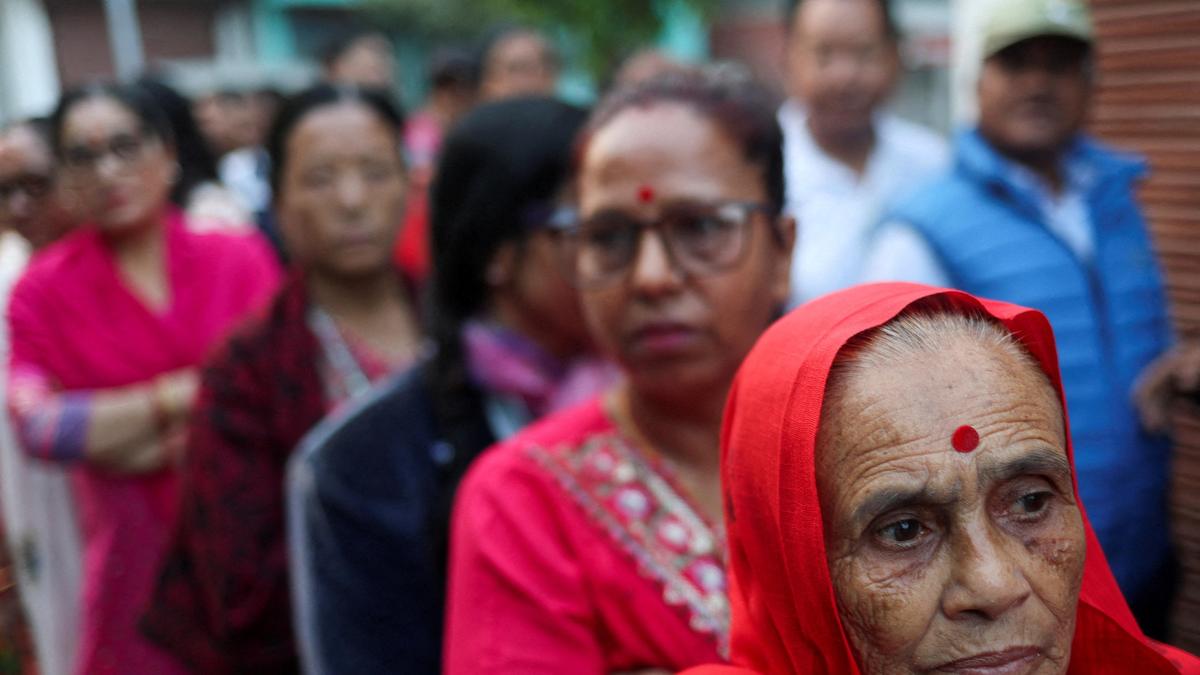
Most people outside the region don't realize how quickly the previous administration crumbled. It wasn't a slow burn. It was an explosion. Decades of "musical chairs" between the three major parties—the Nepali Congress, the CPN-UML, and the Maoist Center—created a stagnant swamp of corruption and broken promises. When Gen Z took to the streets last year, they didn't just want a new Prime Minister. They wanted the entire system dismantled. Today, as voters line up across the seven provinces, the air is thick with a mix of desperate hope and crushing skepticism. You might also find this related coverage interesting: The $2 Billion Pause and the High Stakes of Silence.
The Generation Gap Is Now a Canyon
You can't talk about this election without talking about the demographic shift. Over half of Nepal’s population is under the age of 30. These aren't voters who remember the civil war with a sense of "stability at any cost." They're voters who see their peers fleeing to the Gulf countries or Malaysia every single day because there are zero jobs at home.
The old leaders, most of whom are in their 70s, are still campaigning on the same tired slogans of "nationalism" and "sovereignty." They're completely out of touch. I've talked to students in Patan who aren't interested in grand geopolitical theories about balancing India and China. They want to know why they can't get high-speed internet in rural villages or why a teaching license requires a bribe. The traditional parties are trying to use their massive ground networks to secure votes, but the "independent" wave that started in the 2022 local elections has turned into a tsunami. As discussed in recent articles by BBC News, the results are worth noting.
Independent Candidates vs the Old Guard
Last year's protests didn't just produce viral videos. They produced a new class of political aspirants. We're seeing engineers, doctors, and even social media influencers running for seats in the House of Representatives. These aren't "politicians" in the classic sense. They don't have the backing of massive party machines, but they have something more valuable in 2026: credibility.
The big parties are scared. They should be. In previous cycles, the "Big Three" could count on loyal vote banks. That loyalty has evaporated. The youth wing of the Nepali Congress is essentially in open revolt against its own leadership. Meanwhile, the CPN-UML is struggling to explain why it spent more time on internal bickering than on fixing the crumbling infrastructure in the Terai region.
It’s messy. It’s chaotic. It’s exactly what democracy looks like when the "wait your turn" mentality gets tossed out the window. If the independents can grab even 20% of the seats, the coalition-building process will be a nightmare for the establishment. That’s a good thing. Nepal needs a nightmare to wake it up from its long-term lethargy.
The Economic Elephant in the Room
Let's be real about the stakes. Nepal's economy is on life support. Foreign exchange reserves are precarious, and the country's reliance on remittances is a ticking time bomb. The protesters last year were fueled by the skyrocketing cost of living. If this new government—whoever they may be—doesn't address inflation within the first six months, the 2025 protests will look like a rehearsal.
Voters are looking for a plan. Not a manifesto filled with flowery prose, but a hard-nosed economic roadmap. The "Generation Z" bloc is demanding transparency in how hydropower projects are managed and an end to the "syndicate" system that controls everything from transport to vegetable prices. They're tired of seeing their country's resources sold off while they can't afford a bag of rice.
Why International Observers Are Nervous
New Delhi and Beijing are watching these polls with intense scrutiny. Nepal has long been a playground for regional influence. The old guard was predictable. They knew how to play both sides to get development aid. A government led or heavily influenced by unpredictable, nationalist, and tech-savvy youth is a wildcard.
There's a fear that a fragmented parliament will lead to more instability. In the last 15 years, Nepal has seen more than a dozen government changes. The "Gen Z" activists argue that this "stability" the old leaders brag about was just a stable way to loot the country. They’d rather have a noisy, functional democracy than a quiet, corrupt one.
Social Media Is the New Battlefield
Forget the traditional rallies with rented buses and packed lunches. This election is being won and lost on smartphones. The Election Commission has been playing a game of cat-and-mouse with "misinformation," but the reality is that the youth are simply better at the game. They’re using short-form video to fact-check candidate promises in real-time.
When a veteran politician claimed last week to have built a certain road in the Karnali region, a 19-year-old with a drone showed the entire country that the "road" was still a dirt track. That kind of accountability is new. It’s visceral. And it’s making the traditional power brokers sweat.
The digital divide is still a factor, though. While Kathmandu is hyper-connected, the rural hills still rely on word-of-mouth and FM radio. The parties that can bridge this gap—combining high-tech messaging with old-school grassroots organizing—will come out on top.
What Happens When the Counting Starts
Expect delays. Nepal's terrain makes ballot collection a logistical nightmare. But the real tension will start once the numbers begin to trickle in from the urban centers. If the independent candidates sweep the cities, the establishment will likely try to form a "grand coalition" to keep them out of power. That would be a massive mistake.
If the will of the 2025 protesters is ignored at the ballot box through backroom deals, the protests will return. And this time, they won't just be asking for change. They'll be demanding a total reset.
For anyone watching from the outside, pay attention to the turnout numbers in the 18-25 age bracket. That is the only statistic that actually matters. If they showed up, the old guard is finished. If they stayed home out of cynicism, Nepal is headed for another decade of decay.
The first step for any observer is to track the results from the Kathmandu Valley and Pokhara. These urban hubs are the bellwethers for the national mood. Watch the "Bell" symbol and other independent icons. Their success or failure will dictate whether Nepal finally moves past its post-war transition or remains stuck in a loop of failed leadership. Check the official Election Commission portal for live updates, but keep an eye on local independent journalists for the story behind the numbers.