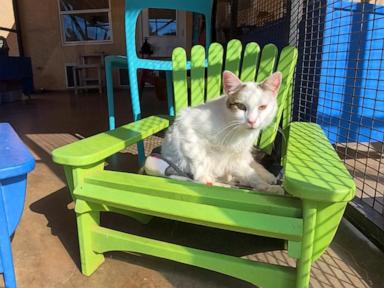
Cats don't care about your design aesthetic. You spend hundreds on a velvet mid-century modern cat bed only to find them curled up in a greasy pizza box. It's insulting. But a woodworker recently broke the internet by shrinking a classic piece of Americana—the Adirondack chair—to feline proportions with a clever twist. This isn't just about making things small. It's about why the Adirondack cat chair works where other pet furniture fails.
The original Adirondack chair was designed by Thomas Lee in 1903 for the rugged terrain of the Westport mountains. It has that signature slanted back and wide armrests. For humans, it's a lounge staple. For cats, it’s a tactical vantage point. When you scale this down, you aren't just making a "mini" chair. You're building a structural fortress that taps into a cat's primal need for elevation and back support.
The Design Tweak That Changed Everything
Most pet furniture is flimsy. If you buy a plastic or soft-sided bed, it slides across the hardwood when your cat tries to jump into it. This DIY version uses heavy cedar or pine. The weight matters. When a ten-pound tabby launches onto a solid wood Adirondack, the chair doesn't budge. That stability creates trust.
The real genius in the "new twist" seen in recent viral videos involves the slats. Traditional Adirondack chairs have gaps between the backboards. This maker tightened those gaps and added a recessed holder for a food bowl or a catnip plant directly into the wide armrest. It transforms a piece of furniture into a functional station.
I've seen people try to use doll furniture for this. Don't do that. Doll furniture is made of MDF or thin plywood that snaps under the weight of a chunky Maine Coon. Real wood stands up to claws. It also smells better. Cedar has natural oils that repel pests, which is a massive win if you plan on putting these chairs on your porch or patio.
Why Your Cat Actually Wants This
Cats are arboral. They want to be up. Even a few inches of elevation makes them feel like they own the room. The slanted seat of an Adirondack chair naturally cradles a cat's spine. Think about how they sleep—they love being tucked into a "U" shape. The 15-degree tilt of a standard Adirondack seat mimics that curvature.
Better Than a Cardboard Box
Let’s be honest. Your living room looks like a recycling center because of the boxes. A wooden chair solves the "ugly pet gear" problem. It looks intentional. It looks like you have your life together.
- Durability: You can’t pressure wash a cardboard box. You can hose down a wooden chair.
- Aesthetics: It matches your outdoor furniture.
- Customization: You can paint it to match your home’s trim.
The viral man behind the recent trend used scrap wood. That’s the beauty of this project. You don't need a $5,000 workshop. You need a jigsaw, some wood glue, and a handful of galvanized screws. If you’re using scrap, make sure it isn't pressure-treated with older chemicals like CCA (Chromated Copper Arsenate). Stick to cedar, redwood, or untreated pine with a pet-safe finish.
Building Tips for the Weekend Woodworker
If you're going to build one, start with the armrests. In a human chair, the armrests are for your elbows. In a cat chair, the armrests are the "loading docks." They need to be wide enough for a cat to stand on comfortably before they turn around to sit. Aim for at least four inches of width.
Most people mess up the slat spacing. If the slats are too far apart, a paw can get stuck. Keep the gap under half an inch. It's safer. It also makes the chair look more premium.
Don't use high-gloss indoor paint if this is going outside. Use a penetrating stain. It won't peel when the cat scratches it. And they will scratch it. That’s the point. It’s a chair and a scratching post wrapped into one.
The Psychology of Pet Furniture
We often project human comfort onto animals. We think they want pillows. Sometimes they do. But more often, they want a solid surface that retains heat. Wood holds the sun's warmth better than synthetic fabric. If you place this Adirondack chair in a sunbeam on your deck, you’ve basically created a feline spa.
There is a reason this specific design went viral. It hits that sweet spot of "too cute to handle" and "actually useful." We're seeing a shift in pet ownership where people are tired of disposable junk. They want legacy pieces for their pets.
If you're looking for your next project, stop scrolling and go to the lumber yard. Grab some 1x4 cedar boards. Measure your cat—especially the width of their hips when they're laying down. Add two inches to that measurement for your seat width. Cut your angles at 15 degrees for the seat-to-back transition. Sand every edge until it's smooth as silk. Your cat won't thank you—they're cats, after all—but they'll stop sleeping in the pizza box. That's a win in any house.
Build it solid. Use outdoor-rated wood glue. Skip the fancy cushions that just collect hair and let the wood do the work. If you want to get really fancy, route a small groove into the armrest to keep their favorite toy from rolling off. It's the small details that make it a "twist" rather than just another miniature. Get the saw out and start cutting.