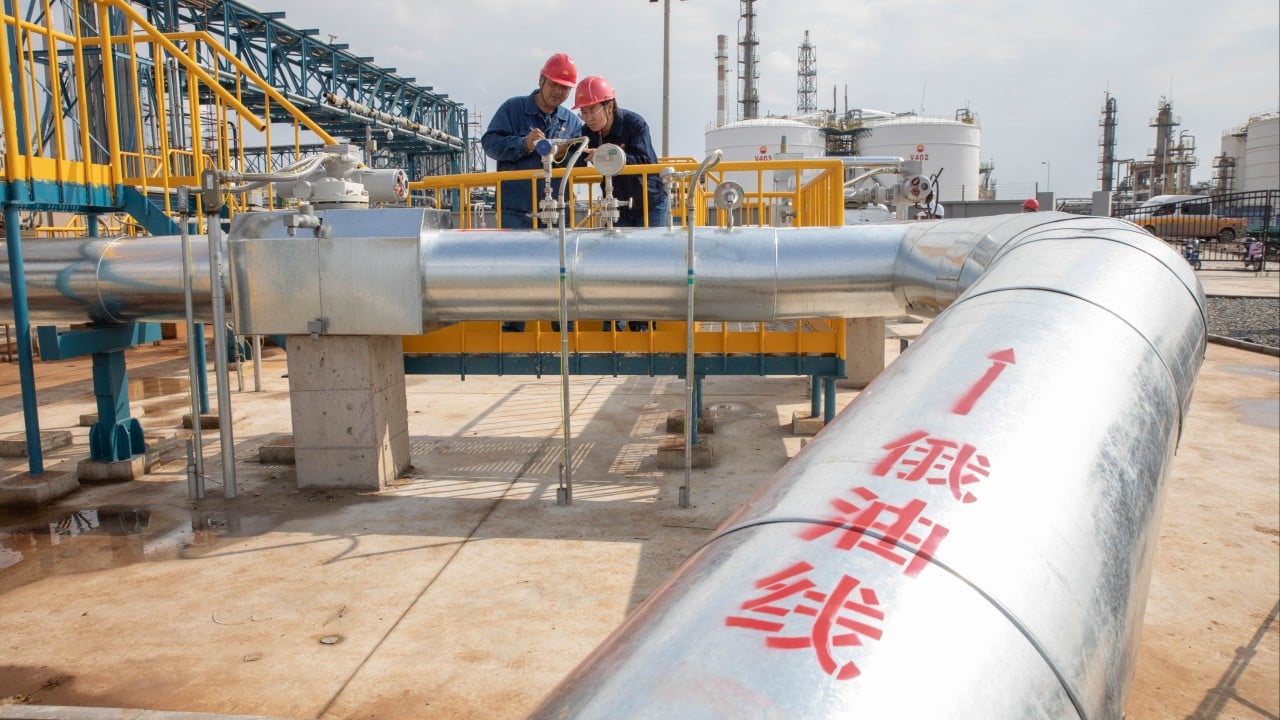
The smell of a petrol station is a sensory anchor for the modern age. It is the scent of progress and pollution, of family road trips and the grinding commute, of a world that runs on the prehistoric remains of crushed ferns and long-dead organisms. We have spent a century tearing open the earth to find this liquid gold. We have fought wars over it. We have watched the climate shift under the weight of its exhaust.
Now, imagine a small laboratory in China where the air itself is being harvested. No drills. No derricks. Just the invisible gases we breathe every day, being stitched back together into the very fuel that powers our civilization.
It sounds like a conjurer’s trick. It sounds like the kind of headline that appears in the back pages of a tabloid, nestled between sightings of mythical beasts and miracle cures. But the chemistry is real. A Chinese firm, the Dalian Institute of Chemical Physics, recently demonstrated a process that converts carbon dioxide and hydrogen into high-grade gasoline. They aren't just making a substitute; they are making the real thing.
The stakes are higher than a simple technical achievement. If this works at scale, the geopolitical map of the last hundred years doesn't just change. It evaporates.
The Ghost in the Machine
To understand why this matters, we have to look at the carbon atom. Carbon is the ultimate builder. It is the backbone of life, the structural integrity of a diamond, and the energy stored in a gallon of fuel. For decades, our relationship with carbon has been a one-way street. We extract it from the ground as hydrocarbons, burn it, and toss the waste—carbon dioxide—into the atmosphere like trash into a river.
The breakthrough in Dalian flips the script. Instead of viewing carbon dioxide as a waste product to be buried or ignored, these engineers are treating it as a raw material.
Think of a Lego set. Currently, we are taking a finished castle (oil), smashing it to bits to get the energy, and throwing the individual bricks (CO2) into the attic. The Chinese researchers have found a way to go into that attic, grab those loose bricks, and click them back together to build the castle again.
They use a catalyst—specifically, a multi-functional iron-based catalyst—to facilitate the reaction. Under the right conditions, carbon dioxide reacts with hydrogen. The CO2 provides the carbon, and the water provides the hydrogen. The result? A synthetic fuel that is chemically identical to the stuff you pump into your SUV at the corner station.
The Cost of a Miracle
The skeptic in the room—and there should always be one—will immediately point to the energy balance. You cannot get something for nothing. The laws of thermodynamics are the only laws that cannot be broken.
To pull carbon out of the air and force it to bond with hydrogen requires a massive influx of energy. If you use coal-fired power plants to run your "air-to-fuel" factory, you are just moving the goalposts. You'd be emitting more carbon than you’re capturing. The math would be a tragedy.
However, the vision here isn't to run on coal. The vision is to use the massive, often wasted surpluses of renewable energy. China has built wind farms and solar arrays at a pace that defies comprehension. Often, these installations produce more electricity than the grid can handle. In those moments, the energy is "curtailed"—essentially thrown away.
This fuel-from-air technology acts as a massive chemical battery. It takes that fleeting, excess sunlight and wind and bakes it into a stable, liquid form that can be stored in a tank for years. It turns the most volatile energy sources into the most reliable one.
A World Without Pipelines
Consider the life of a merchant sailor or a long-haul trucker. Their lives are dictated by the price of a barrel of Brent Crude. When a pipeline leaks in the North Sea or a tanker is blocked in the Suez Canal, the ripple effects reach every kitchen table in the world.
If fuel can be manufactured anywhere there is sunlight and water, the concept of "energy independence" takes on a radical new meaning. A landlocked nation with no natural resources suddenly becomes its own oil well. The geographical lottery that blessed some nations with vast oil reserves while leaving others in the cold is suddenly invalidated.
This is the human element of the story. It’s the farmer in a remote province who can power his tractor using the very air blowing across his fields. It’s the reduction of the massive, vibrating infrastructure of global oil shipping. It is the silence of a world where we no longer need to pierce the ocean floor to keep the lights on.
The Catalyst and the Crucible
The technical process involves something called the Fischer-Tropsch synthesis, a method originally developed in the 1920s. But the Germans who invented it were using coal as their feedstock. The Chinese advancement lies in the efficiency of the catalyst.
In a pilot plant in Shandong, the system reportedly achieved a 95% CO2 conversion and a "selectivity" for gasoline of 85%. In layman’s terms: it’s incredibly good at making exactly what we need without creating a mess of useless byproducts.
But science is rarely a straight line. There is a "valley of death" between a successful pilot plant and a global industry. To replace even a fraction of global oil consumption, we would need thousands of these facilities. We would need a staggering amount of green hydrogen, which is currently expensive and difficult to produce.
The path is not easy. It is fraught with the potential for failure, for economic shifts that could make the process unviable, and for the sheer inertia of the trillion-dollar oil industry.
The invisible shift
We often talk about the "energy transition" as if it were a clean break—a moment where we stop using one thing and start using another. But history suggests it’s messier than that. We still burn wood. We still use coal.
The genius of "fuel from air" is that it doesn’t require us to scrap every internal combustion engine on the planet tomorrow. It allows us to keep the machines we have while changing the blood that flows through them. It turns the car in your driveway into a carbon-neutral vehicle.
There is a profound irony in using the very gas that threatens our climate to save our way of life. It is a form of atmospheric recycling. We are finally learning to clean up after ourselves.
The Final Exchange
Walking through the streets of a major city, you can feel the heat radiating from the traffic. You can see the haze. For a century, that heat and that haze have been the price of admission for the modern world. We accepted it because there was no other way to move at the speed of the 20th century.
The engineers in Dalian are betting that the 21st century will be different. They are looking at the sky not as a landfill for our exhaust, but as a reservoir of potential.
The air is heavy with the components of our future. We just had to figure out how to reach up and grab them. If this technology scales, the era of scarcity—the era where we fought over what was buried in the ground—might finally give way to an era where the energy we need is as infinite as the wind.
The gasoline of tomorrow won't come from a hole in the earth. It will come from the breeze through an open window.