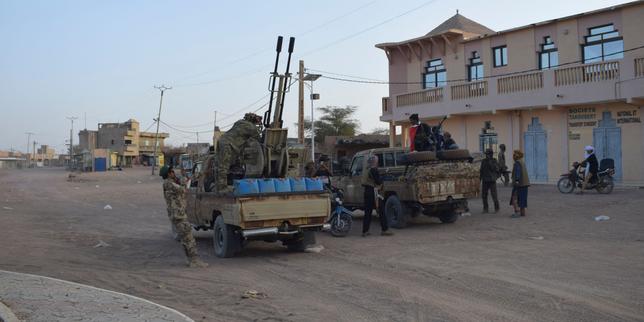
The shifting sands of the Sahel are burying the ambitions of the Malian junta and, in doing so, are unearthing the dormant diplomatic weight of Algiers. For three years, the military leaders in Bamako chased a mirage of total sovereignty by cutting ties with traditional partners and inviting Russian mercenaries to secure their borders. That experiment is hitting a wall of reality. As the Malian state loses its grip on the northern territories and communal violence surges, Algeria has pivoted from a sidelined neighbor to an indispensable power broker. This is not a matter of choice for the region; it is a matter of survival.
The collapse of the Bamako security myth
The junta led by Colonel Assimi Goïta predicated its entire legitimacy on the promise of security. By tearing up the 2015 Algiers Peace Agreement and demanding the departure of UN peacekeepers, the military government claimed it would do what the international community could not: crush the insurgency and reclaim every inch of Malian soil. You might also find this similar article interesting: The Humanitarian Disaster in Darfur is Killing a Generation of Children.
The results have been catastrophic. Instead of a unified march toward peace, the north has dissolved into a three-way meat grinder between the Malian Armed Forces (FAMa), the permanent strategic framework for peace, security, and development (CSP-PSD) representing Tuareg rebels, and various affiliates of Al-Qaeda and the Islamic State. The reliance on the Wagner Group—now rebranded as the Africa Corps—has failed to provide the surgical precision required to hold territory. Instead, it has brought a cycle of scorched-earth tactics that further alienates the local population.
Algeria watched this descent with growing alarm. For Algiers, a chaotic Mali is not just a foreign policy headache; it is a direct threat to its own national security. The 1,300-kilometer border between the two nations is a sieve for arms, militants, and refugees. When Bamako officially declared the Algiers-brokered peace deal "null and void" in early 2024, it was seen in the El Mouradia Palace as a declaration of diplomatic war. As reported in latest coverage by Associated Press, the results are notable.
The Algiers doctrine of necessity
Algerian foreign policy has long been defined by a strict principle of non-interference, but that has never meant indifference. The "Algiers Accords" were the only framework that kept the Tuareg independence movements and the central government in a state of fragile coexistence. When the junta torched that agreement, they effectively invited the northern rebels back onto the warpath.
Now, Algiers is reasserting its influence through a blend of "strategic patience" and renewed diplomatic aggression. While Bamako attempted to bypass Algeria by seeking alliances with Morocco and seeking entry to Atlantic ports, the geography remains stubbornly unchanged. Mali is landlocked, and its northern regions are culturally and economically tethered to the Algerian south.
Mapping the power shift
Algeria’s leverage comes from its role as the regional elder. While the junta in Mali is increasingly isolated—facing sanctions, suspended from the African Union, and treated with suspicion by its ECOWAS neighbors—Algeria maintains a line of communication with all actors. This includes the disgruntled rebel factions in the north who feel betrayed by the junta. Algiers is positioning itself as the only adult in the room, the only power capable of hosting a dialogue that doesn't end in more gunfire.
The Russian factor and its limits
The entry of Russia into the Sahelian theater was supposed to be a "game-changer"—to use the parlance of the junta’s supporters—but Algiers views Moscow's presence with a cold, cynical eye. Algeria is a major buyer of Russian hardware, yet it has no desire to see a Russian-managed mercenary state on its doorstep.
The limitations of the Africa Corps became painfully obvious during the battle of Tinzaouaten near the Algerian border. Malian forces and their Russian allies suffered a humiliating defeat at the hands of Tuareg rebels and jihadist elements. The incident proved that high-tech drones and mercenaries cannot replace a political solution.
For the Algerian military establishment, Tinzaouaten was proof of their long-held thesis: there is no military solution to the Sahelian crisis. By allowing the situation to deteriorate to the point of a massacre, the junta proved it cannot protect its borders without the regional cooperation that Algiers facilitates.
Economic realities vs. military rhetoric
While the junta focuses on military parades and nationalist rhetoric, the economy of northern Mali is tied to the Algerian tap. Subsidized goods, fuel, and trade routes flow from the north. When Algiers tightens the valve, the northern provinces feel the pressure instantly.
The junta tried to pivot toward a "Triple Alliance" with Burkina Faso and Niger, forming the Alliance of Sahel States (AES). While this looks formidable on paper, it lacks the financial and logistical backbone to replace the role Algeria plays. Burkina Faso and Niger are facing their own internal collapses. They cannot provide the grain, the electricity, or the diplomatic cover that Algiers offers.
The return of the mediator
In recent months, we have seen a noticeable shift in tone from the African Union and the United Nations. There is a quiet consensus forming that the attempt to bypass Algeria was a mistake. Diplomats are returning to the idea that any lasting peace in the Sahel must go through Algiers.
This isn't because Algeria is particularly well-loved in Bamako. On the contrary, the junta views Algiers with deep resentment, seeing it as a paternalistic neighbor. However, resentment does not pay for security or feed a starving population in the Gao or Kidal regions.
The structural fragility of the AES
- Financial Isolation: Without a regional central bank or a stable currency, the AES countries remain tethered to the systems they claim to reject.
- Logistical Bottlenecks: The distance from Bamako to the sea via the "Atlantic Initiative" is vast and plagued by insecurity, making Algerian routes more viable.
- Intelligence Gaps: The departure of Western intelligence assets has left a vacuum that only Algeria, with its extensive desert intelligence networks, can partially fill.
Algeria is using this fragility to reset the terms of engagement. They are no longer just asking the junta to return to the negotiating table; they are demonstrating that the alternative is a slow-motion collapse of the Malian state.
The internal Algerian pressure
It is important to understand that President Abdelmadjid Tebboune is not acting out of pure altruism. The Algerian public has little appetite for an endless refugee crisis or a spillover of the "Mali war" into their territory. The memory of the "Black Decade" of the 1990s looms large. Any sign that Al-Qaeda or the Islamic State is gaining a permanent sanctuary in northern Mali triggers an immediate and forceful response from the Algerian DRS (Intelligence Services).
By reclaiming its role in the Sahel, Algiers is also signaling to the West and to Moscow that it remains the hegemon of North Africa. It is a balancing act. Algiers provides the intelligence and the diplomatic floor, while the junta provides the chaos that makes that floor necessary.
The Tuareg wildcard
The most significant factor in Algeria's resurgence is its relationship with the Tuareg populations. The 2015 agreement gave these groups a stake in the state. By discarding it, the junta turned a political problem into an existential war.
Algiers remains the only entity that the CSP-PSD (the rebel coalition) will actually listen to. When the rebels took out the Wagner columns at the border, the first place they looked for a diplomatic outlet was north. Algeria’s ability to "turn off" or "turn on" the northern rebellion is the ultimate leverage over the colonels in Bamako.
The junta’s attempt to centralize power in Bamako has ignored the fundamental truth of the Sahel: the periphery often dictates the fate of the center. As long as Kidal and Timbuktu are in flux, the government in Bamako is built on sand.
The failure of the "New Sovereignty"
The junta's brand of sovereignty is based on the expulsion of foreign "meddlers." This played well with the crowds in Bamako initially. But sovereignty is not just the absence of French soldiers; it is the presence of state services, the safety of the roads, and the stability of the currency.
On all these fronts, the junta is losing ground. The "reclaiming of influence" by Algeria is a direct result of this failure. When a state cannot provide the basics of governance, its neighbors inevitably step in to fill the void, either for their own protection or out of political ambition.
A regional realignment
The Sahel is currently undergoing a painful realignment. The era of Western-led interventions (Barkhane, MINUSMA) is over. The era of Russian-led "security solutions" is proving to be a bloody disappointment. What remains is the original regional power structure, with Algeria at its center.
This is a return to the status quo ante, but with much higher stakes. The Malian junta is finding that it is much easier to start a fire than it is to put one out, and they are increasingly looking toward Algiers for the water. Whether the colonels are willing to swallow their pride and return to the Algiers framework is the question that will determine if Mali survives the decade as a unified state.
The current trajectory suggests that the junta will eventually have to concede. The costs of isolation are mounting, the military losses are becoming impossible to hide from the public, and the "allies" in the AES are too weak to offer a real lifeline. Algiers is waiting. It has the geography, the history, and the patience to wait until the reality of the desert forces Bamako’s hand.
The lesson of the last three years is clear: in the Sahel, you can ignore your neighbors, but you cannot ignore your map. Algiers has not moved, but the ground beneath the junta certainly has.