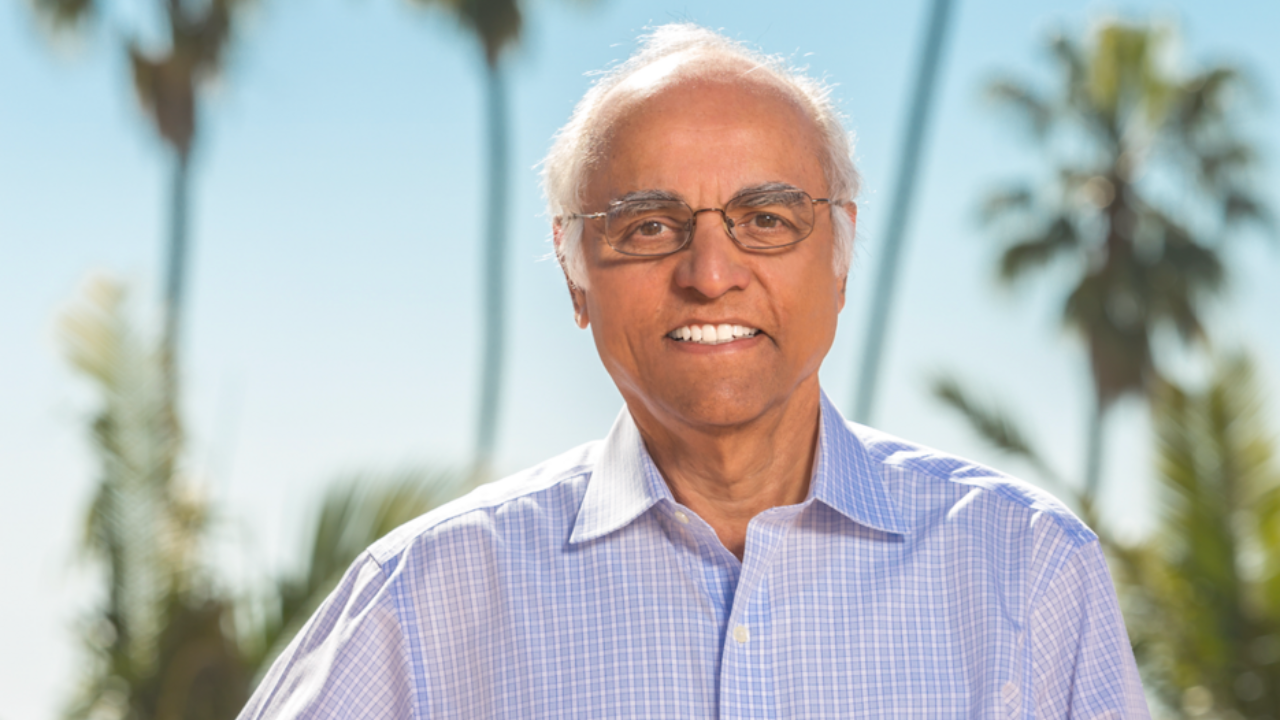
Most wealthy alumni write a check and walk away. They want their name on a building or a mention in a graduation speech, but they rarely stick around to see if the money actually moves the needle. Anant Yardi isn't "most alumni." The founder of Yardi Systems just doubled down on his commitment to the Indian Institute of Technology (IIT) Delhi with a fresh $8 million pledge, bringing his total contribution to a staggering $16 million (roughly ₹150 crore).
This isn't just about charity; it's a calculated bet on the future of global intelligence. If you've been following the sudden explosion of AI-driven property management or the bizarre saga of WeWork’s bankruptcy, you already know Yardi is a man who plays the long game. By funneling these millions into his alma mater, he’s not just "giving back." He's building a pipeline for the next century of engineering. Meanwhile, you can read related developments here: Why Mortgage Borrowers are Ditching Five Year Fixes for Shorter Deals.
The Yardi School of AI is the real winner here
When Yardi first pledged $8 million back in 2020, the goal was ambitious: establish a dedicated hub for high-level research. The Yardi School of Artificial Intelligence (ScAI) wasn't just another department. It was a statement. Today, that school houses over 40 faculty members pulling from different departments to solve problems that don’t fit into neat little boxes.
We’re talking about AI that predicts the weather with terrifying accuracy, robots that handle surgery, and data science that might finally fix urban transportation. This second $8 million installment is the fuel needed to turn those academic experiments into real-world tools. A huge chunk is specifically earmarked for "Infrastructure Renewal and Expansion." In plain English? They’re building more labs and housing so the smartest minds in India don't have to go to Stanford or MIT to change the world. To understand the complete picture, we recommend the excellent analysis by Bloomberg.
From the 1968 batch to the top of the real estate world
To understand why this matters, you have to look at where Anant Yardi started. He wasn't born into a billion-dollar empire. He was a Mechanical Engineering student at IIT Delhi, graduating in 1968. He even bagged the Director’s Gold Medal. That's the kind of pedigree that usually leads to a comfortable corporate job, and for 14 years, he did exactly that at Burroughs Corporation.
But in 1982, he saw a gap. People were managing massive property portfolios with spreadsheets and prayers. He built "Basic Property Management" on an Apple II. That was the spark. Now, Yardi Systems is the undisputed heavyweight of real estate software.
It’s easy to forget that Yardi is now essentially the "landlord of the landlords." When WeWork collapsed under the weight of its own hype last year, Yardi was the one who stepped in, eventually becoming the majority owner. He doesn't do "flashy." He does "functional." That same pragmatic energy is what he’s injecting back into IIT Delhi. He knows that without a "strong educational foundation"—a phrase he uses often—the technical breakthroughs of 2026 wouldn't be possible.
Why this donation hits differently in 2026
India is currently in the middle of a massive educational overhaul. While the government is pushing the "Viksit Bharat @ 2047" vision, it’s the private sector and the global diaspora that are providing the high-octane capital.
Yardi’s $16 million total isn't just a big number. It’s a challenge to other billionaire alumni. For years, the "brain drain" was the only story people told about IIT graduates. They’d get a world-class education for pennies and then fly off to Silicon Valley to never look back. Yardi is flipping that narrative. He’s proving that you can be a titan of American industry while still being the primary architect of Indian academic excellence.
What the money is actually buying
- Computational Power: AI research is expensive. You need massive GPU clusters and cooling systems that cost a fortune.
- Interdisciplinary Silo-Busting: The school bridges healthcare, materials science, and robotics. That kind of collaboration requires specialized physical spaces.
- Faculty Retention: To keep the best professors from being poached by Google or OpenAI, you need a world-class environment.
- Campus Modernization: The "Infrastructure Renewal and Expansion Programme" is literally the first phase of making IIT Delhi look and feel like a global Tier-1 university.
It is about more than just a name on a wall
Honestly, the most impressive part of Yardi’s philanthropy isn't the amount. It’s the focus. He isn't spreading his money thin. He’s obsessed with the intersection of technology and democracy, a theme he also supports through scholarships at UC Berkeley. He believes technology should be a tool for positive change, not just a way to automate people out of jobs.
Director Rangan Banerjee and the team at IIT Delhi are already moving on the first phase of the infrastructure project. They’re building new academic blocks and modernizing the residential areas. It’s a much-needed facelift for a campus that has long relied on its reputation while its physical buildings aged.
If you want to see what the future of tech looks like, don't just look at the stock market. Look at where the old guard is putting their money. Anant Yardi is betting $16 million that the next great AI breakthrough won't come from a windowless office in San Francisco, but from a lab in New Delhi.
If you're an entrepreneur or a student, the takeaway is simple: your foundation dictates your ceiling. Yardi’s story proves that an engineering degree from 1968 can still be the most relevant asset in 2026 if you keep building. Keep an eye on the Yardi ScAI publications over the next twelve months; that’s where you’ll see this $8 million actually at work. Reach out to the IIT Delhi Endowment Fund if you're looking to track how these massive alumni gifts are being audited and deployed. High-value philanthropy like this requires total transparency, and so far, Yardi is setting the gold standard.