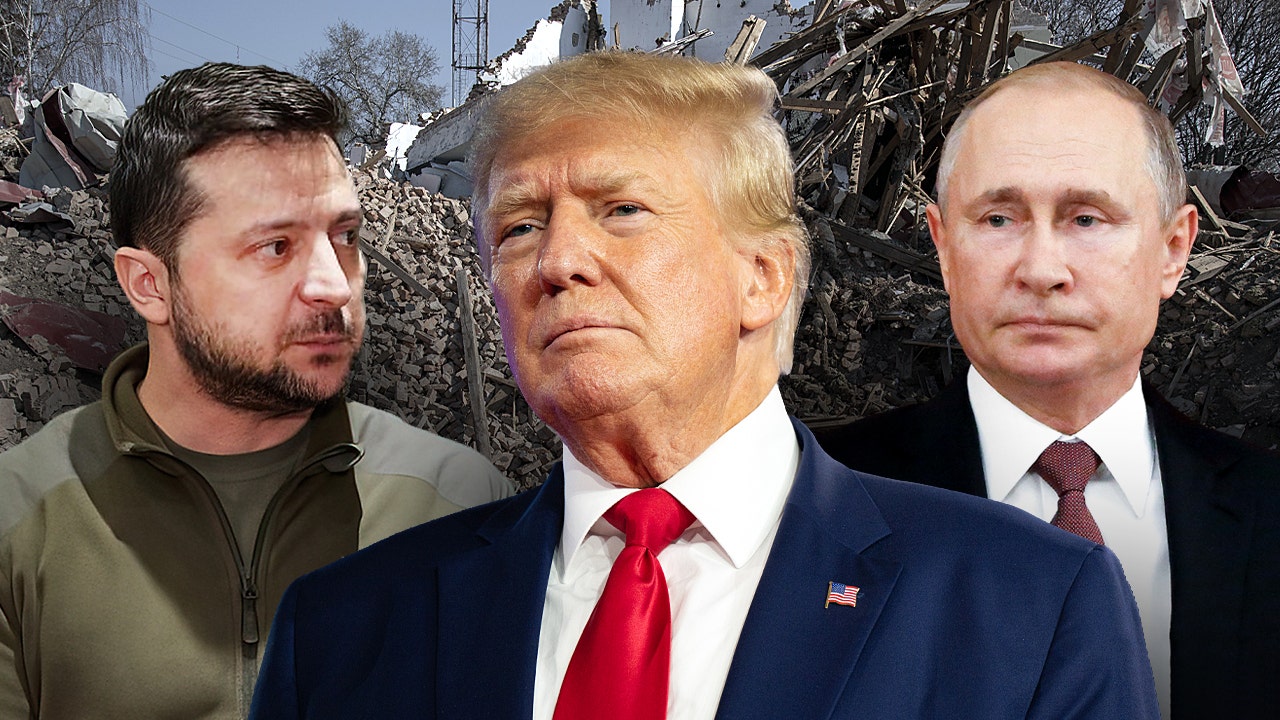
Geopolitical friction behaves exactly like a supply chain bottleneck: individual declarations matter less than structural incentives. Following the bilateral summit in Beijing between U.S. President Donald Trump and Chinese President Xi Jinping, public narratives highlight a superficial alignment regarding the Strait of Hormuz. While the U.S. executive branch claims China agrees that Iran must lift its blockade on the vital waterway, Beijing’s formal communications diverge, characterizing the broader conflict as an avoidable friction with no rational basis for continuation.
This disconnect is not a breakdown in communication; it is a predictable feature of asymmetric economic exposure. Evaluating the strategic standoff requires analyzing the underlying economic dependencies, maritime realities, and the precise cost functions governing Washington, Beijing, and Tehran. If you enjoyed this post, you should read: this related article.
The Asymmetric Exposure Vector
The crisis began following the February 28, 2026, kinetic actions initiated by U.S. and Israeli forces against Iranian infrastructure. Tehran’s asymmetrical response—the effective closure of the Strait of Hormuz—disrupted a transit corridor that historically handled 20% of global petroleum and liquefied natural gas (LNG) liquids. The resulting supply shock represents the largest singular disruption to maritime energy logistics on record.
To understand why the diplomatic positions of the United States and China are fundamentally misaligned, we must map their distinct economic exposures to this specific maritime chokepoint. For another perspective on this development, check out the recent coverage from NPR.
[Global Energy Ingestion via Strait of Hormuz]
                   │
         ┌─────────┴─────────┐
         ▼                   ▼
   United States           China
   (Net-Exporter /   (Net-Importer /
    Price-Exposed)    Volume-Exposed)
         │                   │
         ▼                   ▼
  Inflationary Risk    Sovereign Supply
  & Yield Pressure     Disruption Risk
The Chinese Energy Ingestion Function
China operates as the world’s largest net importer of crude oil, with Iran historically serving as a foundational supplier. Because western enforcement mechanisms previously drove Iranian crude to trade at a structural discount, Chinese independent refiners optimized their refining margins around these specific heavier slates.
- Volume Disruption vs. Price Disruption: For Beijing, an offline Strait of Hormuz is a direct threat to domestic industrial manufacturing. The risk is volumetric starvation of industrial inputs.
- Sovereign Capital Flight: The closure has placed immediate downward pressure on the Chinese Yuan (CNY). In secondary markets, currency volatility has forced state entities to prioritize absolute supply security over diplomatic alignment.
The United States Inflationary Transmission Mechanism
The United States, while a net total energy exporter due to domestic shale production, remains hyper-exposed to global price parity mechanisms. Petroleum is a globally fungible commodity; localized physical bottlenecks rapidly transmit to global benchmark prices like Brent and West Texas Intermediate (WTI).
- Macroeconomic Yield Cohesion: The immediate transmission mechanism of the Hormuz closure into the U.S. domestic economy operates via Treasury yields and asset repricing. Elevated energy costs act as an input tax across all domestic manufacturing and logistics sectors. This has driven the 10-Year Treasury Yield (TNX) higher, compressing equity valuations, causing multi-million dollar liquidations in leveraged digital assets, and weakening the Euro (EUR) relative to the dollar.
- The Tariff-Sanction Paradox: Washington faces a structural bind. The current administration has signaled a willingness to evaluate lifting sanctions on Chinese energy entities purchasing Iranian oil. However, utilizing sanctions relief as a bargaining chip fails to resolve the primary physical bottleneck: the ships cannot physically pass safely, regardless of their legal status.
The Strategic Cost Functions of the Three Pillars
The current diplomatic stalemate is best deconstructed through the explicit cost-benefit calculation of the three core state actors involved. Each operates on mutually exclusive strategic motivations.
1. The United States: Enforcement Without Entanglement
The U.S. strategic objective is the immediate restoration of commercial navigation through Hormuz without dedicating substantial ground forces or sustaining long-term regional military deployment.
The administration’s diplomatic strategy assumes that China possesses sufficient leverage over Tehran to force a policy shift. This assumption overlooks a fundamental rule of proxy conflicts: when an isolated regime faces existential or high-intensity kinetic pressure, its tolerance for risk increases exponentially, overriding the economic preferences of its primary trade partners.
2. China: The Neutral Free-Rider Strategy
Beijing’s operational policy relies on a calculated synthesis of diplomatic neutrality and localized tactical agreements. While Washington seeks a systemic resolution to reopen the strait for all global commerce, China has focused on securing carve-outs for its own state-flagged vessels.
Recent maritime movements indicate that East Asian transport vessels—predominantly those associated with China, Japan, and Pakistan—have secured conditional passage or are actively negotiating transit protocols directly with the Islamic Revolutionary Guard Corps (IRGC) navy. By ensuring its own industrial inputs remain stable while western economies absorb the inflationary shock of the broader blockade, China transforms a systemic global crisis into a localized competitive advantage.
3. Iran: The Chokepoint Leverage Matrix
Tehran views the Strait of Hormuz not as a commercial asset, but as an asymmetric defense mechanism. With its domestic economy heavily sanctioned, the marginal cost of disrupting global trade is minimal compared to the perceived defensive utility of holding global energy markets hostage.
The internal legislative dynamic in Tehran confirms this calculus. The Iranian parliament’s national security structures are actively evaluating formal transit fee mechanisms. Rather than planning a simple reopening, the regime is attempting to codify its physical control of the waterway into a permanent, revenue-generating geopolitical toll booth.
Structural Bottlenecks to Resolution
The standard narrative suggests that a high-level diplomatic understanding between Washington and Beijing can quickly normalize global shipping. A rigorous structural analysis reveals three independent bottlenecks that invalidate this assumption.
The Tactical-Strategic Gap
Even if Chinese leadership verbally agrees with the principle of open waterways, they lack the direct operational command structure to alter Iran's immediate military stance. The IRGC's naval choices are governed by an internal security logic tied to domestic survival and ideological positioning. Beijing can threaten to reduce future oil purchases, but in a high-intensity conflict scenario, long-term economic threats rarely alter short-term military behavior.
The Fragmented European Parallel Tracks
The crisis is further complicated by European nations breaking from unified western coalition structures. Driven by immediate domestic industrial pressure and escalating energy costs, European state entities have bypassed collective security frameworks to initiate direct, independent negotiations with the IRGC navy.
This fragmentation undermines any coordinated multilateral pressure campaign. When individual G7 economies seek separate transit permissions, Tehran's leverage multiplies, neutralizing the effectiveness of broader economic sanctions.
Macroeconomic Destabilization Vectors
The persistence of the blockade acts as a systemic shock across peripheral and emerging markets. The conflict has forced countries distant from the immediate geographic theater to alter their domestic economic policies to protect sovereign reserves.
For instance, Sri Lanka's introduction of a 50% surcharge on import customs duties to stave off currency depreciation reflects how regional maritime blockades quickly trigger global capital preservation measures. These secondary defensive policies compound global trade contraction, creating a feedback loop that dampens global consumer demand and complicates international supply chain normalization.
Expected Operational Trajectories
Given the structural incentives of the primary state actors, the crisis is highly unlikely to resolve through a singular diplomatic breakthrough. Analysts must anticipate three distinct operational realities.
First, global energy markets must price in a permanent structural risk premium. The Strait of Hormuz will not return to its pre-February 28 status as an unhindered global common. Instead, it will transform into a actively managed transit zone where passage is contingent upon ongoing political alignment and tactical concessions to Tehran.
Second, the U.S. dollar will continue to experience upward demand pressure driven by defensive capital flows, even as domestic inflation markers remain elevated due to energy inputs. This creates a challenging environment for global central banks, forcing them to choose between raising interest rates to defend their currencies or cutting rates to support slowing industrial sectors.
Finally, China will maintain its dual-track foreign policy. It will continue to provide rhetorical support for global peace and stability in public forums while simultaneously using its unique relationship with Iran to secure preferential maritime access. This strategy ensures its domestic manufacturing core remains insulated from the very supply disruptions currently challenging its western economic competitors.