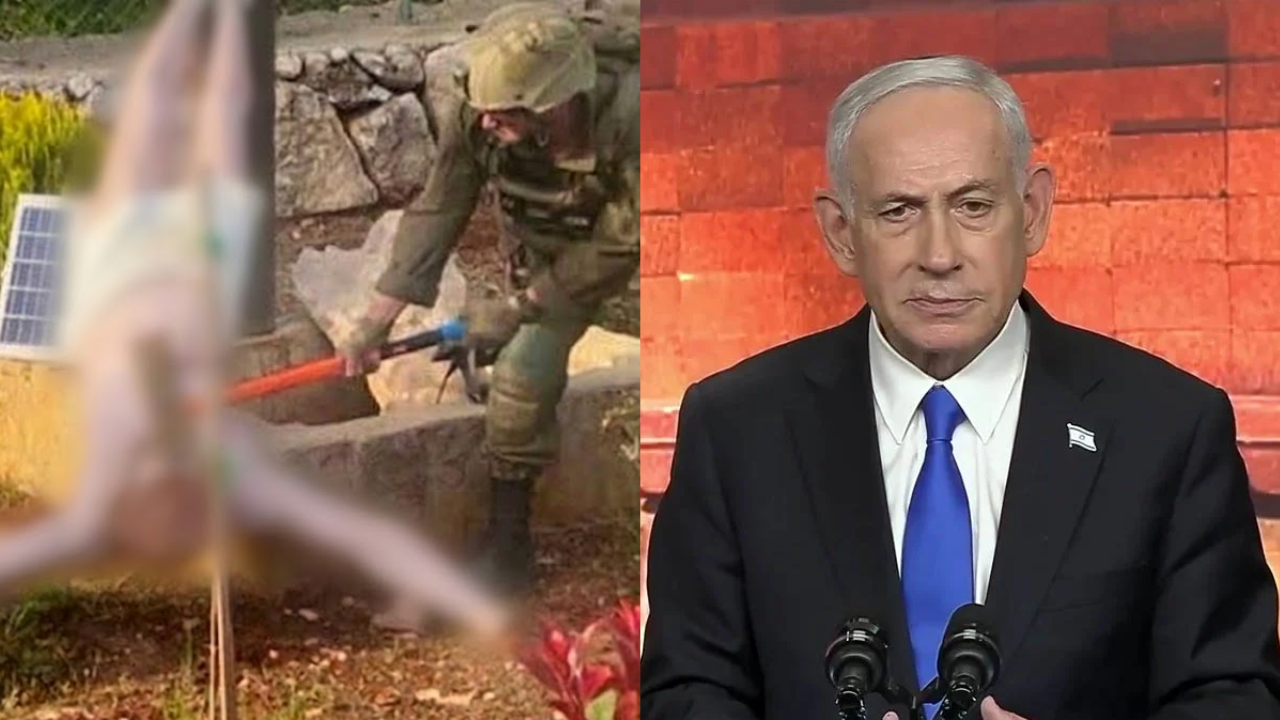
The incident in Debel, Lebanon, involving an Israel Defense Forces (IDF) soldier damaging a Christian religious icon, functions as a high-velocity catalyst for diplomatic and operational instability. When low-level tactical actions propagate through the modern information ecosystem, they cease to be isolated events. They become systemic indicators of organizational discipline and strategic alignment. In the current conflict, the cost of such an event is not measured in material destruction, but in the rapid depletion of diplomatic capital and the erosion of the operational narrative.
The Mechanism of Information Asymmetry
In asymmetric warfare, the combatant with superior military technology often loses the information war because the visual economy favors the defender of the "moral high ground." The Debel incident demonstrates a failure in the OODA loop (Observe, Orient, Decide, Act) at the squad level, where tactical actions operate without regard for their strategic feedback. Meanwhile, you can explore similar events here: The Diplomatic Delusion Why Pakistan and Irans Dialogue is a Geopolitical Dead End.
- The Visual Primacy: An image of a soldier using a tool to damage a religious icon carries a higher symbolic weight than an airstrike on a logistical hub. Symbols of religious faith cross linguistic and geopolitical boundaries instantly.
- Amplification Velocity: The viral nature of the image on social media platforms forces an immediate institutional reaction. The IDF loses control of the narrative the moment the visual evidence is indexed by search algorithms and social networks.
- The Attribution Trap: Once an image is authenticated, the specific act of an individual becomes a proxy for the entire organization's doctrine. This creates a distortion where tactical misconduct is equated with institutional policy, forcing a reactive defensive posture from national leadership.
The Cost Function of Moral Capital
The primary currency in international conflict is legitimacy. When a state actor engages in activities perceived as sacrilegious or disrespectful toward non-combatant populations, it incurs specific, calculable costs:
- Erosion of Coalition Cohesion: Diplomatic support from Western allies often relies on the domestic political approval of their own electorates. Visual evidence of misconduct provides ammunition for internal opposition groups, increasing the political price of maintaining alliances with Israel.
- Radicalization of Neutral Parties: The deliberate targeting or casual desecration of cultural or religious sites drives neutral regional populations into the opposition camp. The incident in Debel alienates the Christian minority in Lebanon, a group that otherwise represents a counterweight to non-state actors like Hezbollah.
- Internal Command and Control Degradation: The necessity for the Prime Minister and high-level command to publicly condemn the act signals an institutional friction. It indicates that the chain of command—intended to impose discipline—failed to prevent the action before it reached the public domain. This suggests a variance between the declared Rules of Engagement (ROE) and the reality of field execution.
The Disciplinary Response Matrix
The immediate condemnation by Benjamin Netanyahu and the subsequent launching of a criminal probe serve a singular purpose: containment. This is a damage-control operation designed to decouple the individual's action from the state’s official stance. To see the complete picture, check out the detailed article by The Washington Post.
The success of this containment is measured by the delta between the incident's viral peak and the restoration of order. The state uses three primary variables to manage this:
- Denunciation Speed: The time elapsed between the image surfacing and the official condemnation.
- Accountability Clarity: The visibility and severity of the promised punishment.
- Restorative Action: The speed with which the state engages in tangible repair of the damaged site.
If these variables are optimized, the state can potentially limit the long-term impact on its geopolitical positioning. However, the recurring nature of these incidents—documented in Gaza and the West Bank—suggests that the underlying issue is not the lack of rules, but the enforcement variance within the deployed units. The "social media culture" within the military, where combatants film their actions for personal, often performative, reasons, constitutes a failure of professional standards.
Strategic Forecast
The intersection of individual combatant behavior and global information reach will continue to place pressure on conventional military structures. The state is currently operating under a flawed assumption: that diplomatic and military goals can remain isolated from the behavior of individual infantrymen.
Future conflicts will be defined by "micro-kinetic" events. A single soldier with a smartphone possesses the capability to alter the strategic positioning of the entire state. The current reliance on post-facto condemnation is a reactive, low-utility strategy. It assumes that public apologies can neutralize the long-term, cumulative effect of these images on global perception.
The structural danger is that this behavior creates a "confirmation bias loop." Adversaries of the state will actively seek out or manufacture these moments, knowing that the institutional response will be forced, predictable, and ultimately inadequate to reverse the reputational damage. The strategic mandate for the leadership is to shift from reactive damage control to preventive internal conditioning.
Military leadership must implement a rigorous, pre-emptive enforcement of non-disclosure and professional conduct standards that account for the permanent digital record of the battlefield. This involves treating "digital hygiene" with the same tactical priority as weapon proficiency. The state cannot claim to be the protector of regional freedom and values while its representatives—through action or negligence—telegraph the opposite.
The final strategic play requires an immediate, total restructuring of field-level authority. If the chain of command cannot guarantee that its members will refrain from conduct that provides the adversary with asymmetrical propaganda, then the chain of command itself is compromised. Operational planners must account for the high probability that any incident involving religious or cultural sites will be weaponized. Consequently, future military doctrine should incorporate a "cultural sensitivity overlay" on all operational maps, treating religious icons as protected assets with the same status as critical infrastructure, not because of humanitarian optics, but because of the high strategic cost of their desecration.