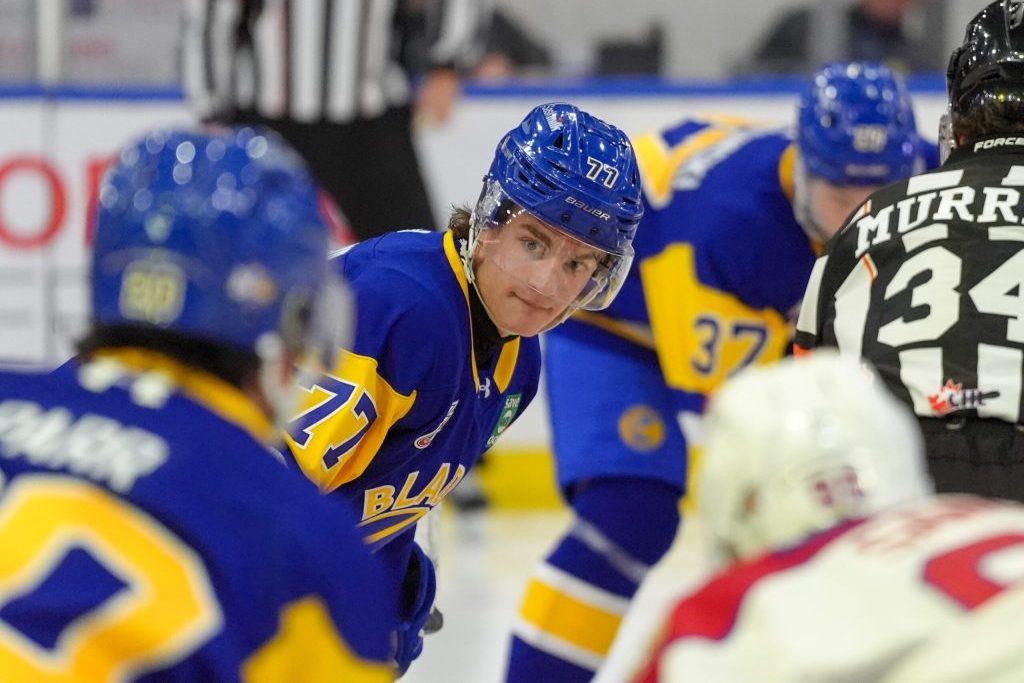
The fluorescent lights of a suburban hockey rink at 5:00 AM have a specific, sterile hum. It is a sound Lucas Wahlin knows better than the voice of an old friend. For a hockey player chasing the professional crest, that hum is the soundtrack to a decade of cold toes, bus rides through snow-blind prairies, and the persistent, nagging question of whether the game will ever love them back.
When the news broke that the Winnipeg Jets signed the forward to a one-year, two-way contract, the transaction appeared as a mere blip on the NHL’s daily waiver wire. To the casual observer, it is a clerical entry—a depth move for an organization shoring up its roster. To the person wearing the skates, it is a lifeline thrown across a frozen lake.
The Paper Thin Divide
A two-way contract is a brutal piece of sports architecture. It is a document that acknowledges a player's talent while simultaneously highlighting their vulnerability. In the simplest terms, it means the athlete is paid one salary to play in the NHL and a significantly smaller one to play in the minors.
Consider the psychological weight of that distinction. One phone call on a Tuesday afternoon can determine whether you are flying private to Los Angeles or carpooling to a bus terminal in Manitoba. It is the difference between five-star hotels and per diems that barely cover a steak dinner. For Wahlin, this isn't just a legal agreement; it is a permission slip to keep fighting for a permanent seat at the table.
The "two-way" designation acts as a constant reminder that nothing is guaranteed. You are part of the team, but you are also the contingency plan. Every practice becomes an audition. Every missed assignment in the defensive zone feels like a one-way ticket to the American Hockey League. The pressure doesn't just come from the opposing defenseman; it comes from the very paper you signed.
The Winnipeg Crucible
Winnipeg is a city that demands a specific type of character from its athletes. It is a place where the wind chill can bite through the thickest parka, and the fans possess an encyclopedic knowledge of fourth-line checking wingers. They don't just cheer for the superstars; they respect the grinders.
Wahlin enters an ecosystem where work ethic is the primary currency. The Jets are a franchise built on the idea of "draft and develop," a philosophy that relies heavily on players like him. These are the "glue" players—the ones who kill penalties, block shots with their shins, and provide the energy required to survive an eighty-two-game marathon.
But the competition is fierce. The locker room is a crowded room where everyone is fighting for the same sliver of ice time. Imagine standing in a hallway with twenty other people, all of you eyeing a single open chair. That is the reality of a training camp on a two-way deal. You have to be better than the person next to you, but you also have to be the teammate everyone wants to see succeed.
The Invisible Stakes of a One Year Deal
A one-year contract is a ticking clock. From the moment the ink dries, the countdown to expiration begins. There is no long-term security. No multi-year cushion to fall back on if an injury occurs or a slump sets in.
This creates a high-stakes environment where every shift is a microcosm of a career.
- The Physical Toll: Pro hockey is a game of high-speed collisions. On a one-year deal, a "minor" injury is a major catastrophe. You play through the pain because sitting out means someone else takes your spot.
- The Emotional Grind: Living out of a suitcase becomes a lifestyle. When you are on a two-way contract, you don't buy a house. You rent. You keep your boxes packed. You live in a state of perpetual readiness.
- The Financial Reality: While the NHL minimum salary is a king's ransom compared to most professions, the "minor league" side of a two-way deal is a sharp reality check.
Wahlin isn't just playing for the jersey; he is playing for his next year of employment. It is a performance review that lasts seven months and takes place in front of fifteen thousand people.
Why We Watch the Grinders
We often gravitate toward the highlight reels—the cross-ice passes and the top-shelf goals from the league's elite. But there is a deeper resonance in the story of a player like Lucas Wahlin. Most of us will never know what it feels like to score fifty goals in a season. We do, however, know what it feels like to be on a "two-way contract" in our own lives.
We know the feeling of having to prove ourselves every day. We understand the anxiety of a temporary contract or the uncertainty of a probationary period at a new job. We see ourselves in the hustle. When a player on the fringe makes a game-saving block or wins a gritty puck battle along the boards, we aren't just cheering for a goal. We are cheering for the underdog who refused to be sent down.
The Jets didn't just sign a forward. They signed a story of persistence. They signed the guy who stayed late to work on his backhand when the arena was empty and the Zamboni was waiting. They signed the hope that hard work, when met with a sliver of opportunity, can manifest into something permanent.
The Long Road to Opening Night
Between now and the first puck drop of the season, there are thousands of hours of unseen labor. There are the heavy squats in a humid gym in July. There are the monotonous skating drills designed to shave a tenth of a second off a turn.
For Wahlin, the contract is a door left slightly ajar. His task is to kick it open. The scouts have seen the tape, the coaches have checked the stats, and the front office has crunched the numbers. But the numbers don't capture the internal fire required to survive the professional ranks.
The Jets organization is betting that Wahlin can provide depth and reliability. Wahlin is betting on himself. In the cold, hard world of professional sports, that is the only bet that truly matters.
He will arrive at camp with his gear bag and his determination, walking past the retired jerseys hanging in the rafters. Those jerseys belong to the legends, the ones whose names are etched in silver. But every legend started with a single year, a modest salary, and the terrifying, beautiful uncertainty of a two-way dream.
The hum of the rink is louder now. It sounds like a beginning.