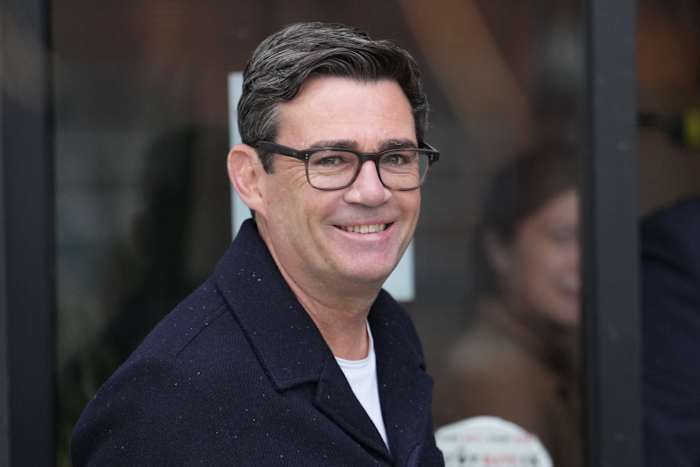
The Westminster establishment is collapsing under the weight of its own unpopularity, and Britain is looking north for a savior. Following a brutal set of local elections, a Cabinet resignation, and plummeting approval ratings for Prime Minister Keir Starmer, the Labour Party is actively hunting for an escape hatch. That escape hatch is Andy Burnham. But the Greater Manchester Mayor cannot simply ride into Downing Street on a wave of regional popularity. He faces a rigid constitutional barrier: he does not have a seat in the House of Commons. To save the government, Burnham must first win the upcoming Makerfield by-election, a high-stakes gamble that will test whether his brand of northern populism can actually survive the brutal reality of a shifting British electorate.
The route back to London is fraught with logistical and political traps. The seat became available after Josh Simons resigned, explicitly stating he was stepping aside to let Burnham drive national change. While Labour's National Executive Committee (NEC) previously blocked Burnham from running in a February by-election out of fear of a leadership challenge, the current crisis has forced their hand. They have granted him permission to seek selection. Yet, treating Burnham as an automatic prime-minister-in-waiting ignores the complex mechanics of parliamentary selection, the fierce resistance of internal rivals, and a highly motivated opposition.
The Makerfield Gamble
Makerfield is not a safe haven. It is a battleground.
While historically a Labour stronghold, the seat now represents the front line of a fierce electoral battle against Reform UK. Nigel Farage has already pledged to throw the entire weight of his party machinery into the constituency. If Burnham runs and wins convincingly, he establishes an undeniable mandate to challenge Starmer. If he scrapes by with a narrow majority, the myth of the "King of the North" shatters before he even boards the train to Euston.
The financial cost of this ambition is also straining a party already facing financial difficulties. Forcing a parliamentary by-election in Makerfield simultaneously triggers a secondary mayoral by-election in Greater Manchester to replace Burnham. Senior union officials have expressed deep concern over the combined bill, which is expected to exceed £1 million.
Internal rivals are already positioning themselves to block a smooth coronation. While some party figures call for an uncontested transition of power to avoid a prolonged leadership crisis, loyalists to figures like former Health Secretary Wes Streeting and Deputy Leader Angela Rayner are pushing back. They argue that party rules should not be altered or extended simply to accommodate one individual's timeline.
The Problem of the Westminster Rules
The British constitution remains unyielding. A Prime Minister must command a majority in the House of Commons. For Burnham to mount a credible leadership challenge, the timing must align perfectly.
- The Nominations Barrier: Under current party rules, any challenger needs the formal nomination of 20% of Labour MPs—roughly 81 lawmakers. Allies claim Burnham has easily surpassed this threshold, but turning private promises into public votes during a bitter leadership race is notoriously difficult.
- The Timetable Trap: If a leadership contest begins immediately, Burnham cannot legally participate until he is an elected MP. His allies are currently lobbying the NEC to extend the leadership election timetable to three months, allowing the Makerfield by-election to conclude first.
This procedural battle exposes the deep ideological divide within the party. Burnham represents the "soft left," positioning himself as the antithesis of the technocratic London establishment. His rivals on the right of the party view his sudden return as an opportunistic power grab that risks plunging the country into deeper political instability at a time when global economic factors require steady governance.
The Ghost of Campaigns Past
Burnham’s current status as a political heavyweight relies heavily on his reinvention outside of Westminster. His three successive terms as Greater Manchester Mayor allowed him to shed the stiff, institutional persona that doomed his previous national campaigns.
During his time in municipal government, he traded formal suits for a casual appearance and cultivated a reputation as a fierce defender of working-class communities. His public battles with central government during national crises solidified his image as an outsider fighting a broken system.
However, the House of Commons is a different arena. Westminster has a track record of neutralizing regional champions. The skills required to run a devolved combined authority—where a mayor can act as a singular figurehead—do not automatically translate to navigating the factional warfare of the Parliamentary Labour Party. Burnham’s critics remember his unsuccessful leadership bids in 2010 and 2015, where his policy positions were criticized as indecisive.
The central question hanging over Makerfield is whether voters will accept being used as a stepping stone. By-elections are notoriously unpredictable environments where local grievances frequently override national political strategies. If the electorate decides to punish the government rather than endorse a savior, Burnham's return will end before it begins, leaving the administration trapped in the very crisis it is desperate to escape.