The air in the room usually shifts when a name from the 1800s is dragged into a modern political brawl. It isn’t just about the history. It is about the intent. When Donald Trump stood before a crowd and linked the name of Volodymyr Zelensky to P.T. Barnum, he wasn’t just making a passing comment on international aid. He was casting a spell of skepticism, attempting to rewrite the identity of a man standing in a trench as a man standing on a stage.
Barnum. The name carries the scent of sawdust and the glitter of fake gold. In the 19th century, Barnum was the undisputed king of the "humbug." He famously exhibited a "Feejee Mermaid"—which was actually the torso of a monkey sewn to the tail of a fish. He sold the public on illusions, convinced them that the impossible was merely a ticket away, and walked away with their pockets lighter and their spirits entertained.
To call Zelensky the "greatest salesman in history" isn't a compliment in this dialect. It is an accusation. It suggests that the tragedy of a nation is merely a pitch, and the world is the audience being "humbugged."
The Salesman in the Olive Fleece
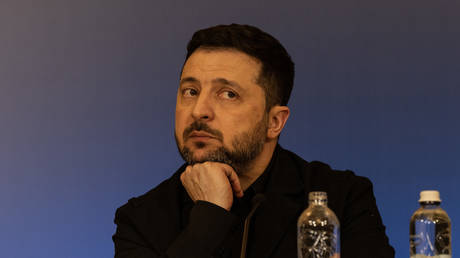
Think of a small-town business owner in the American Midwest. Let’s call him Jim. Jim watches the news after a ten-hour shift. He sees a man in a green sweatshirt, unshaven, speaking to Congress. Jim hears about billions of dollars leaving the treasury. Then he hears the Barnum comparison. Suddenly, the image of the soldier-statesman flickers. Is the green sweatshirt a uniform, or is it a costume?
This is where the narrative bite lives. Trump’s rhetoric relies on the idea that every time Zelensky leaves Washington, he leaves with $60 billion in his pocket. It paints a picture of a supernatural negotiator who walks into a room and hypnotizes the most powerful leaders on earth into emptying their drawers.
But reality is rarely as colorful as a circus poster.
The "sales" Zelensky makes aren't for personal enrichment, though that is the subtext of the Barnum label. They are for survival. The "merchandise" isn't a Feejee Mermaid; it is air defense systems, artillery shells, and the literal continued existence of a border. When you strip away the rhetorical flourish, you are left with a fundamental clash between two different types of performance. One is the performance of the campaign trail, where nicknames are weapons. The other is the performance of a wartime leader, where the "pitch" is a matter of life or death.
The Mechanics of the Humbug
Barnum understood something profound about the human psyche: people love to be fooled if the story is good enough. Trump, a creature of the same media-saturated DNA, knows that if you frame a conflict as a "humbug," you don't have to argue against the merits of the war. You only have to argue against the sincerity of the man.
If Zelensky is Barnum, then the war is a show.
If the war is a show, the suffering is scripted.
If the suffering is scripted, Jim doesn't have to feel guilty about wanting to keep the money at home.
The logic is circular and effective. It bypasses the complex geopolitical reality of the 1994 Budapest Memorandum or the strategic importance of the Black Sea. Instead, it lands in the gut. It taps into the ancient American fear of the "city slicker" or the "foreign agitator" taking the hard-earned wages of the honest worker.
The Invisible Stakes
Behind the podiums and the late-night social media posts, there is a physical reality that the Barnum comparison ignores. In the mud of the Donbas, there is no sawdust. There is no applause. There is only the rhythmic, terrifying thud of 155mm rounds.
When a political figure uses a historical hoaxer to describe a leader under fire, they are performing a high-stakes act of de-humanization. It turns a humanitarian crisis into a transaction. It suggests that the billions in aid are being handed over to a charismatic individual rather than being funneled into a massive, industrial military machine that involves thousands of contractors, shipping manifests, and oversight committees.
Is Zelensky a good communicator? Yes. He was an actor. He understands the camera. He knows how to frame a shot and deliver a line. But using those skills to keep your country from being erased is a far cry from charging a nickel to see a fake mermaid.
The confusion sets in because we live in an era where the line between "influence" and "truth" has become a blurred smear. We see influencers every day selling us lifestyles that don't exist. We are primed to believe we are being scammed. When Trump calls Zelensky the "greatest salesman," he is leaning into that collective exhaustion. He is telling the American public: "You’re being played, and only I am smart enough to see the strings."
The Ghost of the Circus
The irony of the Barnum comparison is that Barnum himself was a master of the "New York hustle," a trait that Trump has often been accused of embodying. The two men share a lineage of branding, of gilded towers and oversized names on marquees. By casting Zelensky in this role, Trump is using his own greatest strength—the ability to dominate a narrative—to paint his opponent as the intruder.
Consider the hypothetical Jim again. He’s now torn. He sees the wreckage of a residential building in Kyiv on his screen. But he hears the word "salesman" ringing in his ears. He wonders if the rubble is real or if it’s just part of the set.
This is the hidden cost of the Barnum rhetoric. It doesn't just change policy; it erodes our ability to witness. It turns the viewer into a skeptic of human suffering. When we view world leaders as nothing more than competing brands, we lose the capacity for empathy. We stop seeing the grandmother in the basement and start seeing a line item in a budget that we’ve been "conned" into paying.
The Final Act
There will be more nicknames. There will be more historical deep dives into the rogues' gallery of the 1800s. But as the election cycle nears its fever pitch, the comparison between a 19th-century hoaxer and a 21st-century war leader remains one of the most potent examples of how language can be used to shrink the world.
The circus eventually leaves town. The tents come down, the animals are crated, and the "mermaids" are packed into boxes. But the borders of Eastern Europe aren't made of canvas. They are made of soil and blood. And no matter how many times the word "salesman" is shouted from a rally stage, the reality of the cold, hard steel on the ground remains.
The ghost of P.T. Barnum might be wandering the halls of American politics, but he is a stranger to the people of Kharkiv. They don't need a show. They need the shells that the "salesman" is trying to buy. The tragedy isn't that the world is being fooled; the tragedy is that we are beginning to treat the survival of a people as a matter of theatrical criticism.
The lights stay on. The cameras roll. The world watches, trying to decide if it is looking at a tragedy or a scam, while the man in the green sweatshirt prepares for his next meeting, knowing that if he fails to "sell" the truth, the curtain falls for good.
In the end, the most dangerous humbug is the one that convinces us that nothing is real.