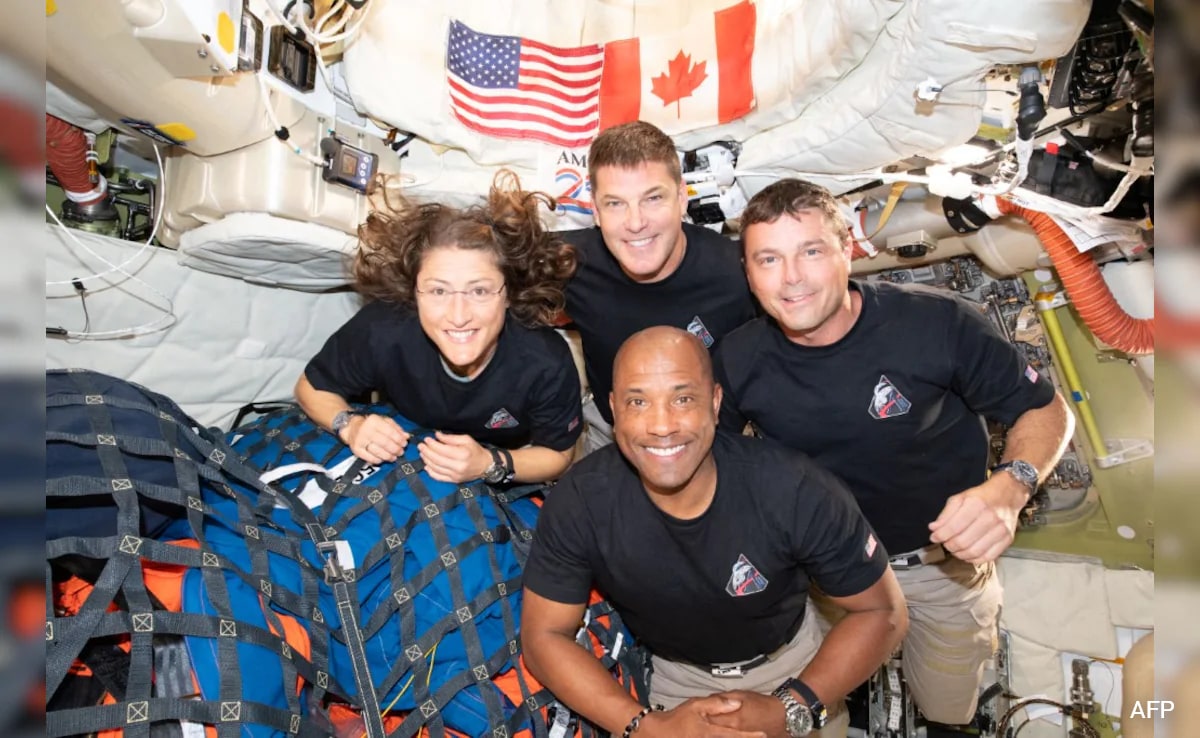
The selection of actors to portray Artemis II crew members—Reid Wiseman, Victor Glover, Christina Koch, and Jeremy Hansen—is not a matter of celebrity trivia but a strategic exercise in brand-mission alignment. In high-stakes aerospace initiatives, the public-facing persona serves as a critical bridge between complex orbital mechanics and taxpayer-funded sustainability. By examining how astronauts select their cinematic counterparts, we can identify a deliberate mapping of professional archetypes, physical presence, and psychological resilience required for the first lunar flyby in over half a century.
The Archetypal Mapping of Mission Personnel
The transition from a high-performance pilot or scientist to a cinematic protagonist requires a translation of specific traits into "screen presence." When astronauts suggest actors to play them, they are performing a subconscious self-audit of their most marketable professional virtues. This mapping follows three distinct structural pillars.
1. The Operational Stoic
Astronauts often gravitate toward actors who embody the "quiet professional." This choice reflects the high-risk nature of the Artemis mission profile. The need for a performer who can convey complex decision-making through minimal dialogue mirrors the actual cockpit environment. In the Artemis II mission, which involves a complex Translunar Injection (TLI) and a free-return trajectory, the "operational stoic" archetype reinforces public confidence in technical competence over emotional volatility.
2. The Technical Expert
Unlike the early Mercury or Apollo eras where the pilot archetype reigned supreme, the Artemis era emphasizes the multi-disciplinary scientist. The selection of an actor must reflect a capability for high-level data processing. When Christina Koch—who holds the record for the longest single spaceflight by a woman—is projected into media, the persona must balance physical endurance with intellectual rigor. The choice of actor becomes a proxy for the scientific legitimacy of the mission.
3. The International Delegate
The inclusion of Jeremy Hansen from the Canadian Space Agency (CSA) introduces a geopolitical variable. The cinematic representation must account for the collaborative nature of the Artemis Accords. The actor chosen for this role does not just represent a person but a sovereign partner in the lunar ecosystem. The persona here is one of diplomatic competence and cross-agency integration.
The Physical and Psychological Utility Function
The "actor-astronaut" match is constrained by more than just appearance. It is a function of perceived Gravitas (G) and Technical Relatability (Tr). We can define the utility of a casting choice through the following relationship:
$$U = \omega_{1}G + \omega_{2}Tr - \delta D$$
Where:
- $U$ is the overall suitability for mission representation.
- $G$ is the perceived authority or "gravitas."
- $Tr$ is the technical relatability or "humanity" of the actor.
- $\delta D$ represents the "Distraction Factor" (the risk that the actor’s existing celebrity baggage overshadows the mission).
- $\omega$ represents the weight assigned to each variable by NASA’s communications strategy.
A high $\delta D$ occurs when an actor is too closely associated with a previous, non-technical role, which could undermine the perceived reality of the mission. Consequently, the ideal candidate often sits in the "Goldilocks Zone" of fame—recognizable enough to command attention, but sufficiently versatile to disappear into the role of a mission specialist.
Structural Bottlenecks in Spaceflight Narratives
Public perception often fails to account for the disconnect between "movie space" and "real space." This creates a narrative bottleneck that NASA must navigate through these actor associations.
The Problem of Microgravity Representation
In cinema, microgravity is often used for comedic relief or high-stakes tension. In actual mission operations, it is a constant, grueling environmental variable that affects everything from bone density to fluid shifts. When astronauts choose actors, they are implicitly asking for a performer capable of portraying the physical toll of $10^{-6}g$ without drifting into caricature.
The Latency Gap
The Artemis II mission will experience communication delays that increase as the Orion spacecraft moves toward the Moon. Traditional Hollywood pacing relies on instantaneous communication. The actor chosen must be capable of acting in the "silence" of these delays, portraying the psychological isolation that comes with being 384,400 kilometers away from Earth.
Comparative Framework: Apollo vs. Artemis Media Strategies
The media strategy of the 1960s was centered on the "Cold War Warrior." Today, the strategy has shifted toward the "Inclusive Explorer." This transition changes the requirements for cinematic representation.
- Demographic Shift: The Artemis crew is intentionally diverse, reflecting a broader segment of the global population. The casting of Victor Glover, for instance, requires an actor who can navigate the weight of being the first person of color to leave low Earth orbit (LEO). This adds a layer of cultural significance that was absent from the 1960s casting pool.
- Technological Integration: Apollo-era films focused on the "seat-of-the-pants" flying style. Artemis-era narratives must focus on the integration of human intuition with highly automated AI systems. The actor must look comfortable interacting with digital interfaces, not just flipping manual toggles.
- The Commercial Variable: With SpaceX and Axiom Space involved, the "movie version" of Artemis must also serve as a branding vehicle for the commercial space industry. This introduces a private-sector polish to the persona that was not a factor in the government-only era of Gemini or Apollo.
Risk Mitigation in Celebrity Endorsements
There is a latent risk when astronauts engage in "who would play me" discussions. If the public focuses too heavily on the Hollywood glamour, the genuine life-threatening risks of the mission may be downplayed. The Orion spacecraft’s heat shield must withstand temperatures of nearly 2,800°C upon reentry. No actor can simulate the physical reality of a 40,000 km/h atmospheric skip-reentry.
The mission’s success depends on the heat shield’s ablative properties and the precision of the parachute deployment sequence. If the narrative leans too far into celebrity, the technical complexity of these systems is obscured. The strategic play for NASA is to use the "actor" hook to draw people into the "engineering" reality.
The Cognitive Load of Global Representation
Each Artemis II crew member carries a specific cognitive load related to their specific mission role.
- Reid Wiseman (Commander): Must project ultimate accountability. The chosen actor must embody the weight of three other lives.
- Victor Glover (Pilot): Must project precision. The pilot of Orion manages the manual docking and proximity operations should the automated systems fail.
- Christina Koch (Mission Specialist): Projects endurance and expertise. Her role involves the highest level of systems monitoring.
- Jeremy Hansen (Mission Specialist): Projects international cooperation.
The synergy between these four roles creates a "unit persona." Hollywood typically focuses on a single protagonist, but the Artemis reality is a decentralized team. The "outclassing" of the original article comes from recognizing that these aren't just four people picking favorite actors; they are four components of a singular mission-critical system.
Strategic Direction for NASA Media Relations
To maximize the value of the Artemis brand, the agency should pivot from "who would play you" to "what skills does the actor need to understand." By reframing the conversation around the physical and mental demands of the mission, NASA can ensure that the cinematic representation enhances rather than diminishes the technical achievement.
The final strategic move is the transition from "the moon as a destination" to "the moon as a proving ground." The actors chosen for the Artemis movies will eventually be the faces that sell the public on the Mars missions of the 2030s. The casting choice is, therefore, a multi-decade investment in the narrative of human expansion. NASA must ensure that the actors chosen are not just "stars" but "vessels" for the mission's core values: resilience, precision, and international unity.
The focus must remain on the Orion Stage Adapter, the European Service Module, and the Space Launch System (SLS) performance. The actors are merely the human interface for these colossal engineering feats. The most effective cinematic portrayal will be one where the spacecraft itself is the lead character, and the astronauts—and their actor counterparts—are the expert operators of that system.