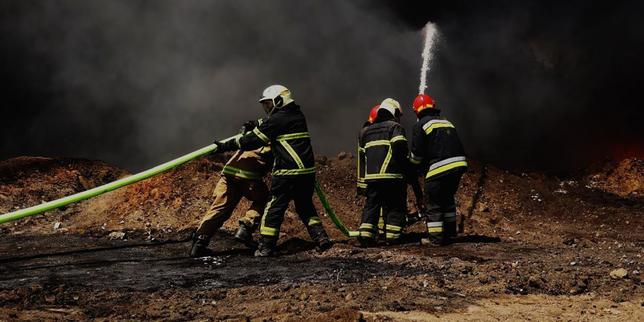
The resumption of hostilities following a technical or political ceasefire is rarely a return to the previous status quo; instead, it represents the release of coiled potential energy accumulated during the interval of restraint. When Russian drone strikes resulted in nine fatalities across Ukraine immediately following the expiration of a ceasefire, the event served as a clinical demonstration of Kinetic Rebound. This phenomenon occurs when a belligerent uses a period of non-engagement to recalibrate targeting data, optimize logic chains for autonomous systems, and consolidate munitions for a high-intensity surge. The resulting lethality is a direct function of the "Surge Differential"—the gap between the average daily attrition rate and the concentrated output of a post-pause strike.
The Mechanics of the Post-Ceasefire Surge
Military history and modern systems analysis suggest that ceasefires function as logistical buffers. In the context of the Ukraine-Russia conflict, a pause in active drone strikes does not equate to a pause in the kill chain. The kill chain consists of several distinct phases: find, fix, track, target, engage, and assess.
During a ceasefire, the "engage" phase is suspended, but the "find," "fix," and "track" phases often accelerate. This creates a data-rich environment where targets are identified and prioritized in a queue. The moment the ceasefire expires, the "engage" phase is triggered for the entire queue simultaneously.
The primary variable in these specific attacks is the Saturation Ratio. By deploying a high volume of low-cost loitering munitions, such as the Shahed-series or domestic Russian variants, the aggressor attempts to overwhelm the processing capacity of Integrated Air Defense Systems (IADS). An IADS has a finite number of engagement channels. If an air defense battery can track 20 targets but engage only 4 simultaneously, a swarm of 30 drones creates a mathematical certainty of "leaking" through the defensive perimeter. The nine deaths reported are the statistical residue of this saturation strategy.
The Economic Asymmetry of Loitering Munitions
The use of drones in these strikes highlights a fundamental divergence in the Cost-Exchange Ratio. This is the economic metric comparing the cost of an offensive munition to the cost of the interceptor used to destroy it.
- Offensive Unit Cost: A standard loitering munition may cost between $20,000 and $50,000.
- Defensive Unit Cost: A sophisticated surface-to-air missile (SAM) like those used in Patriot or IRIS-T systems can cost between $2 million and $4 million per interceptor.
This 100:1 ratio creates a strategic bottleneck for the defender. Ukraine is forced to decide whether to expend high-value, finite interceptors on low-value drones or risk the kinetic impact on civilian infrastructure and personnel. The Russian strategy leverages this "Interceptor Depletion" model. By forcing the defense to engage every drone, the attacker attrits the defender's treasury and stockpile faster than they attrit the attacker's industrial output.
Structural Vulnerabilities in Urban Density
The fatality count of nine individuals is not a random distribution; it is a result of Spatial Lethality Correlation. In urban environments, the probability of a strike causing casualties increases exponentially with the density of the built environment. When drones target energy infrastructure or logistics hubs located within or near residential sectors, the "Circular Error Probable" (CEP)—the radius within which 50% of munitions will land—becomes a critical factor.
Even if a drone is successfully intercepted, the kinetic energy and unspent fuel of the falling debris create a secondary strike zone. The "Debris Lethality Radius" often extends hundreds of meters from the point of interception. Consequently, a successful defensive action in an urban sky can still result in a lethal event on the ground. This creates a paradox for civil defense: the more effective the mid-air interception, the more unpredictable the impact location of the resulting wreckage.
The Psychological Operations (PSYOP) Feedback Loop
Beyond the physical destruction, the timing of these strikes—immediately following a ceasefire—is designed to exploit the Hope-Despair Cycle. This is a cognitive framework used to degrade the resilience of a civilian population.
- The Hope Phase: The ceasefire introduces a period of relative safety, allowing the civilian cortisol levels to normalize and creating an expectation of de-escalation.
- The Disruption Phase: The sudden, high-intensity resumption of violence shatters the newly formed expectation of safety.
- The Despair Phase: The contrast between the pause and the surge amplifies the perceived power of the aggressor, leading to a sense of inevitability and exhaustion.
By maximizing casualties at the exact moment the ceasefire expires, the attacker signals that the pause was a matter of choice, not a lack of capability. This reinforces the narrative that the defender cannot guarantee safety, regardless of diplomatic intervals.
Intelligence and Reconnaissance Recalibration
A ceasefire provides an ideal window for Signals Intelligence (SIGINT) and Electronic Intelligence (ELINT) gathering. During the pause, the defender may reposition mobile air defense units or repair damaged infrastructure. The attacker monitors these movements via satellite and high-altitude reconnaissance.
The strikes following the pause likely utilized updated target coordinates acquired during the "quiet" period. This explains the precision in hitting specific nodes in the power grid or command centers that may have been moved during the interval. The ceasefire, therefore, acts as a "reset" for the attacker’s targeting database, ensuring that the first wave of post-pause strikes has the highest possible probability of mission success.
Constraints on Defensive Escalation
The defender faces a rigid set of constraints when responding to post-ceasefire surges. The most significant is the Logistics Lead Time. While the attacker can stockpile drones during a ceasefire, the defender is reliant on the "Just-in-Time" delivery of Western interceptors and spare parts.
The second constraint is Geospatial Fixedness. Unlike the drones, which are highly mobile and can be launched from diverse, hidden locations, the targets (cities, power plants, bridges) are stationary. This inherent asymmetry means the defender must be "right" 100% of the time across 100% of the geography, while the attacker only needs to be "right" once at a single coordinate.
Strategic Forecast: The Shift Toward Autonomous Saturation
The data from these nine deaths and the preceding strikes suggest an evolution toward Autonomous Swarm Logic. Current drone attacks are largely pre-programmed or remotely piloted. The next iteration involves drones that communicate with one another in real-time to redistribute targets if an "alpha" drone is shot down.
When this technology reaches maturity, the "Saturation Ratio" mentioned earlier will become even more lethal. The defense will no longer be fighting 30 individual drones, but a single, distributed "hive" that can react to defensive fire in milliseconds. This will necessitate a shift from missile-based defense to Directed Energy Weapons (DEW), such as high-powered lasers or microwaves, which offer a "near-zero" cost-per-shot and can engage targets at the speed of light.
The shift to DEW is the only viable path to breaking the negative Cost-Exchange Ratio. Until that transition is complete, the pattern of ceasefire-pause and kinetic-rebound will remain the dominant operational tempo. The nine casualties in Ukraine are not merely victims of a single attack; they are data points in a broader transition toward a war of total industrial and algorithmic attrition.
The immediate tactical requirement for the defender is the decentralization of critical infrastructure and the rapid deployment of "Kinetic Shields"—physical barriers and net-based systems—that can neutralize low-cost drones without exhausting the inventory of multi-million dollar interceptors. Success in this theater will be measured not by the number of drones shot down, but by the preservation of the Cost-Exchange Ratio.