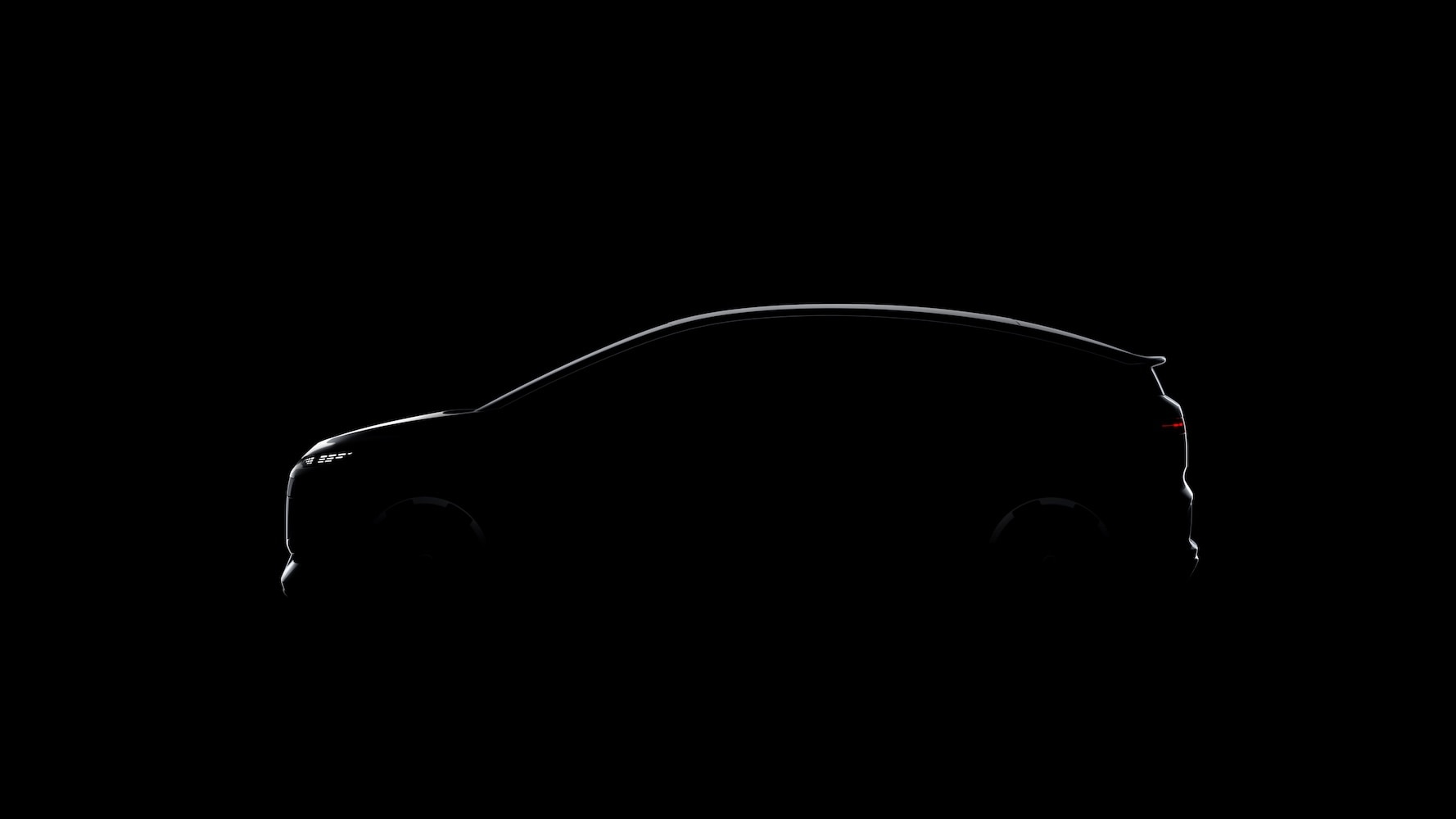
Audi is dusting off the A2 nameplate for 2026 because it has run out of ideas.
The industry is currently high on the "entry-level" supply. Every executive from Ingolstadt to Wolfsburg is parroting the same script: "We've listened to the customers. They want affordable, compact, urban mobility." It sounds noble. It sounds like a democratization of the electric dream.
It is actually a desperate retreat.
The upcoming A2 e-tron isn’t a bold leap into a new segment. It is a frantic attempt to claw back relevance in a market where the "premium" label has become a liability. By confirmed reports, this vehicle will be the most affordable EV in Audi’s stable, likely starting around €35,000. For years, German luxury brands ignored the bottom of the pyramid, chasing the high-margin sugar high of $100,000 electric yachts. Now that those yachts are rotting on dealer lots, they are sprinting back to the "compact" segment they once abandoned.
The Myth of the "Entry-Level" Premium
There is a fundamental lie at the heart of the A2 e-tron announcement. You cannot build a "premium" car at an "entry-level" price point without gutting the very soul of the brand.
I’ve spent two decades watching OEMs play this shell game. When a luxury brand moves downmarket, they don’t magically discover a more efficient way to build a motor. They just swap the Alcantara for recycled plastic and hope the badge on the steering wheel blinds you to the road noise.
The original A2 from 1999 was a marvel because of its Aluminum Space Frame (ASF). It was a technological flex that made the car incredibly light—under 900kg in some trims—and famously expensive. Audi lost money on almost every single one they sold.
The 2026 A2 e-tron will not have an aluminum space frame. It will not be a lightweight rebel. It will be built on the Volkswagen Group’s MEB platform—the same "one size fits all" skateboard that underpins the VW ID.3 and the Cupra Born.
By using the MEB architecture, Audi is admitting that it can no longer afford to be unique at the entry level. This isn't innovation; it's badge engineering with a heritage-flavored coat of paint.
The Platform Trap
The competitor narrative suggests that the A2 e-tron "perfects the portfolio." In reality, it highlights a massive structural weakness.
Consider the math of the MEB platform. It was designed for mass-market efficiency, not luxury performance. By the time the A2 e-tron hits the streets in late 2026, the MEB architecture will be nearly seven years old. While rivals in China are iterating on 800-volt architectures and integrated cell-to-body tech that lowers the center of gravity and increases cabin space, Audi is recycling a 400-volt legacy platform for its "new" entry-level hope.
Imagine a scenario where you pay a €10,000 premium over a Chinese-made EV only to get slower charging speeds and a heavier curb weight because your "luxury" car is built on a budget-first chassis.
- The Weight Penalty: Batteries are heavy. Without the original A2's expensive aluminum obsession, the e-tron version will likely weigh nearly double its predecessor.
- The Charging Ceiling: While the higher-end PPE (Premium Platform Electric) models get the good stuff, the A2 is stuck in the slow lane of the MEB ecosystem.
- The Software Debt: VW Group's well-documented struggles with CARIAD software have turned their "compact" EVs into glitchy tablets on wheels. Buying an A2 e-tron is a bet that Audi has finally figured out how to write code—a bet I wouldn't place with your money, let alone mine.
Why the Original A2 is the Wrong Ghost to Summon
Audi’s marketing department is leaning heavily into nostalgia. They want you to remember the original A2 as a cult classic that was "ahead of its time."
They forget to mention why it was discontinued: nobody bought it.
The original A2 failed because it was too smart for its own good. It was an engineering solution to a problem consumers didn't care about yet. Now, Audi is trying to resurrect the name for a car that is the exact opposite. The new A2 e-tron is a marketing solution to a problem the engineers can't solve: how to make an EV profitable at a low price point.
By labeling this a "compact crossover," Audi is also killing the one thing that made the A2 iconic—its monovolume efficiency. Every design sketch released so far hints at a bloated, high-riding silhouette. It’s not an A2; it’s a Q2 that went to finishing school and forgot its personality.
The Real Competition Isn't BMW
The biggest misconception in the "Audi confirms A2" headlines is that this car is a response to BMW or Mercedes. It’s not.
This is a defensive crouch against the inevitable. Brands like Zeekr, BYD, and MG are already delivering "premium-feel" interiors and superior battery tech for thousands less than what Audi is targeting.
In the internal combustion era, Audi could rely on its superior engines and Quattro heritage to justify a price gap. In the EV era, the motor is a commodity. The battery is a commodity. The competitive advantage has shifted to software and supply chain verticality—two areas where German legacy players are currently bleeding.
The Profit Margin Delusion
Audi CEO Gernot Döllner claims the A2 e-tron is "crucial for the brand." He’s right, but not for the reason he thinks.
It’s crucial because Audi needs volume to keep the Ingolstadt factory lights on. The 2025 financial reports showed a 10% profit rise, but look closer: that was driven by high-margin outliers and "intragroup sales." The core business of selling cars to humans is getting harder.
The A2 e-tron is a volume play. But volume at the €35,000 price point is a dangerous game for a brand that prides itself on "Vorsprung durch Technik." If they strip too much "Vorsprung" out to hit the price target, they dilute the brand. If they keep the "Vorsprung" in, they lose money on every unit.
It’s a "Premium Paradox." You can be premium, or you can be entry-level. You can't be both on a seven-year-old shared platform.
The Hard Truth for Buyers
If you are waiting for the A2 e-tron because you want an "affordable Audi," you are asking the wrong question.
The question isn't whether you can afford the car; it’s whether the car can afford to be an Audi. Buying the cheapest model from a luxury brand is almost always a mistake. You pay for the marketing budget of the flagship R8 or e-tron GT, but you sit in the cost-cutting reality of a mass-market hatchback.
Stop looking at the badge and start looking at the architecture. If it doesn't have 800-volt charging, if it doesn't have a dedicated luxury platform, and if it's just a VW ID.3 in a sharper suit, you aren't buying a "premium entry-level EV."
You’re buying a souvenir.
Would you like me to analyze the specific battery chemistry Audi is likely to use in the A2 e-tron to see if it actually meets the "efficiency" claims of its predecessor?