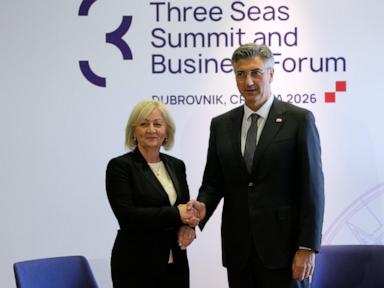
The press releases read like a victory lap for European sovereignty. Croatia and Bosnia and Herzegovina have shaken hands on a new gas pipeline deal, specifically the Southern Interconnection, promising to "diversify" supply and "shatter" the Russian energy stranglehold. It is a comforting narrative for bureaucrats in Brussels. It is also an expensive fantasy.
We are watching a classic geopolitical pivot where one monopoly is swapped for another, dressed up in the language of liberation. While the media celebrates the reduction of Gazprom’s influence, they are ignoring the cold, hard physics of energy infrastructure and the toxic political reality of the Balkans. This isn't a strategy for energy independence; it’s a high-stakes shell game that will leave consumers paying for the hubris of politicians who don't understand how a grid actually functions. Building on this topic, you can also read: The Durand Line Illusion Why Diplomatic Protests are Geopolitical Theater.
The Myth of the "Clean" Alternative
The fundamental lie sitting at the center of the Southern Interconnection project is the idea that diversification equals security. It doesn’t. In the energy sector, security comes from redundancy and cost-efficiency. By building a massive new pipeline to bring in Liquefied Natural Gas (LNG) via Croatia’s Krk terminal, Bosnia isn't achieving independence. It is moving from a stable, albeit politically compromised, piped-gas system to a volatile, price-sensitive global LNG market.
Let’s talk about the math that the "industry experts" conveniently omit. Piped gas from Russia, for all its moral baggage, arrives via long-term contracts with predictable pricing. LNG is a commodity subject to the whims of global shipping, Asian demand spikes, and American export whims. When you pivot an entire national economy toward LNG, you aren't "securing" your energy. You are tethering your grandmother’s heating bill to the spot price of gas in Shanghai. I have seen governments burn through decades of reserves trying to subsidize these "patriotic" energy shifts once the reality of the market sets in. Experts at Al Jazeera have shared their thoughts on this situation.
Infrastructure as a Political Weapon
The Southern Interconnection isn't just a series of pipes buried in the dirt; it is a political landmine. The project is currently stalled not because of engineering challenges, but because of a bitter internal dispute over who controls the "tap."
Dragan Čović and the Croatian Democratic Union (HDZ) in Bosnia want a new, ethnically-controlled entity to manage the pipeline in the Federation. The Americans and the Bosniaks want it run by the existing state operator, BH-Gas. This isn't a minor administrative disagreement. This is the blueprint for the next thirty years of Balkan gridlock.
By building this pipeline, we are effectively subsidizing the creation of a new patronage network. We are giving local power brokers a fresh valve to turn whenever they need to extract concessions from the central government. If you think Russian influence was a problem, wait until you see what happens when domestic ethno-nationalists have their hands on the primary energy artery for the country’s industry.
The Krk Terminal Bottleneck
Croatia’s Krk LNG terminal is often cited as the savior of Southeast Europe. It’s a fine piece of engineering, but it is currently operating at near-capacity with a footprint that cannot easily scale to meet the sudden, desperate needs of the entire peninsula.
When Croatia promises gas to Bosnia, they are promising a surplus that barely exists. To make this work, Croatia needs massive upgrades to its internal transmission network—upgrades that are years away and billions of euros over budget. The "deal" signed recently is a memorandum of intent, not a flow of gas. In the world of energy infrastructure, a signed paper without a funded construction timeline is just expensive confetti.
The Stranded Asset Trap
Here is the counter-intuitive truth that no one in Sarajevo or Zagreb wants to admit: natural gas is a dying bridge. The European Union is pushing for a net-zero transition by 2050. Bosnia is currently applying for EU membership while simultaneously doubling down on 30-year fossil fuel infrastructure projects.
Imagine a scenario where Bosnia spends $200 million on the Southern Interconnection, only to have the EU introduce carbon border adjustment taxes (CBAM) that make gas-fired electricity and industrial production economically non-viable by 2035. We are building the "infrastructure of the future" using the technology of the past, right as the global financial system is pivoting away from it.
This isn't just bad environmental policy; it’s catastrophic fiscal policy. We are creating "stranded assets"—massive, expensive projects that will never pay for themselves before they become obsolete. The smart move would be to bypass the gas wars entirely and sink that capital into deep geothermal or massive grid-scale storage, but there isn't enough political theater in a battery array.
The Gazprom Ghost
The obsession with "removing Russia" has blinded policymakers to the fact that Gazprom isn't actually the biggest threat to Bosnian energy security—Bosnia's own internal fragmentation is. Even if the Southern Interconnection is built, the country will still rely on the TurkStream branch for a significant portion of its needs.
Why? Because the geography of the Dinaric Alps makes internal distribution a nightmare. You cannot simply "flip a switch" and move gas from the Croatian coast to the industrial heartlands of Tuzla or Zenica without a level of investment that neither country is truly prepared to authorize.
The result will be a bifurcated system. The Croat-dominated areas will use expensive LNG from the West, while the rest of the country clings to whatever they can get from the East. Instead of a unified energy market that could actually bargain for better prices, we are literally building a physical manifestation of the country's ethnic divisions into the bedrock.
Stop Asking for "Diversification"
The "People Also Ask" sections of the internet are filled with queries like "How can Bosnia stop relying on Russian gas?" The question itself is a trap. The goal shouldn't be to stop relying on Russian gas; the goal should be to stop relying on gas as a primary geopolitical lever.
If you want actual energy sovereignty, you don't build a 160-kilometer pipe through disputed territory to buy American gas at a 30% markup. You decentralize. You move toward micro-grids and municipal-level energy production that cannot be shut off by a single decree in Moscow, Zagreb, or Sarajevo.
The Southern Interconnection is a 20th-century solution to a 21st-century crisis. It is a project designed to make politicians look "pro-Western" while they continue the same old games of resource extraction and cronyism. It is a monument to the "lazy consensus" that says any pipe moving West-to-East is inherently good.
The Cost of the "Free" Market
Finally, we must address the "American Interest" in this deal. The US Ambassador to Bosnia has been uncharacteristically vocal about this pipeline. While the rhetoric is about "security," the reality is about market share. The US is now the world’s largest LNG exporter.
There is nothing wrong with a country pursuing its economic interests, but let’s stop pretending this is a charitable act of liberation. This is a trade deal. Bosnia is being asked to trade a cheap, reliable, but politically "dirty" supplier for a more expensive, less reliable, but "politically correct" one.
The "battle scars" of energy transitions in Eastern Europe show that when the subsidies run out and the geopolitical excitement fades, it’s the local manufacturing plants—the aluminum smelters and the steel mills—that go dark because they can’t compete with global energy prices.
The Southern Interconnection is not a bridge to independence. It is a high-cost detour into a different kind of dependency, wrapped in a flag and sold as a victory. If you’re a taxpayer in Bosnia, hold onto your wallet. This "security" is going to cost you a fortune.