The political commentariat loves a clean, conventional narrative. When a high-stakes summit doesn't end with a sweeping treaty, a historic signing ceremony, or a neatly packaged concession framework, the consensus machine rushes to label it a failure. They call it a stalemate. They lament the lack of "concrete gains."
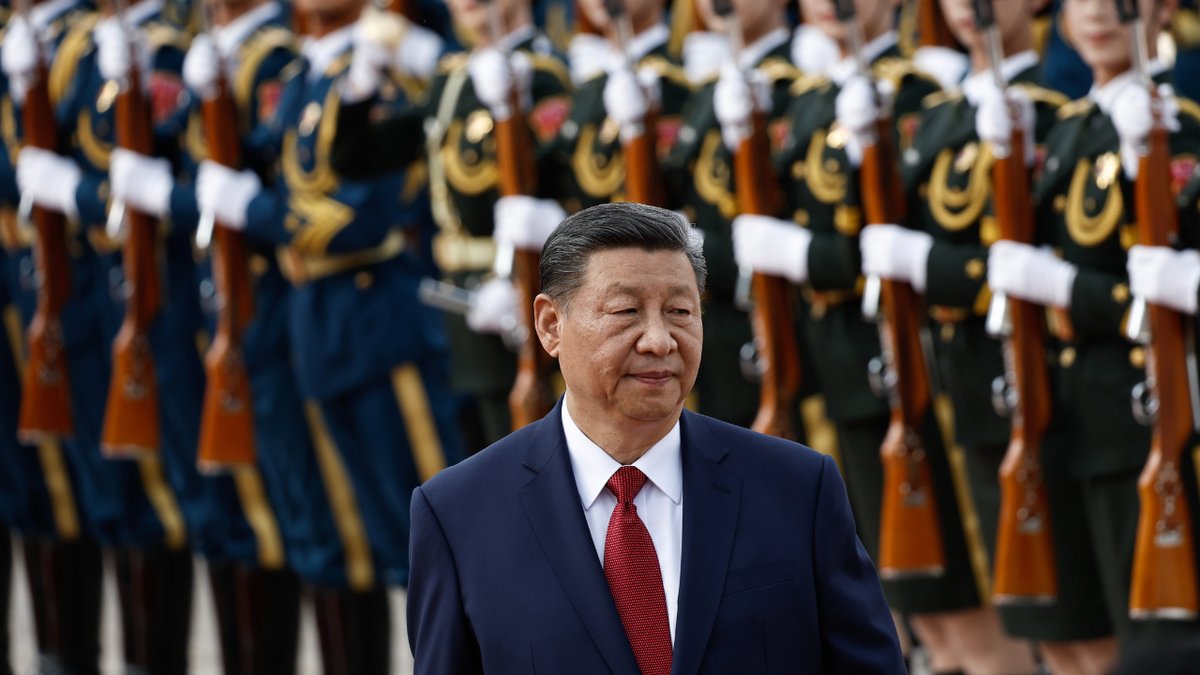
That is exactly how mainstream media misread Donald Trump’s summit with Xi Jinping in Beijing.
The lazy consensus states that because the Trump administration left China without securing massive, structural changes to Beijing’s state-led economic model, the trip was a bust. Pundits pointed to the lack of immediate progress on intellectual property theft, forced technology transfers, and currency manipulation as definitive proof of a strategic misfire. They looked at the $250 billion in signed commercial deals and dismissed them as mere "theatrics"—non-binding memorandum agreements meant to mask a diplomatic deficit.
This analysis completely misunderstands the mechanics of modern geopolitical leverage.
The summit was not a failure to secure a deal. It was a deliberate, calculated refusal to accept a bad one.
The Illusion of the Diplomatic Breakthrough
For three decades, Western leaders followed a predictable playbook when dealing with Beijing. They would fly in, hold bilateral talks, express "deep concern" over trade imbalances, sign a vague joint statement promising mutual cooperation, and fly home. Meanwhile, China's industrial policy rolled on entirely undisturbed.
The goal of the Beijing summit was never to walk away with a standard, polite diplomatic communiqué. The goal was to shatter the old framework entirely.
In trade negotiations, accepting a partial, easily subverted concession from an adversary is far worse than leaving with nothing. Had the administration accepted a superficial promise from Xi to reduce the trade deficit by a few billion dollars in exchange for dropping tariff threats, it would have signaled a return to status quo complacency.
By refusing to settle for cosmetic reforms, the administration achieved something far more valuable than a short-term political victory: it preserved its leverage. It signaled to Zhongnanhai that the old tricks—buying off American presidents with temporary agricultural purchase boosts while maintaining structural mercantilism—were officially dead.
Dismantling the Punditry Premise
Let us address the standard questions that dominate the post-summit analysis, because the premises behind them are fundamentally flawed.
Did the Summit Fail to Fix the Trade Deficit?
This question assumes that a trade deficit can be fixed during a three-day state visit. It cannot. The bilateral trade deficit with China is the product of decades of deeply entrenched macroeconomic factors, including currency misalignments, supply chain dependencies, and systemic Chinese subsidies for state-owned enterprises.
To suggest that a single summit could—or should—instantly close that gap is economically illiterate. The administration's objective was to lay the groundwork for a long-term recalibration of the economic relationship. You do not do that by begging for quick concessions; you do it by demonstrating a willingness to walk away from the table.
Why Didn't the $250 Billion in Deals Matter?
The critics are partially right about one thing: the deals signed during the trip—involving companies like Boeing, General Electric, and Qualcomm—were largely non-binding. Where the critics blunder is in their interpretation of why those deals existed.
These agreements were not an attempt to fool the American public into thinking a massive structural shift had occurred. They were a tactical maneuver designed to exploit internal Chinese dynamics. By allowing Beijing to roll out the red carpet and announce a quarter-trillion dollars in potential business, the administration forced China to publicly acknowledge the massive imbalance in the relationship. It weaponized China's own desire for a successful, prestigious "state-visit plus" hosting performance against them, establishing a baseline of expectations that the US could later hold them to when the real pressure began.
The Reality of Geopolitical Leverage
I have watched corporate executives and international trade negotiators make the same fundamental mistake for twenty years. They get so hooked on the optics of closing a deal that they trade away their long-term strategic position just to get a signature on a piece of paper. They view a stalemate as a loss.
It is not. A stalemate is a holding pattern that favors the party holding the bigger stick.
When the US left Beijing without a formal agreement, it left the threat of unilateral tariffs completely intact. It left Section 301 investigations hanging over the Chinese tech sector like a guillotine. It refused to grant China the one thing it desperately wanted: predictability and a guarantee of economic peace.
Traditional Diplomacy:
Negotiation -> Superficial Concessions -> Signed Treaty -> Status Quo Maintained

Asymmetric Leverage:
Negotiation -> Refusal of Bad Deal -> Preserved Tariffs -> Permanent Structural Pressure
This is asymmetric leverage in action. By keeping Beijing guessing about the next move, the administration retained the element of strategic ambiguity. China thrives on managing stable, predictable declines in their opponents' competitive advantages. They are remarkably bad at handling volatile, unpredictable counter-parties who refuse to play by the established rules of diplomatic etiquette.
The Hidden Cost of the New Approach
Admitting the downside of this strategy is necessary for an honest assessment. The contrarian approach to China comes with significant friction.
By bypassing traditional multilateral institutions like the World Trade Organization and opting for direct, aggressive bilateral pressure, you inject massive volatility into global markets. Supply chains fracture. Domestic agricultural sectors face retaliatory pain. American companies operating within China find themselves caught in the crossfire, facing sudden regulatory scrutiny and bureaucratic slowdowns from local authorities.
It is messy, disruptive, and financially painful in the short run. But anyone who claims we could fundamentally alter a multi-decade economic imbalance with zero collateral damage is selling a fantasy. The choice was never between a smooth, painless restructuring and a chaotic trade dispute. The choice was between managed, long-term economic surrender and a high-stakes, disruptive confrontation to rebalance the scales.
The Flawed Logic of the Multi-Lateral Fix
A popular counter-argument from the foreign policy establishment is that the US should have used the summit to build a broad, international coalition to pressure China through the WTO.
This view ignores the reality of how the WTO actually operates. The institution is structurally incapable of policing Chinese state capitalism. The WTO was built for market economies. It has no effective mechanisms to counter industrial subsidies hidden deep within state-owned banks, or forced technology transfers disguised as voluntary joint ventures. Waiting for a consensus-driven international body to fix these issues is an exercise in futility. It plays directly into Beijing’s strategy of running out the clock.
Bilateral pressure—backed by the threat of market access restrictions—is the only language that registers in Beijing. The summit proved that the United States was finally willing to speak it.
The True Metric of Success
Stop looking at the joint statements that weren't issued. Stop counting the number of official handshakes.
The success of the Beijing summit should be measured by what happened after the planes left the tarmac. The administration did not back down. The tariff threats were not watered down. The structural demands regarding IP theft and market access remained firm.
The summit stripped away the comforting illusions that had defined US-China relations for a generation. It forced Beijing to realize that the era of easy accommodation was over. That isn't a stalemate. That is a fundamental realignment of the global economic order.