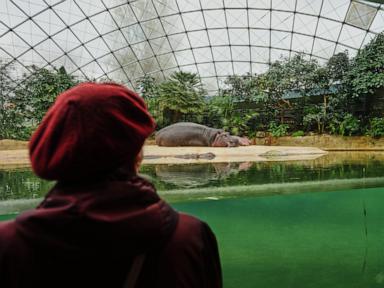
Berlin’s zoo isn't just for kids or tourists with cameras. For a specific group of seniors in the city, the Zoo Berlin serves as a bridge back to memories they thought were gone. Most people view dementia as a slow, inevitable fading away. They see the forgetting, the confusion, and the loss of self. But if you spend an hour with the specialized dementia tours at the zoo, you’ll see something different. You see a spark.
When someone lives with dementia, their world shrinks. Walls close in. Conversation becomes a minefield of "I don't know" or "I forgot." Animals change that dynamic instantly. They don't ask questions. They don't care if you repeat yourself. At the Berlin Zoo, a program designed specifically for people with cognitive decline proves that sensory experiences can bypass the broken parts of the brain. It’s about emotional resonance, not factual recall.
Why the Zoo Works When Other Therapies Fail
Traditional memory care often focuses on "reminiscence therapy"—looking at old photos or listening to music from the 50s. It’s useful, sure. But it’s still rooted in the past. Animal-assisted experiences at the zoo live entirely in the present moment.
A person with advanced Alzheimer’s might not remember what they ate for breakfast, but they can feel the coarse hair of a donkey or smell the hay in the petting area. These sensory triggers are powerful. They hit the amygdala—the brain's emotional center—which often stays intact much longer than the regions responsible for logic and short-term memory.
The Berlin Zoo program doesn't just wander around the enclosures. It’s curated. They choose animals that are calm and accessible. They focus on the petting zoo and specific exhibits where the smells and sounds are most distinct. It’s a tactile explosion. Honestly, it’s the kind of stimulation you can’t replicate in a sterile nursing home lounge.
The Science of the Human Animal Bond in Memory Care
We've known for a long time that animals lower cortisol. They reduce blood pressure. But in the context of dementia, the impact is even more profound. Research from institutions like the University of Maryland and various German geriatric studies shows that regular interaction with animals can reduce "sundowning"—that period of intense agitation and anxiety that many dementia patients experience in the late afternoon.
The Berlin Zoo tours lean into this. By engaging the senses, the tours help ground patients who feel adrift. When a senior brushes a goat, their heart rate slows. Their breathing evens out.
Researchers call this "biophilia." It’s our innate tendency to seek connections with nature and other forms of life. In dementia, your connection to the human world—to social rules and complex language—is fraying. Your connection to the natural world doesn't need words. It’s instinctual.
Beyond Just Looking at Animals
The tours in Berlin aren't passive. Guides are trained to handle the specific needs of these groups. They know how to speak to people with aphasia. They know how to manage the wheelchairs and the slow pace.
What’s truly fascinating is how the animals act as "social lubricants." In a typical setting, a person with dementia might struggle to start a conversation. At the zoo, the animal is the topic. "Look at those ears," or "He’s hungry." It gives them something to talk about that doesn't require digging into a faulty memory bank.
Sensory Triggers and Emotional Memory
- Touch: The feel of fur or a cold nose.
- Sound: The braying of a donkey or the chirping of birds.
- Smell: The very specific, earthy scent of the stables.
- Sight: The bright colors of exotic birds or the slow, rhythmic movement of a grazing sheep.
These inputs don't just sit there. They often trigger "flashbulb memories." A woman might suddenly recall the farm she grew up on in rural Germany after WWII. A man might remember a childhood pet. These aren't just facts; they’re feelings of safety and belonging.
Breaking the Isolation Cycle
Dementia is lonely. It’s lonely for the patient and exhausting for the caregiver. These zoo outings provide a rare moment of shared joy. When a caregiver sees their loved one smile or engage with a zookeeper, it breaks the cycle of grief that usually defines their daily life.
It’s about dignity. Being out in public, in a world-class institution like the Berlin Zoo, makes the participants feel like part of society again. They aren't "patients" here. They’re visitors. They’re animal lovers. That shift in identity is massive for mental health.
The program also tackles the "frozen" state many dementia patients fall into. Apathy is a huge problem in memory care. Many people just sit and stare. The movement and unpredictability of animals force a level of engagement that humans simply can’t always provoke.
Implementation is Everything
You can't just drop a group of people with dementia into a crowded zoo and expect magic. The Berlin Zoo succeeds because they prioritize the environment. They use quiet paths. They avoid peak hours when the noise might be overwhelming.
Overstimulation is the enemy. Too many crowds, too much noise, or too much heat can cause a "catastrophic reaction" in someone with cognitive impairment. The zoo staff manages the flow, ensuring the experience stays calming rather than chaotic.
How to Replicate This at Home
You might not live in Berlin. You might not have access to a world-famous zoo with a specialized program. But the principles remain the same. If you’re caring for someone with dementia, you can integrate these animal-centric strategies into their life.
Don't overthink it. Take them to a local park with a duck pond. Visit a pet-friendly garden center. Even sitting on a porch and watching birds at a feeder provides that necessary connection to the living world. The goal is to get outside the four walls of the home or the facility.
If you want to try a version of this, start small. Find a local farm or a gentle neighbor with a calm dog. Focus on the sensory details. Ask questions about how the animal feels or what it’s doing, rather than asking if the person remembers a specific event.
Next Steps for Caregivers
- Check your local zoo or aquarium for "senior hours" or specialized accessibility tours. Many are starting to follow Berlin’s lead.
- Look for "Intergenerational Programs" that combine kids, seniors, and nature.
- Invest in high-quality bird feeders for the window if mobility is a major issue.
- Focus on "non-demanding" activities where there is no right or wrong way to participate.
The success of the Berlin Zoo program shows that we need to stop looking at dementia care as just "managing a decline." It’s about finding the parts of the person that are still there. The parts that still want to feel the sun on their face and the soft fur of a rabbit. It’s about life, right now, in this second. That’s enough.