The discovery of over 110 new species within the Coral Sea Marine Park is not merely a biological milestone; it is a data-driven validation of the "sampling deficit" in deep-water ecosystems. Scientific expeditions led by the Minderoo Foundation and partners utilized advanced Remotely Operated Vehicles (ROVs) to penetrate depths of 4,500 meters, revealing a biodiversity density that challenges existing models of abyssal productivity. This high rate of discovery—averaging multiple new species per dive—indicates that our current understanding of the Western Pacific's ecological architecture is based on a statistically insignificant sample size. To understand the implications of these findings, one must analyze the mechanisms of deep-sea speciation, the technological constraints of benthic exploration, and the economic imperatives of marine conservation.
The Taxonomy of Discovery: Categorizing New Biological Assets
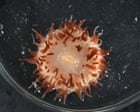
The 110+ species identified are not distributed uniformly across the phylogenetic tree. Instead, they cluster within specific niches that reflect the unique selective pressures of the Coral Sea’s bathymetry. The discovery set includes a diverse array of fish, octocorals, sponges, and crustaceans, each representing a distinct evolutionary solution to high-pressure, low-light environments.
- Invertebrate Dominance: The majority of new finds are invertebrates, specifically within the classes Anthozoa and Hexactinellida. These organisms function as the "foundation species" of the deep sea, providing the structural complexity necessary for higher trophic levels.
- Ichthyological Rarities: The identification of new fish species, particularly in the families Liparidae (snailfish) and Ophidiidae (cusk-eels), suggests that vertebrate adaptation to the hadal zone is more plastic than previously theorized.
- Geographic Endemism: Preliminary data suggests a high rate of endemism. The isolated seamounts of the Coral Sea act as "evolutionary islands," where restricted gene flow leads to rapid speciation.
The Three Pillars of Abyssal Biodiversity
The presence of such high species richness in a nutrient-poor environment (oligotrophic waters) requires a structural explanation. We can categorize the drivers of this biodiversity into three distinct pillars.
1. The Seamount Effect as a Biological Multiplier
Seamounts interrupt the laminar flow of deep-sea currents, creating "Taylor columns"—stationary eddies that trap nutrients and larvae. This physical phenomenon transforms an otherwise barren sea floor into a localized hub of high primary and secondary productivity. The vertical relief of these underwater mountains allows for a compressed zonation of habitats, where species can specialize in narrow depth bands, effectively increasing the "packing density" of the ecosystem.
2. Genetic Isolation through Bathymetric Barriers
The complex topography of the Coral Sea, characterized by deep trenches and high ridges, creates significant barriers to movement for benthic organisms. This fragmentation of the habitat forces populations into reproductive isolation. Over geological timescales, this leads to vicariance, where a single ancestral species splits into multiple distinct lineages. The 110 species found are likely the result of thousands of years of this localized evolutionary pressure.
3. Metabolic Specialization in High-Pressure Regimes
Survival at 4,000+ meters requires specialized biochemistry to maintain membrane fluidity and protein stability. The discovery of these species provides a library of biological solutions to extreme pressure (piezophilia). Species here do not just survive; they have optimized their metabolic rates to align with the sporadic arrival of "marine snow"—the falling organic debris from the surface that fuels the entire abyssal food web.
The Mechanics of Modern Marine Exploration
The "sampling deficit" mentioned earlier is a direct result of historical technological bottlenecks. Previous expeditions relied on trawling, which is both destructive and biased toward organisms that cannot swim away or that are sturdy enough to survive a net. The shift to ROV-based exploration has fundamentally altered the data collection process.
High-definition imaging and precision robotic arms allow for "in-situ" observation. This means scientists can document an organism’s behavior, color, and precise ecological niche before it is collected. For many fragile invertebrates, such as glass sponges or certain jellyfish, ROV collection is the only way to retrieve a sample intact. Furthermore, the integration of environmental DNA (eDNA) sequencing allows researchers to detect the presence of species even when they are not physically captured, by analyzing the genetic material shed into the water column.
Quantifying the Value of Bio-Prospection
The discovery of 110 new species is more than a win for conservation; it is an expansion of the "biological ledger" with potential industrial applications. The unique enzymes and secondary metabolites produced by deep-sea organisms are of intense interest to the pharmaceutical and biotechnology sectors.
- Enzymatic Stability: Enzymes from piezophiles are being studied for use in industrial processes that require high-pressure or low-temperature catalysts.
- Bio-Silicification: The structural properties of glass sponges, which construct intricate skeletons from silica, offer blueprints for advanced materials science and fiber optics.
- Pharmacological Leads: Deep-sea sponges and corals are known to produce complex chemical compounds to deter predators or prevent biofouling, many of which exhibit anti-cancer or anti-microbial properties.
The "Cost Function" of these discoveries is high, with daily vessel rates often exceeding $50,000 to $100,000. However, the return on investment (ROI) is measured in the long-term acquisition of genetic resources that could underpin future bio-economies.
The Bottleneck of Formal Description
A critical distinction must be made between "identifying" a new species and "describing" it. While the expedition has located 110+ "putative" new species, the formal taxonomic process—the peer-reviewed naming and description—often takes years. This creates a backlog in the scientific pipeline.
The bottleneck is caused by a shortage of taxonomic expertise. Morphological analysis must be paired with genomic sequencing to ensure a species is truly unique. This requires comparing the new specimens against "type specimens" held in museums globally. Without an acceleration of this process through machine learning-assisted taxonomy or increased funding for systematic biology, the rate of discovery will continue to outpace the rate of formal documentation.
The Ecological Risk Assessment
The Coral Sea Marine Park provides a level of protection, but the deep-sea environment is not immune to external stressors. The primary threats to these newly discovered species are twofold: climate-driven changes in marine snow flux and the potential for deep-sea mining.
As surface temperatures rise, the composition of plankton communities changes. This alters the quality and quantity of organic matter reaching the abyss. Because deep-sea species are highly specialized to specific nutrient regimes, even a minor shift in the "carbon rain" can lead to localized extinctions.
Secondly, the seamounts that host high biodiversity are often the same areas targeted for cobalt-rich ferromanganese crusts. The removal of these crusts would not only destroy the immediate habitat but would also create sediment plumes that could smother filter-feeding organisms miles away from the mining site. The discovery of 110 species in a single survey area highlights the "opportunity cost" of mining: we risk destroying biological assets before we even know they exist.
Strategic Imperatives for Marine Resource Management
To move from discovery to meaningful management, three strategic shifts are required:
- Transition from "Point Sampling" to "Predictive Modeling": Use the data from these 110 species to train machine learning models that can predict biodiversity hotspots across the entire Coral Sea. By identifying the topographic and oceanographic signatures of high-diversity seamounts, we can prioritize areas for protection without needing to dive on every single one.
- Standardization of eDNA Protocols: Implement a standardized genomic monitoring network across the marine park. This would allow for the continuous assessment of ecosystem health and the detection of invasive species or population declines in real-time.
- Institutional Investment in Systematic Biology: Address the taxonomic bottleneck by funding "rapid description" programs. This involves digitizing museum collections and using AI to assist in the morphological comparison of new specimens.
The Coral Sea expedition has proven that the deep ocean is not a desert, but a densely populated frontier. The challenge now is to integrate this new biological data into a coherent framework for "Blue Economy" governance, ensuring that the preservation of genetic diversity is weighted as heavily as mineral or fisheries extraction. The data is clear: we have only begun to scratch the surface of the planet's largest habitat.