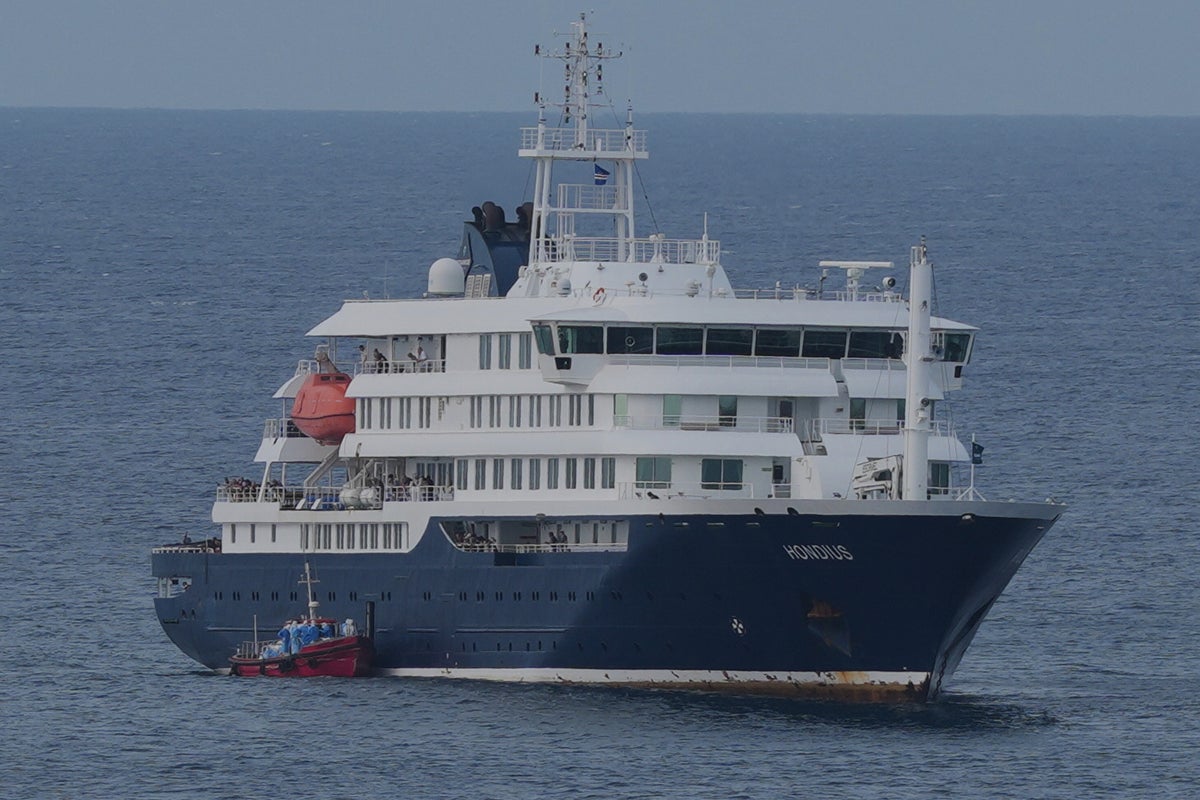
Hantavirus isn't supposed to happen on a luxury cruise. You expect buffets, sun decks, and maybe a bit of sea sickness. You don't expect a life-threatening pulmonary syndrome usually reserved for people cleaning out dusty, rodent-infested sheds in the desert. Yet, a recent outbreak has health experts rattled because it links two worlds that should never meet: a high-end cruise cabin and a birdwatcher's trip to a remote landfill.
The recent infection of passengers aboard a major cruise liner shows how thin the barrier is between our modern comforts and ancient, deadly pathogens. It turns out a couple’s innocent desire to spot rare gulls at a trash site may have invited a silent killer onto a ship carrying thousands.
[Image of hantavirus structure]
Why a Landfill Visit Is a High Risk Move
Most people see a landfill as a place for trash. Birdwatchers see it as a buffet for rare species. It’s a common trope in the birding world. If you want to see specific gulls or scavengers, you go where the food is. That means trekking through heaps of refuse.
The problem isn't the birds. It's the rodents. Landfills are basically luxury resorts for mice and rats. Specifically, deer mice and white-footed mice are the primary carriers of hantaviruses in the Americas. These rodents shed the virus in their urine, droppings, and saliva.
When the sun beats down on a landfill, those waste products dry out. They turn into dust. If you're walking through that site, kicking up dirt to get a better look at a Glaucous Gull through your binoculars, you're breathing in aerosolized virus particles. It’s that simple. You don't need to be bitten. You just need to inhale.
The couple in question likely didn't feel a thing at the site. They didn't see a mouse. They didn't touch anything "gross." But the microscopic particles were already in their lungs, beginning a slow-motion countdown.
The Cruise Ship Connection
Ships are closed ecosystems. They’re fantastic for spreading germs. Usually, we're talking about Norovirus—the infamous "stomach bug" that ruins vacations. Hantavirus is a different beast entirely. It doesn't typically spread person-to-person like a cold or the flu. This is why the cruise ship aspect is so terrifying to epidemiologists.
If the virus isn't jumping from the couple to other passengers, how did an "outbreak" start?
Experts fear the couple brought contaminated gear into their small, climate-controlled cabin. Think about your luggage. You toss your dusty boots in a bag. You open that bag in a room with recirculated air. Suddenly, the enclosed space of a cruise ship cabin becomes a concentrated zone of infection.
The air filtration systems on ships are better than they used to be, but they aren't perfect. If the couple was shedding the virus from their clothing or gear, the tight quarters and shared ventilation pathways in certain sections of the ship could potentially expose others.
Understanding Hantavirus Pulmonary Syndrome
You need to know that Hantavirus Pulmonary Syndrome (HPS) is brutal. It starts like the flu. Fever. Chills. Muscle aches. You’d probably think you just stayed in the sun too long or caught a common bug at the ship's bar.
Then things take a dark turn.
After a few days, your lungs start filling with fluid. It’s called pulmonary edema. You literally begin to drown from the inside. The mortality rate is roughly 38%. That’s not a typo. Nearly four out of ten people who get the severe form of this disease don't make it.
What to watch for if you've been exposed
- Severe shortness of breath that worsens rapidly.
- A "tight" feeling in the chest, as if a band is being constricted around your ribs.
- Extreme fatigue that doesn't improve with rest.
- Deep muscle aches in the large muscle groups like thighs and hips.
Health officials are currently tracking everyone who stayed in the vicinity of the couple's cabin. The incubation period can be up to eight weeks, which means the danger isn't over just because the cruise ended.
The Myth of the Clean Tourist
We have this weird belief that if we're on an expensive vacation, we're safe from "wild" diseases. That’s a dangerous lie. The "clean" environment of a cruise ship actually makes us more vulnerable because our guard is down.
The couple didn't do anything "wrong" by birding. They followed a passion. But they ignored the fundamental reality of zoonotic diseases: animals don't care about your hobby. Landfills are high-density zones for disease vectors. If you enter those zones, you have to treat yourself like a lab tech in a bio-hazard room.
How to Avoid Bringing the Wild Home
If you're a birdwatcher, a hiker, or someone who loves exploring off-the-beaten-path spots like old barns or waste sites, you have to change your habits.
Don't bring your field gear into your living space. This is a massive mistake people make. Your boots should never see the inside of your hotel room or cruise cabin until they've been thoroughly disinfected. Use a bleach solution—one part bleach to nine parts water. That kills hantavirus on contact.
Spray your shoes down before you pack them. Better yet, seal them in a plastic bag and don't open that bag until you're outside or in a well-ventilated area.
If you're heading into a site known for rodent activity, wear a mask. A simple cloth mask won't cut it. You need an N95 to filter out those tiny aerosolized particles. It might feel overkill for a birdwatching trip, but it's better than the alternative.
Why This Matters for the Travel Industry
This outbreak is a wake-up call for cruise lines and tour operators. We're seeing more "adventure" add-ons to traditional luxury trips. People want to go to the remote corners of the world. They want the "authentic" experience.
Authenticity comes with risks.
Cruise lines might need to start implementing stricter protocols for "shore excursion" gear. We already see this in Antarctica, where you have to scrub your boots to prevent carrying invasive species or avian flu between colonies. Maybe it's time that same logic is applied to every trip.
The Reality of Zoonotic Spillovers
We live in an age of spillover. As we push further into animal habitats—or as we create massive artificial habitats like landfills—viruses will jump to humans. The cruise ship outbreak isn't just a freak accident. It’s a symptom of how interconnected we are.
You can be in the middle of the ocean, surrounded by glass and steel, and still be at the mercy of a virus from a mouse in a trash heap three thousand miles away.
Check your symptoms if you've traveled recently. If you spent time in rural areas or sites with high rodent populations and you start feeling "flu-ish," tell your doctor exactly where you were. Don't just say you were on a cruise. Mention the landfill. Mention the birding. That specific detail could save your life.
Stop treating travel gear as if it’s "clean" just because it’s in your suitcase. Scrub your boots. Wash your clothes in hot water. Treat the outdoors with the respect—and the caution—it deserves. Your next vacation depends on it.


