The air in the high desert of the American Southwest smells of sage and dust. It is a clean, sharp scent that usually promises life. But for a young ranch hand in 1993, that air became a thief. He was fit, a marathon runner with lungs like bellows, until he wasn't. Within hours, his breathing became a desperate, ragged struggle, a drowning on dry land. He died before the doctors could even name the shadow that took him.
That was our introduction to the Sin Nombre virus. Today, the World Health Organization is signaling that the shadow is lengthening. Hantavirus is no longer a localized ghost story from the Four Corners or a rare tragedy in the Chilean backcountry. It is moving.
We often think of viral threats as invisible clouds passed between people in crowded subways or bustling airports. Hantavirus is different. It is a patient, ancient hitchhiker. It lives within the bodies of rodents—deer mice, cotton rats, and bank voles—who carry the pathogen without ever falling ill. They are the vessels. The virus waits in their waste, drying into a fine powder in the corners of abandoned sheds, under the floorboards of summer cabins, or deep within the insulation of a dormant tractor.
The moment a human picks up a broom to clear out a winter’s worth of nesting, the trap is sprung.
One sweeping motion kicks the microscopic particles into the light. You breathe. You don’t feel the grit in your throat. You don’t see the viral load entering your lungs. For one to eight weeks, you feel nothing at all. Then, the fever hits. It feels like a common flu, a standard exhaustion, a muscle ache that signals a long day’s work. But while you rest, the virus is dismantling the very barriers that keep your blood inside your vessels. Your capillaries begin to leak. Your lungs fill with fluid.
This isn't just a medical occurrence; it is a betrayal of the body by its own immune response.
The Geography of a Quiet Expansion
Why is the WHO chief sounding the alarm now? The answer lies in the shifting boundaries of the natural world. As we push further into rural territories and as the climate swings between extreme droughts and torrential rains, the rodent populations follow a cycle of "boom and bust." A sudden explosion of seeds and food leads to a surge in mouse populations. More mice mean more contact. More contact means more chances for that one unlucky breath.
In South America, the stakes have shifted even further. While the North American strains typically require a rodent intermediary, the Andes virus has shown it can jump from human to human. It is a chilling evolution. It turns a localized environmental hazard into a potential chain reaction. Imagine a small village wedding where a guest unknowingly carries the pathogen. The intimacy of a celebration becomes the engine of an outbreak.
We are seeing a rise in reported cases not because the virus is "new," but because we are becoming more visible to it. We are disturbing the quiet places where it has slept for millennia.
The Human Cost of an Invisible Boundary
Consider a hypothetical woman named Elena. She lives on the edge of a growing suburban sprawl in Argentina. She isn't a scientist or a wilderness scout; she is a mother cleaning out a garage to make room for her daughter’s bicycle. She sees a few droppings. She wipes them away with a dry rag.
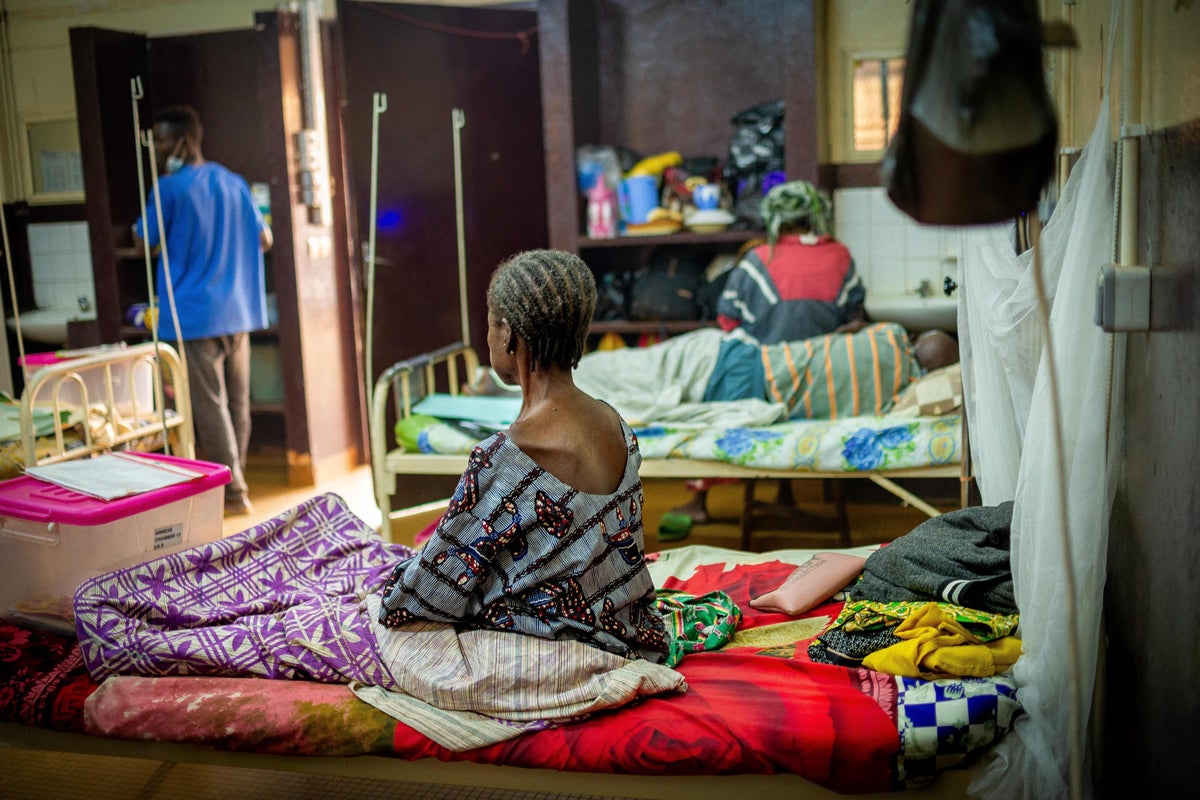
Ten days later, Elena is in an Intensive Care Unit. Her family watches through a glass partition as a ventilator does the work her lungs no longer can. The doctors talk about "pulmonary syndrome" and "case fatality rates" that hover near 38 percent. These numbers are sterile. They do not capture the silence of a house where a mother is missing, or the terror of a husband who realizes he used the same rag the day before.
This is the reality behind the WHO’s data points. Every "case" is a rupture in a family. Every "outbreak" is a reminder that our safety is a fragile agreement with the environment we inhabit.
The Strategy of Dampness and Distance
The tragedy of hantavirus is that it is largely preventable through the most mundane of actions. But humans are creatures of habit and speed. We want to clean the shed quickly. We want to get the job done.
The virus thrives in the dry and the dusty. Its weakness is moisture. Public health experts aren't just calling for more vaccines—though research is ongoing—they are calling for a change in how we interact with the "wild" parts of our own homes.
- Never sweep or vacuum rodent-infested areas while they are dry.
- Use a mixture of bleach and water to soak nests and droppings for ten minutes before touching them.
- Wear rubber gloves and, if possible, a respirator.
- Seal the cracks.
It sounds simple. Too simple to be the front line against a virus with a death rate that rivals some strains of Ebola. Yet, the barrier between a healthy summer and a respiratory collapse is often nothing more than a spray bottle and a bit of patience.
The Shifting Frontier
The rise in cases is a symptom of a larger friction. We are living in an era of "spillover." As we alter the landscapes of the planet, the residents of those landscapes—the bats, the birds, the rodents—are forced into closer proximity with us. The WHO chief isn't just warning us about a specific microbe; he is warning us about the consequences of our encroaching footprint.
We have spent decades looking at the horizon for the next great pandemic, imagining it arriving on a jet engine. We forgot to look under the porch.
The danger isn't just in the far-off jungle. It is in the woodpile. It is in the attic. It is in the dust motes dancing in a shaft of sunlight in a room that hasn't been opened in years. We are being asked to pay attention to the small things. To the tracks in the flour. To the rustle in the insulation.
The invisible stakes are found in the air we take for granted. We must learn to respect the breath of the hidden meadow, or we will find ourselves gasping for it.
The sun sets over the desert, casting long, purple shadows across the scrubland. Somewhere, a deer mouse scurries into a dark corner, carrying a genetic code that hasn't changed in an eternity. It is not an enemy. It is simply a neighbor we have failed to understand. The next time you reach for that old box in the garage, remember the ranch hand. Remember Elena. Stop. Wet the dust.
The air should belong to you, not the virus.