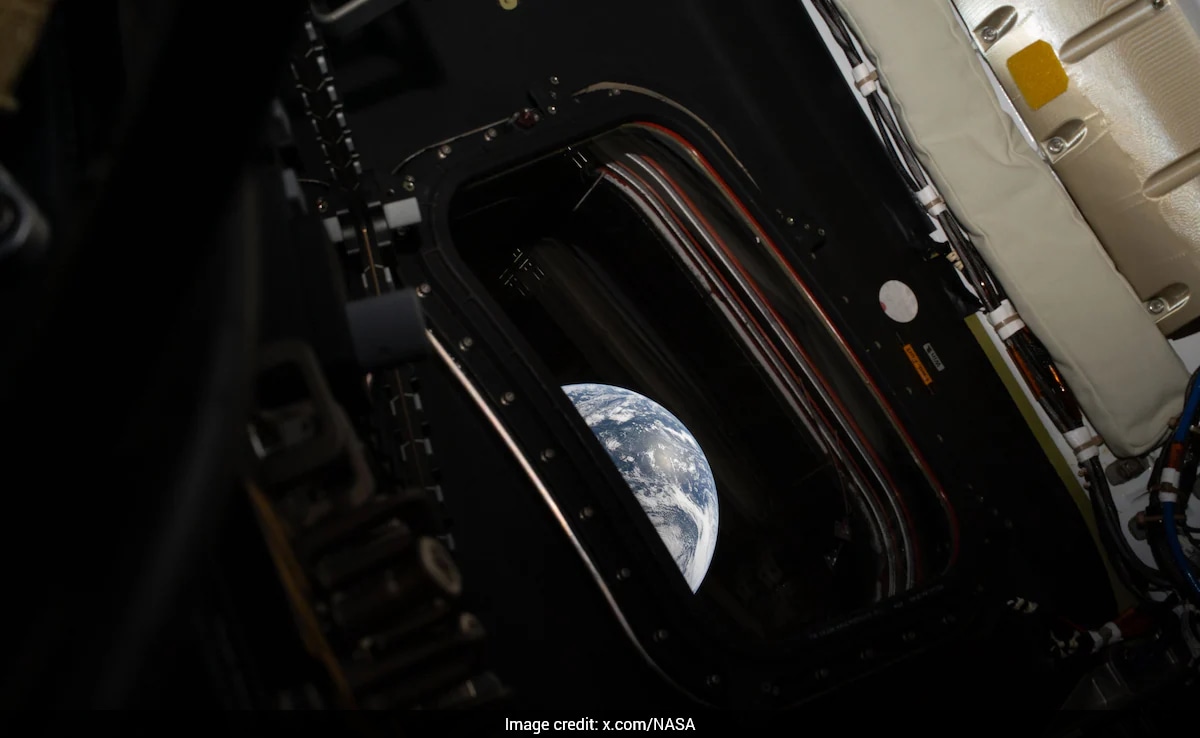
The Orion spacecraft is not just a vehicle. It is a four-person life support system wrapped in a titanium cage, designed to withstand temperatures that would vaporize steel and radiation levels that can scramble human DNA. While marketing departments at NASA and Lockheed Martin lean heavily into the "Living Spacecraft" narrative, the reality of Artemis II is far more gritty. This mission represents the first time humans will leave low-Earth orbit since 1972, and the margin for error is effectively zero.
The upcoming flight is a high-stakes stress test of the Orion Multi-Purpose Crew Vehicle (MPCV). Unlike the Apollo Command Module, which was a cramped, analog cone, Orion is a digital fortress. It carries more than 30 miles of wiring and a flight computer system that handles millions of lines of code. But underneath the glass cockpit and the sophisticated software lies a fundamental challenge of physics that has plagued aerospace engineers for sixty years: how to keep four human beings alive in a vacuum while moving at $25,000$ mph.
The Heat Shield Problem
The most critical component of the Orion spacecraft is the thermal protection system (TPS). During the return from the Moon, Orion will hit the Earth's atmosphere at speeds significantly higher than a return from the International Space Station. The friction generates a plasma field reaching $5,000$°F.
Investigative scrutiny of the uncrewed Artemis I mission revealed an unexpected issue with the Avcoat heat shield. Instead of wearing down evenly, the material charred and sloughed off in chunks. NASA engineers have spent the last two years analyzing why this "char loss" occurred and whether it poses a catastrophic risk to the Artemis II crew. The agency insists the capsule remained safe, but the incident highlights the unpredictable nature of reentry dynamics. Every gram of heat shield material is a calculation between safety and weight. If the shield is too thin, the crew burns. If it is too thick, the rocket cannot reach the Moon.
Life Support in a Radiation Storm
Orion's interior is roughly the size of a small minivan. Inside this space, four astronauts—Reid Wiseman, Victor Glover, Christina Koch, and Jeremy Hansen—must live, sleep, and work for ten days. The "living" part of this spacecraft is a complex dance of chemistry.
The Environmental Control and Life Support System (ECLSS) has to scrub carbon dioxide, manage humidity, and provide oxygen. On the ISS, these systems are bulky and can be repaired with parts sent from Earth. On Orion, the system must be miniaturized and flawlessly reliable. There is no "abort to Earth" option that happens in minutes once the spacecraft transitions into a High Earth Orbit.
Then there is the radiation. Once Orion leaves the protection of Earth's Van Allen belts, the crew is exposed to solar energetic particles and galactic cosmic rays. To combat this, the spacecraft utilizes a "shelter-in-place" protocol. In the event of a solar flare, the astronauts will huddle in the center of the capsule, using the surrounding mass of water, food, and equipment as a makeshift shield. It is a low-tech solution to a high-tech problem, proving that in deep space, density is the only true defense.
The European Connection
A major overlooked factor in the Orion narrative is that the "back half" of the ship isn't American. The European Service Module (ESM), provided by ESA and built by Airbus, is the spacecraft's powerhouse. It provides the propulsion, power, and thermal control.
This international dependency is a double-edged sword. While it secures global political backing for the Artemis program, it creates a logistical nightmare. Components are shipped across oceans, and engineering standards must be reconciled between metric and imperial systems. The ESM houses the four solar wings that provide electricity, but more importantly, it holds the main engine—a refurbished Orbital Maneuvering System engine from the Space Shuttle era. Using flight-proven hardware from the 1980s on a 2020s spacecraft is a pragmatic move, but it also underscores the stagnant pace of heavy-lift propulsion development.
Software as the Ultimate Failure Point
We often focus on the physical structure, but the digital architecture of Orion is where the most silent risks reside. The flight software is responsible for the "optical navigation" system. This tech uses cameras to look at the Moon and stars, autonomously determining the spacecraft's position in space if communication with Deep Space Network (DSN) ground stations is lost.
In a crisis, the astronauts have to trust that the sensors aren't being blinded by sun glint or misinterpreted by a line of code written five years ago. The transition from the semi-manual controls of the Apollo era to the highly automated systems of Orion means the crew are less pilots and more systems managers. They are there to intervene when the automation fails, but the complexity of those systems makes human intervention increasingly difficult.
The Weight of the SLS
You cannot discuss Orion without the Space Launch System (SLS). The rocket is the only vehicle currently capable of sending Orion to the Moon in a single launch. However, the SLS is a "single-stick" architecture with a massive price tag—roughly $2 billion per launch.
This cost creates an immense pressure to succeed. A failure of Artemis II wouldn't just be a tragedy for the four families involved; it would likely result in the immediate cancellation of the entire lunar program. This "too big to fail" status creates a dangerous environment where schedules and budgets can sometimes overshadow technical dissent. The investigative history of NASA, from Challenger to Columbia, shows that the most dangerous phase of a mission is when the hardware is treated as operational before it has been fully proven.
Logistics of the Lunar Flyby
Artemis II will not land on the Moon. It is a "hybrid free-return trajectory." The spacecraft will use Earth's gravity to slingshot toward the Moon, loop around the far side, and let lunar gravity pull it back toward Earth.
This trajectory is a safety measure. If the service module engine fails after the initial burn, the laws of gravity will eventually bring the crew home. But "eventually" is a long time in a small tin can. The crew will be farther from Earth than any human in history, staring at the lunar surface from just a few thousand miles away, unable to touch it. It is a psychological test as much as a technical one.
The Interior Reality
Spacecraft interiors are often photographed with wide-angle lenses that make them look spacious. Orion is anything but. Once you factor in the four seats, the storage lockers, and the exercise equipment required to prevent muscle atrophy, the "habitable volume" shrinks rapidly.
The waste management system—the toilet—is a new design specifically for Orion. It is a crucial piece of engineering that, if it fails, turns the "living space" into a biohazard nightmare within forty-eight hours. These are the mundane realities that the glossy brochures ignore. Spaceflight is a dirty, cramped, and physically demanding ordeal disguised as a triumphant feat of engineering.
Redundancy vs Complexity
The core philosophy of Orion is redundancy. Every critical system has a backup, and often a backup for the backup. But there is a point where redundancy introduces its own risk. More parts mean more points of failure. More sensors mean more "false positives" that can trigger an unnecessary abort.
Engineers are currently grappling with the "Integrated Power System" which manages the flow from the solar arrays to the batteries. During testing, small electrical "signatures" were found that didn't match the expected models. In the old days, you might fly anyway. In the post-shuttle era, every anomaly requires a months-long deep dive. This is the friction between the speed of the New Space race (led by SpaceX) and the methodical, risk-averse culture of traditional aerospace.
The Mission Beyond the Moon
Artemis II is the bridge. If Orion performs, it validates the deep-space architecture for the rest of the century. It proves that we can build a pressurized environment capable of sustaining life in the most hostile "landscape" known to man. But if the heat shield chips or the software glitches, the Moon remains a graveyard for old dreams.
The four astronauts boarding that capsule aren't just passengers on a spacecraft; they are the test subjects for a new era of human expansion. They are gambling their lives on the hope that thousands of contractors and sub-contractors all did their jobs with perfect precision. There is no room for "good enough" when you are traveling at several miles per second through a vacuum.
The Orion spacecraft is the most capable machine ever built for human exploration, but it is also a reminder of our fragility. We are sending biological organisms into a world of radiation and cold, protected only by a few inches of alloy and the brilliance of human mathematics. The success of Artemis II will not be measured by the photos they take, but by the integrity of the heat shield when it hits the atmosphere at $11$ kilometers per second.
The physics do not care about the mission's name or the flags on the side of the rocket.


