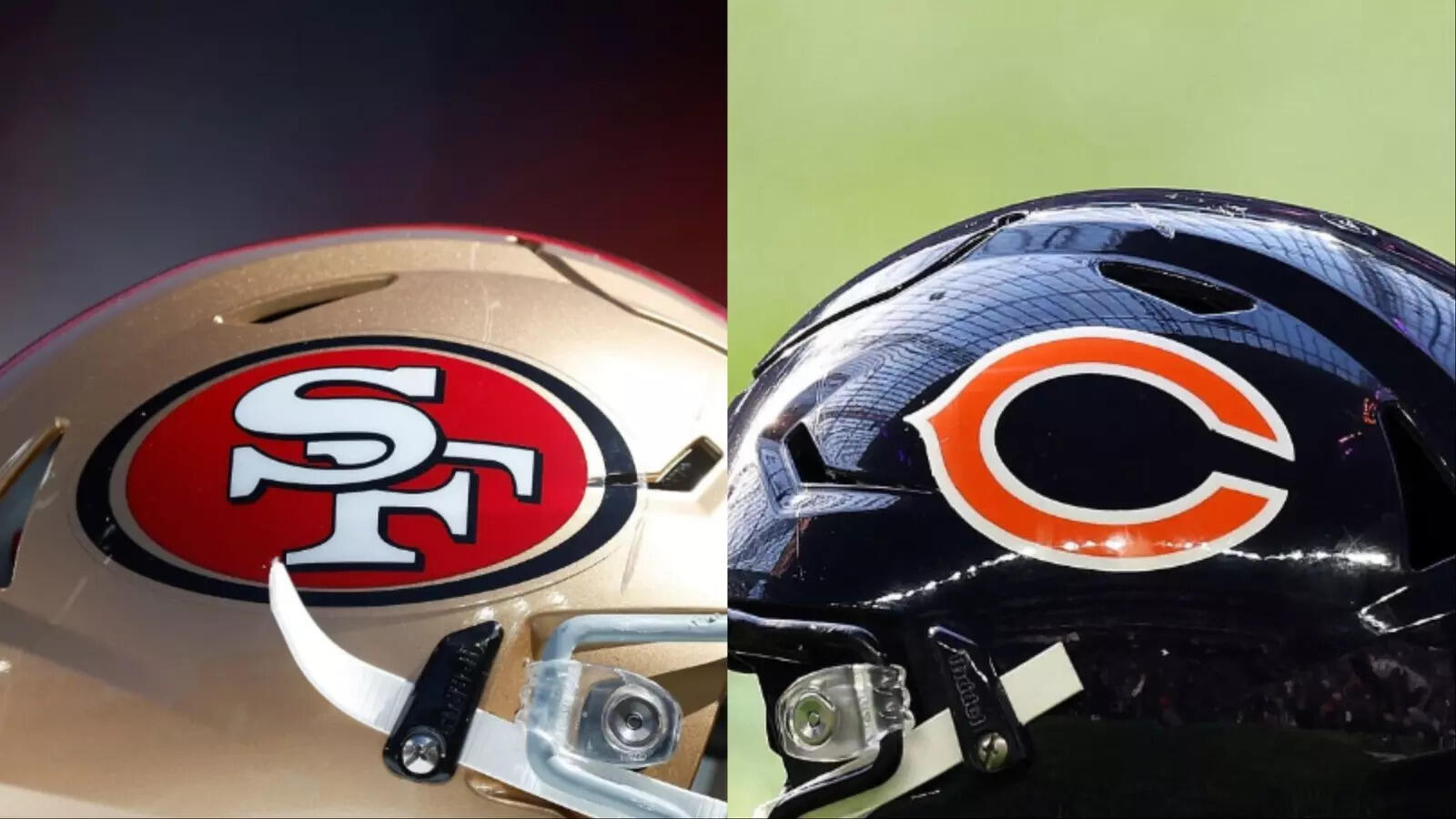
The San Francisco 49ers are currently operating in a state of high-stakes desperation that the public box scores don’t fully capture. With George Kittle rehabbing a season-ending Achilles tear suffered in the 2025 Wild Card Round, the offensive identity that turned Brock Purdy into a $265 million franchise cornerstone is at risk of fracturing. The solution currently circulating through the league’s back channels involves a potential trade for Chicago Bears tight end Cole Kmet, a veteran with over $39 million in career earnings who has suddenly found himself expendable in the Windy City. This is not just a depth chart adjustment. It is a calculated move to prevent the 49ers’ championship window from slamming shut before Kittle can return in late 2026.
The Kittle Vacuum
George Kittle is more than a pass-catcher; he is the structural integrity of Kyle Shanahan’s run game. When Kittle left the field in January 2026, the 49ers didn't just lose a target; they lost their most effective edge blocker. While backup Jake Tonges showed flashes of competence in relief, the drop-off in rushing efficiency was measurable and immediate. Without a tight end who can consistently win at the point of attack, the 49ers’ zone-blocking scheme loses its teeth.
Kittle’s recovery timeline is the ghost haunting the Santa Clara facility. While he recently told listeners on the Bussin’ with the Boys podcast that he expects to be off crutches by April, the reality of a 32-year-old tight end returning from an Achilles rupture is grim. Most medical projections place a realistic return to form in the 9-to-12-month range. This means the 49ers are looking at a minimum of eight to ten games where Brock Purdy will be protected by a rotating cast of unproven commodities like Luke Farrell and Brayden Willis.
Why the Bears are Calling
In Chicago, the math has simply stopped working for Cole Kmet. General Manager Ryan Poles finds himself in a self-inflicted cap squeeze, with the Bears reportedly sitting on a meager $1 million in available space. This financial gridlock comes on the heels of a massive defensive spending spree that brought in names like Neville Gallimore and Devin Bush.
More importantly, Kmet has been overtaken on his own depth chart. The 2025 arrival of rookie Colston Loveland changed the math in Ben Johnson’s offense. Loveland exploded for 713 receiving yards last season, effectively relegated Kmet to a $11.6 million blocking specialist. For a team that needs to sign its upcoming draft class, paying eight figures for a TE2 is a luxury they cannot afford.
A trade after June 1 would allow Chicago to offload Kmet’s base salary and save approximately $9 million in cap space. For the 49ers, Kmet represents a "plug-and-play" starter who understands the complexities of a heavy-personnel offense. He is a 260-pound anchor who can handle the dirty work in the trenches while providing Purdy with a massive, reliable target on third downs.
The Purdy Factor
The 49ers’ urgency is tied directly to the $265 million extension Brock Purdy signed in May 2025. When you pay a quarterback that kind of capital, the "developing talent" excuse evaporates. The front office has already made aggressive moves, including a significant contract restructure for Nick Bosa, to keep the current roster intact. They are essentially betting the 2027 and 2028 seasons on the success of 2026.
If the 49ers enter the season with a hole at tight end, they aren't just hurting the run game—they are exposing Purdy. Kmet’s career 2,939 receiving yards and 21 touchdowns prove he can be a primary option, but his value to San Francisco would be as a stabilizer. He allows the offense to maintain its 12-personnel (two tight ends) packages, which are essential for keeping defenses from stacking the box against Christian McCaffrey.
The Trade Price
Rumors suggest a fourth-round pick (No. 133 overall) could be the asking price. In a vacuum, giving up a mid-round asset for a player with a high cap hit seems steep. However, the 49ers are not in a vacuum. They are in a race against time.
The alternative is the 2026 NFL Draft, where the tight end class is top-heavy and lacks the immediate physicality required for Shanahan’s system. Rookies at this position historically take two to three years to master NFL blocking assignments. San Francisco does not have two to three years. They have the next five months to ensure that when the ball is snapped in Week 1, the offense doesn't look like a shell of itself.
Critics will point to Kmet’s declining numbers in 2025—just 347 yards and two scores—as a sign of regression. But a closer look at the Bears' film reveals a player who was often kept in to pass protect for a struggling Caleb Williams or used as a decoy for Loveland. In a disciplined, timing-based system like San Francisco's, those same traits become assets rather than liabilities.
The 49ers must decide if they are willing to absorb Kmet's contract to buy themselves "Kittle insurance." If they hesitate, they risk a repeat of the 2025 late-season slide where the absence of key veterans turned a juggernaut into a pedestrian unit. In the NFL, you don't win championships with "what if" scenarios. You win them with 260-pound tight ends who can seal the edge on a rainy Sunday in December.
Would you like me to analyze the specific salary cap implications for the 49ers if they were to acquire Kmet's contract before or after the June 1 deadline?