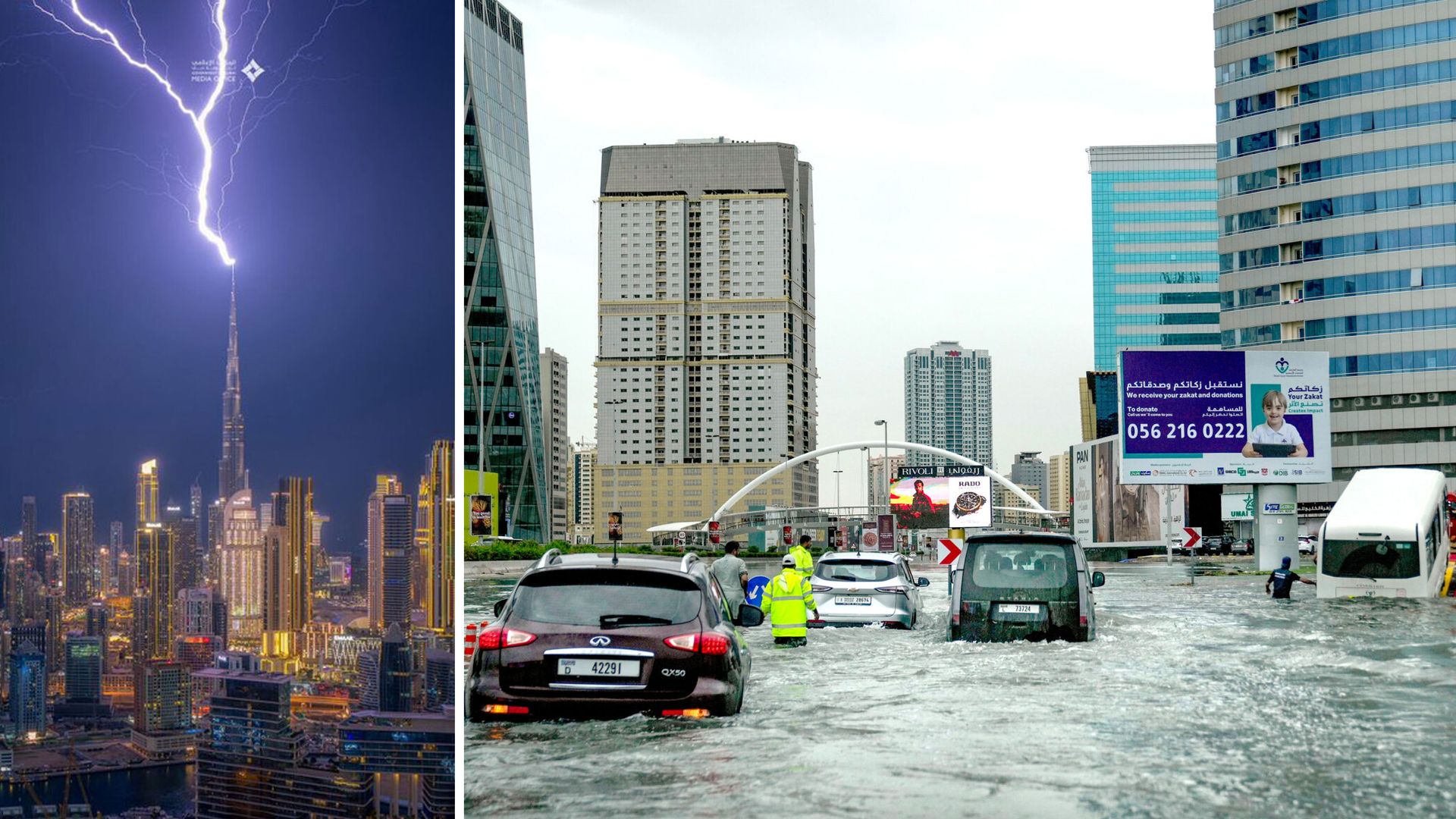
The sight of the Burj Khalifa absorbing a massive lightning strike is a masterclass in architectural theater, but it masks a grittier reality unfolding on the ground. When historic rainfall paralyzed Dubai this week, it wasn't just a freak act of nature. It was a collision between aggressive urban expansion and the hard limits of desert infrastructure. While the world watched social media clips of supercars submerged in luxury districts, the real story lay beneath the pavement in a drainage system never designed for the weight of a changing climate.
Dubai is built on a foundation of rapid-fire ambition. For decades, the city has prioritized vertical growth and surface-level opulence, often outpacing the mundane, invisible utilities that keep a metropolis breathing during a crisis. The flooding we witnessed isn't a fluke. It is the inevitable result of a city that has spent billions on the sky while underestimating the power of the clouds.
The Physics of a Lightning Rod
The Burj Khalifa is designed to be hit. Standing at 828 meters, it acts as a massive lightning rod for the entire downtown corridor. The building utilizes a sophisticated earthing system that intercepts the electrical discharge and directs it safely into the ground, preventing the structural damage or fires that would otherwise gut a smaller, less prepared building.
When you see that jagged purple bolt connect with the spire, you are watching a multi-million dollar safety mechanism working exactly as intended. Sensors across the tower’s skin detect the atmospheric charge buildup, and the structural steel carries the current away from the sensitive electronics and human inhabitants inside. But while the tower remains a fortress against the elements, the streets at its base have become a liability.
The Drainage Deficit
Dubai’s drainage infrastructure is built on the statistical probability of "dryness." In a city where it rarely rains, the cost-benefit analysis of installing massive, high-capacity storm sewers usually skews toward "minimal." Most of the city's runoff is handled by gravity-fed systems and pumping stations that are perfectly adequate for a light drizzle but are instantly overwhelmed by the volume of water seen in recent storms.
The problem is compounded by "hardscaping." In a traditional desert environment, the sand acts as a sponge. However, Dubai is now a sprawl of asphalt, concrete, and non-porous tiles. When rain hits these surfaces, it has nowhere to go but the low points of the road network. Without a comprehensive subterranean network to whisk that water to the sea, the city’s highways essentially become canals.
The Cloud Seeding Controversy
There is a persistent narrative that the intensity of these storms is a direct byproduct of the UAE’s aggressive cloud seeding programs. The National Center of Meteorology (NCM) frequently uses salt flares to encourage precipitation in an effort to bolster the country’s meager water security.
However, blaming cloud seeding for a catastrophic flood is a misunderstanding of the scale. Cloud seeding can enhance a storm that is already forming; it cannot create a massive low-pressure system out of thin air. The recent deluges were the result of a large-scale convective system moving across the Arabian Peninsula. To suggest that a few salt planes caused the flooding is like blaming a bucket of water for a dam breach. The real culprit is the sheer volume of a natural weather event hitting a city that isn't built to absorb it.
The Economic Toll of Standing Water
For a global logistics and tourism hub, standing water is a financial toxin. Dubai International Airport (DXB), one of the busiest transit points on the planet, saw its operations grind to a halt as taxiways turned into lakes. The ripple effect on global supply chains and travel schedules is measured in the hundreds of millions of dollars.
When a city markets itself as a seamless, high-tech utopia, a flooded runway is more than an inconvenience. It is a brand crisis. The cost of retrofitting an entire city with high-capacity storm drainage now far exceeds what it would have cost to build it into the master plan thirty years ago.
The Architectural Counter-Argument
Architects in the region argue that you cannot build a city for a "once-in-a-century" event without making it unlivable or bankrupt. They point to the fact that London or Seattle would be equally paralyzed by a massive sandstorm. This is a fair point, but it ignores the trend line. These "rare" events are happening with increasing frequency.
The desert is becoming less predictable. As the Gulf waters warm, the energy available for these storms increases. The moisture content in the atmosphere rises. The old data sets used by civil engineers in the 1990s are now effectively obsolete.
The Failure of Low-Lying Districts
While the Burj Khalifa and the high-rise clusters of Dubai Marina are relatively safe from the water itself, the older districts and the newly developed inland communities bear the brunt. In areas like Al Quoz or parts of Sharjah, the water can sit for days. This leads to:
- Structural degradation of foundations not treated for prolonged moisture.
- Total loss of luxury vehicles, which often lack the ground clearance to navigate even shallow flooding.
- Electrical grid instability as ground-level transformers are compromised.
The city's response has traditionally been a fleet of "tanker trucks" that manually suck water out of the streets. It is a labor-intensive, reactive strategy that belongs to a smaller town, not a global megacity.
The Engineering Evolution
To fix this, Dubai is looking toward "Deep Tunnel" projects. The Dubai Municipality has already begun work on massive tunnels—some ten meters in diameter—buried deep underground to carry stormwater directly to the sea. These are the same types of systems used in Tokyo or Chicago.
The challenge is the sheer scale of the existing city. Tunnelling under active skyscrapers and a sensitive metro system is an engineering nightmare. It is a race against time and the shifting climate.
The Human Factor in the Storm
Beyond the steel and glass, there is the human reality of a city caught off guard. Delivery drivers on motorbikes, who form the backbone of the city’s service economy, found themselves stranded. Residents in ground-floor apartments saw their possessions destroyed. The "frictionless" life that Dubai promises suddenly became very heavy and very wet.
This is the hidden cost of rapid urbanization in extreme environments. When we build in the desert, we are in a constant state of negotiation with the climate. For a long time, Dubai felt like it had won that negotiation through sheer force of will and capital. But nature has a way of reminding us that it still holds the deed to the land.
The lightning hitting the Burj Khalifa is a distraction. It is a beautiful, terrifying light show that proves our ability to build high. But the water in the lobby is the proof that we still haven't figured out how to build wide. The city must now decide if it will continue to spend its billions on the next record-breaking tower or if it will finally invest in the silent, invisible pipes that prevent its collapse during a rainstorm.
Investigate the depth of your own home's flood insurance or the drainage capacity of your local municipality before the next "once-in-a-century" storm arrives at your door.