France and the United Kingdom are spearheading a multinational maritime coalition to secure the Strait of Hormuz, moving to shield global energy supplies from escalating regional volatility. While the official rhetoric frames this as a routine "freedom of navigation" exercise, the reality is a desperate attempt by European powers to decouple their economic survival from Washington’s increasingly unpredictable Middle East policy. By deploying warships to the world’s most sensitive chokepoint, Paris and London are not just chasing pirates or deterring asymmetric threats—they are signaling that the era of relying solely on the American security umbrella is effectively over.
The Strait of Hormuz remains the jugular vein of the global economy. Roughly a fifth of the world’s total oil consumption passes through this narrow stretch of water, which separates Iran from Oman and the United Arab Emirates. Any sustained disruption here doesn’t just raise prices at the pump; it threatens to collapse industrial supply chains and trigger inflationary spirals that European central banks are currently ill-equipped to handle. Discover more on a similar subject: this related article.
The Mirage of Strategic Autonomy
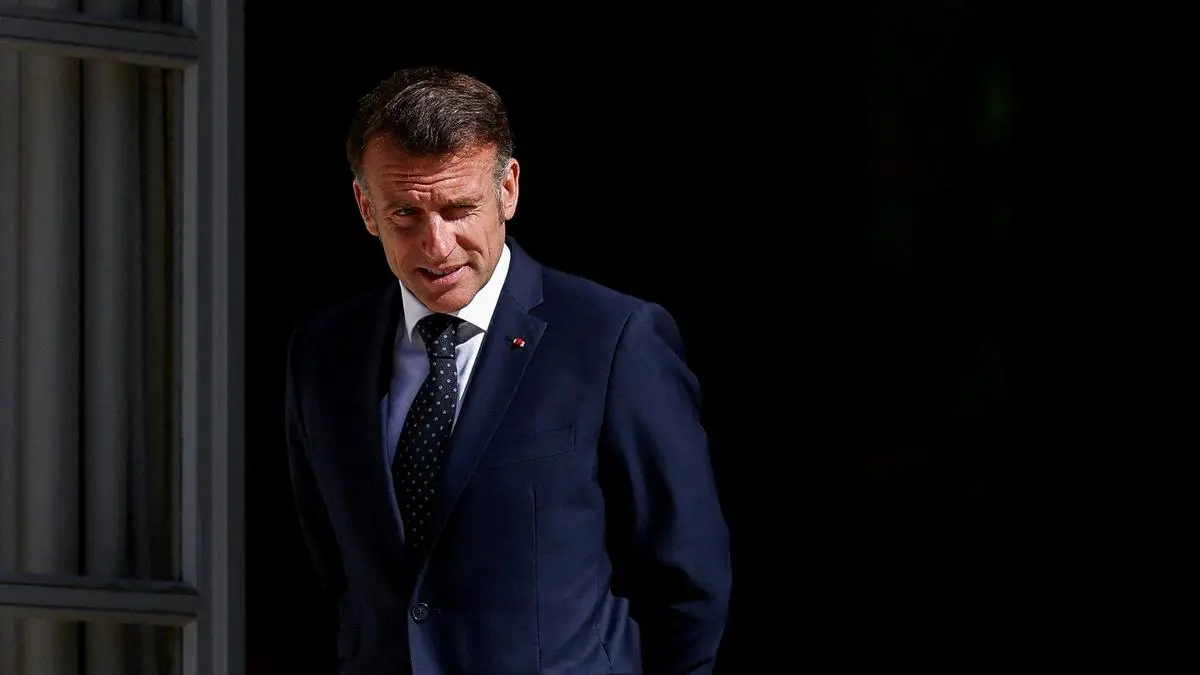
For years, European leaders have talked about "strategic autonomy," a concept that usually dissolves the moment a real crisis hits. This time, the stakes have shifted. Macron and his British counterparts are moving because they have realized that the United States is no longer willing to play the role of the world’s disinterested beat cop. The U.S. is now a net exporter of energy, meaning its domestic survival is no longer inextricably linked to the smooth flow of crude through Hormuz. Europe enjoys no such luxury.
This mission is a gamble. By establishing a separate naval presence, France and the UK are trying to walk a razor-thin line: they must protect commercial shipping without getting sucked into a full-scale shooting war with Iran. The technical challenge is immense. Securing a waterway that is only 21 miles wide at its narrowest point requires more than just heavy steel. It requires a sophisticated dance of electronic warfare, real-time intelligence sharing, and, most importantly, a diplomatic channel to Tehran that remains open even when the cannons are loaded. More analysis by Reuters explores related perspectives on the subject.
Why the Private Sector is Panicking
The shipping industry doesn't care about geopolitics; it cares about insurance premiums. When a tanker is seized or struck by a drone, the "War Risk" surcharges skyrocket. For many Greek and Asian shipowners, the Strait has become a calculated risk that is starting to yield diminishing returns.
Lloyd’s of London and other major insurers have been watching the naval buildup with a mix of relief and skepticism. A multinational mission provides a psychological floor for the market, but it also paints a target on the vessels involved. If a French frigate or a British destroyer is forced to engage, the insurance markets will react as if the entire Gulf is on fire. The goal of this mission is not to win a war, but to maintain the illusion of total control so that the actuarial tables remain favorable.
The Technical Reality of Asymmetric Threats
Traditional naval doctrine is built around carrier strike groups and blue-water engagements. The Strait of Hormuz is the opposite of that. It is a "brown-water" environment where a billion-dollar stealth ship can be harassed, or even disabled, by a swarm of fast-attack boats or low-cost loitering munitions.
- Swarm Tactics: Small, agile craft can overwhelm a larger ship’s defensive systems by attacking from multiple vectors simultaneously.
- Limpet Mines: Sophisticated underwater sabotage remains a quiet, deniable way to cripple a vessel without firing a shot.
- Electronic Interference: GPS jamming in the region has become so common that navigators are being forced to return to manual charting methods to avoid straying into territorial waters.
The French and British navies are deploying specialized mine-hunting vessels and advanced electronic warfare suites specifically designed to counter these "gray zone" tactics. However, hardware is only half the battle. The real difficulty lies in the Rules of Engagement (ROE). At what point does a trailing speedboat become a legitimate target? If a European commander fires too early, they spark a diplomatic nightmare. If they fire too late, they lose a ship.
Washington’s Shadow and the Diplomatic Rift
There is a quiet tension simmering beneath the surface of this announcement. The United States has its own maritime construct in the region, yet France and the UK are conspicuously emphasizing the "multinational" and "independent" nature of their mission. This is a deliberate snub to the "Maximum Pressure" style of diplomacy.
European diplomats believe that by distancing themselves from the American command structure, they can convince Iran that this mission is purely defensive and not a precursor to an invasion. It is a fragile logic. From Tehran's perspective, a western warship is a western warship, regardless of which flag it flies or which capital issues the orders. The Iranians view the Strait as their own backyard and perceive any foreign naval presence as a direct violation of their sovereignty.
The Cost of Cold Steel
Maintaining a permanent naval presence in the Middle East is an expensive endeavor for nations already struggling with domestic budget deficits. A single Type 45 destroyer costs tens of thousands of dollars per hour to operate. This doesn't include the massive logistical tail required to keep these ships fueled, armed, and manned in a high-readiness state.
The UK, in particular, is stretching its Royal Navy to the breaking point. With commitments in the North Atlantic and the Indo-Pacific, the "Global Britain" strategy is hitting a wall of fiscal reality. Critics argue that this mission is a vanity project that the UK cannot afford, while proponents argue that the cost of an oil shock would be infinitely higher.
The Fragility of the Coalition
Macron’s "multinational" mission currently lacks a long list of committed partners. While several smaller European nations have expressed "interest," the heavy lifting remains on the shoulders of the two former colonial powers. Germany, hamstrung by its own constitutional restrictions and a deep-seated aversion to military adventurism, remains the great "maybe" of the operation. Without Berlin’s financial and political backing, the mission risks looking less like a European consensus and more like a Franco-British expeditionary force.
There is also the question of the regional players. Saudi Arabia and the UAE have their own sophisticated navies, but they are often hesitant to be seen as junior partners to Western powers in a mission that targets a neighbor. The success of this operation depends on quiet coordination with regional coast guards, most of whom are playing a double game of their own.
A New Era of High-Stakes Escorts
The immediate future of the Strait will be defined by "escort diplomacy." We are entering a period where commercial tankers will move in guarded convoys, a scene reminiscent of the "Tanker War" of the 1980s. This isn't just about protection; it's about visibility. By physically placing their hulls between Iranian shore batteries and global oil, France and the UK are betting that no one is crazy enough to pull the trigger.
But deterrence is a psychological game, and psychology is notoriously fickle. If the mission fails to stop a seizure or a strike, the European naval presence will be exposed as a paper tiger. The credibility of the entire European security project is now floating in the Persian Gulf.
The Intelligence Gap
One of the most overlooked aspects of this mission is the reliance on "Over-the-Horizon" intelligence. To effectively patrol the Strait, you need to know what is happening deep inside the Iranian coastline. This requires satellite surveillance, signals intelligence, and human assets on the ground. Traditionally, the Europeans have relied on the NSA and the CIA for this level of granularity. Building an independent European intelligence feed that can rival the American apparatus in real-time is a task that will take years, not months.
In the meantime, the commanders on the ground will be operating in a partial fog. They will be forced to make split-second decisions based on incomplete data, knowing that a single mistake could set the global economy back a decade.
Survival of the Most Adaptable
The maritime industry is already adapting to this new reality. Some companies are considering "flag hopping"—registering their ships in nations that have better relations with regional powers. Others are investing in their own private security details, though a team of former commandos with rifles is little help against an anti-ship missile.
The France-UK mission is essentially a stop-gap measure for a world that has no clear leader. It is an acknowledgment that the old rules of maritime trade are dead. The Strait of Hormuz is no longer a public highway; it is a contested corridor where passage is a privilege granted to those with enough firepower to demand it.
Success won't be measured by ribbons or medals. It will be measured by the lack of news—by the silent, boring, and uninterrupted flow of tankers from the Gulf to the refineries of the world. Any deviation from that silence is a sign that the mission has failed. The captains of these warships know that their best-case scenario is to spend months in the blistering heat doing absolutely nothing, because in this part of the world, "nothing" is the most expensive and elusive commodity there is.
Shipowners must now decide if they trust the European promise enough to keep their vessels in these waters. For many, there is no choice. The global economy is a machine that requires oil to function, and as long as that oil is under the mountains of Iran, the warships will have to stay. The mission in the Strait of Hormuz is not a temporary deployment; it is the beginning of a permanent and dangerous new chapter in the struggle for global energy security.
The crews on these ships are currently training for every possible contingency, from a biological attack to a massive oil spill. They are the frontline of a conflict that hasn't officially started, protecting a status quo that is rapidly crumbling. If you want to know where the next global crisis will begin, stop looking at the stock tickers and start looking at the radar screens in the Gulf of Oman.