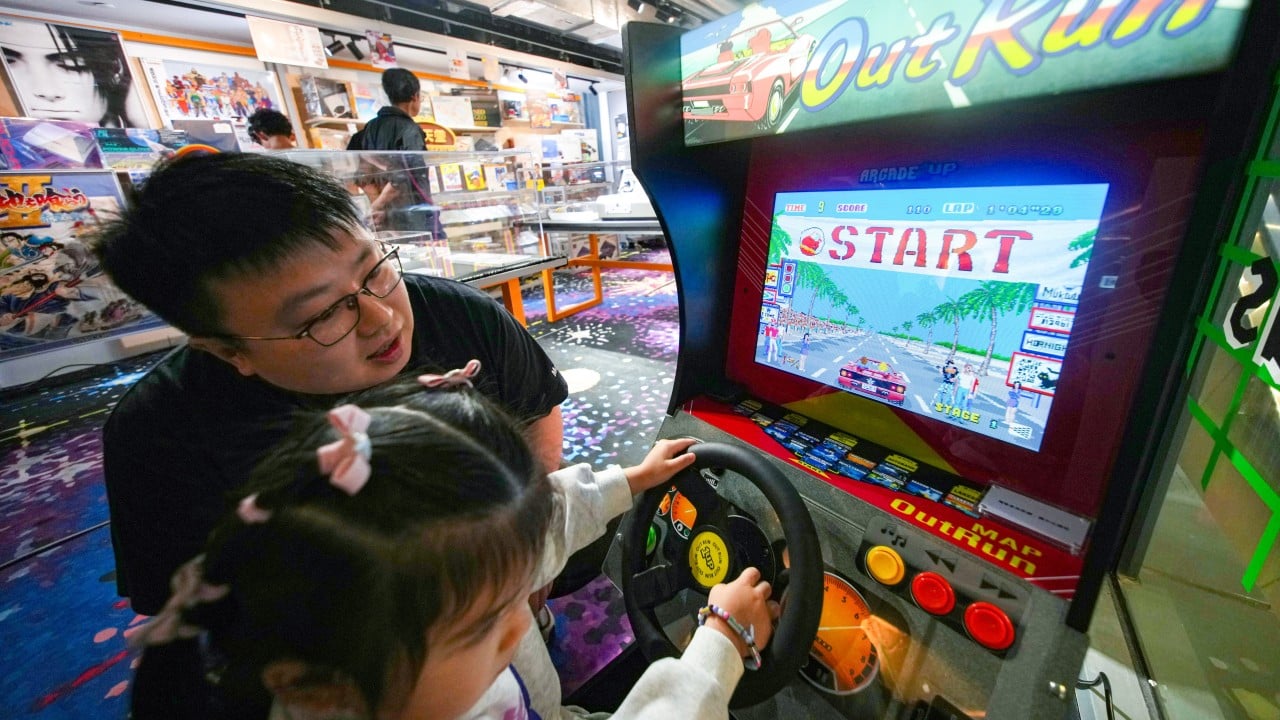
The notion that sitting on a couch with a controller can bridge the generational divide is a seductive marketing pitch, but the reality on the ground is far messier. For years, the gaming industry and lifestyle blogs have pushed the narrative that shared screen time is a shortcut to bonding. It isn't. When parents and children play video games together, they aren't just engaging in a hobby; they are entering a high-stakes psychological arena where power dynamics, frustration thresholds, and digital literacy gaps collide. Success in this space requires more than just "showing up" to play. It demands a total reassessment of how parents view play as a form of labor.
The Myth of the Level Playing Field
The most common mistake parents make is assuming that games are a neutral territory. They aren't. In the vast majority of cases, the child is the native inhabitant of these digital environments, and the parent is an immigrant struggling with the language. This creates an immediate role reversal.
For a child, seeing a parent struggle with basic movement in a 3D space can be hilarious, but it can also be deeply frustrating. If the goal is a shared experience, the skill gap often acts as a barrier rather than a bridge. When a parent enters a game like Fortnite or Minecraft, they are effectively entering their child’s office. The child knows the rules, the shortcuts, and the social etiquette. The parent is the intern.
This reversal can be healthy, but only if the parent is willing to be coached. Many adults bring their "parental authority" into the game, trying to dictate strategy or complain about the game’s mechanics. This kills the connection instantly. To actually "level up" a relationship, the parent must be willing to fail publicly and repeatedly. They must accept being the weakest link in the squad.
The Dopamine Trap and Emotional Regulation
We need to talk about what happens when the console turns off. The biggest friction point in modern parenting isn't the gaming itself; it's the transition away from it.
When you play with your child, you are participating in a high-octane dopamine loop. Modern games are engineered by behavioral psychologists to keep players engaged through variable reward schedules. For a developing brain, the "come down" from this stimulation is physically painful. If a parent plays for two hours and then abruptly says, "Okay, time for dinner, turn it off," they are essentially pulling their child out of a flow state while their brain is still flooded with neurochemicals.
The "bonding" that occurred during the game is often wiped out by the conflict that occurs at the exit point.
Savvy parents treat the end of a gaming session like a plane landing. You don't just drop out of the sky; you begin a gradual descent. This means discussing the game as you wind down—asking what the plan is for the next session or reviewing a particularly difficult boss fight. By staying in the "game world" verbally while physically transitioning away from the screen, you preserve the bond and mitigate the dopamine crash.
Why Competitive Games Are Dangerous for Newcomers
There is a trend of parents jumping into the deep end with competitive shooters or battle royales. This is a tactical error.
In a competitive environment, the stress levels are high. If a child is focused on winning and the parent is the reason they are losing, resentment builds. Imagine a hypothetical scenario where a father joins his teenage son in a ranked match of League of Legends. The father makes a novice mistake, the team loses ranking points, and the son is subjected to vitriol from strangers in the chat. That isn't a bonding moment; it's a social disaster for the teenager.
If the objective is relationship building, the choice of genre is non-negotiable.
The Case for Asymmetrical Cooperation
The most effective games for parent-child bonding are those with asymmetrical roles or pure cooperative goals.
- Asymmetrical Roles: Games where one player has a simpler or different task. This allows the parent to contribute without needing the twitch reflexes of a fourteen-year-old.
- Creative Sandboxes: Building something together in Roblox or Minecraft shifts the focus from "beating the game" to "executing a vision." There is no losing in a sandbox, which removes the primary source of conflict.
- Low-Stakes Chaos: Games like Overcooked or Moving Out are designed around the comedy of failure. When the kitchen catches fire because the parent forgot the soup, it’s a shared joke rather than a competitive failure.
The Hidden Power of the Spectator
Contrary to popular belief, you don't always have to hold a controller to participate. In many ways, being an active, engaged spectator is more beneficial than being a mediocre co-op partner.
The "Backseat Gamer" role is often maligned, but when done with genuine curiosity, it provides a unique window into a child's cognitive process. Why did they choose that upgrade? How did they figure out that puzzle? When a parent treats their child as an expert and asks for an explanation of the game's mechanics, it validates the child’s skills and interests.
This is where the real intelligence gathering happens. You aren't just watching a game; you are observing how your child handles pressure, how they treat their peers online, and how they react to setbacks. This is data you will never get by asking "How was your day?" over a plate of pasta.
The Industry’s Dirty Secret
We must acknowledge that the gaming industry isn't designing these experiences with your family's health in mind. They are designing for retention.
Predatory monetization schemes, such as loot boxes and "battle passes," are designed to create a sense of urgency and FOMO (Fear Of Missing Out). If you are playing with your child, you are going to be confronted with these systems. This is an opportunity for a different kind of "leveling up"—financial and digital literacy.
Rather than banning in-game purchases outright, which often creates a secretive and rebellious dynamic, use the shared playtime to deconstruct the "why" behind the shop. Explain how the game is trying to manipulate their impulses. Turn the game into a laboratory for critical thinking. If you aren't talking about the money being spent in the game, you aren't really playing the game together; you are just being exploited in the same room.
Physical Space and the Silent Communication
The physical layout of the room matters more than the pixels on the screen.
When parents and children sit side-by-side, they are engaging in "parallel play." This is a developmental stage usually associated with toddlers, but it remains incredibly effective for teenagers who find direct eye contact during difficult conversations intimidating.
There is a psychological safety in looking at a screen together rather than looking at each other. Some of the most profound conversations between parents and children happen during the "loading screens" of life. While the next level is buffering, or while traveling across a digital map, the barriers come down. The game provides a "third object" that deflects the intensity of the relationship, allowing for a more honest exchange of ideas.
The Gender Gap in Parental Gaming
We cannot ignore the data suggesting that "gaming together" is still heavily skewed toward fathers and sons. Mothers are frequently left out of the loop, often relegated to the role of the "timekeeper" or the "enforcer" who tells everyone to stop playing.
This creates a toxic dynamic where one parent is the "fun collaborator" and the other is the "digital warden." For gaming to actually improve family life, it cannot be a gendered silo. Mothers who take the time to learn the basics of their children's favorite games often report a massive shift in household power dynamics. It signals that the mother values the child's world enough to spend time learning its rules.
The Exit Strategy
The most important part of gaming with your child is knowing when to stop being a "gamer" and start being a parent again.
There is a risk of becoming too "enmeshed" in the child's digital world. If you are more worried about your Call of Duty K/D ratio than your child's homework, the hierarchy has collapsed in a way that is detrimental to the child's development. You are not their "friend" in the digital space; you are a mentor who happens to be holding a controller.
The goal isn't to become a pro gamer. The goal is to use the game as a vehicle to transport you to a place of mutual respect. If the game is causing more stress than it is relieving, it is failing. If the "bonding" feels forced or if you are constantly checking your phone while your child is trying to show you something in-game, you are doing more damage than good.
Authenticity Over Participation
Children have a built-in "cringe" detector. They know when a parent is feigning interest. If you genuinely hate video games, don't force it. The lack of authenticity will be palpable, and the child will feel like they are a "project" rather than a person you want to spend time with.
Instead, find the intersection of your interests. If you like sports, play FIFA or Madden. If you like puzzles, play Portal 2. If you like stories, sit with them through a narrative-heavy game like The Last of Us.
The magic isn't in the software. It's in the shared attention. In a world where everyone's attention is being fragmented by a thousand different apps and notifications, giving your child two hours of undivided focus—even if that focus is directed at a digital dragon—is the most radical act of parenting you can perform.
Stop looking for a "relationship hack" in the settings menu. Stop worrying about whether you are "good" at the game. The controller is just a piece of plastic. The connection happens in the gaps between the buttons, in the shared frustration of a loss, and in the quiet pride of a hard-won victory. If you can’t handle being the "noob" in your own living room, you’ll never understand the person sitting next to you.