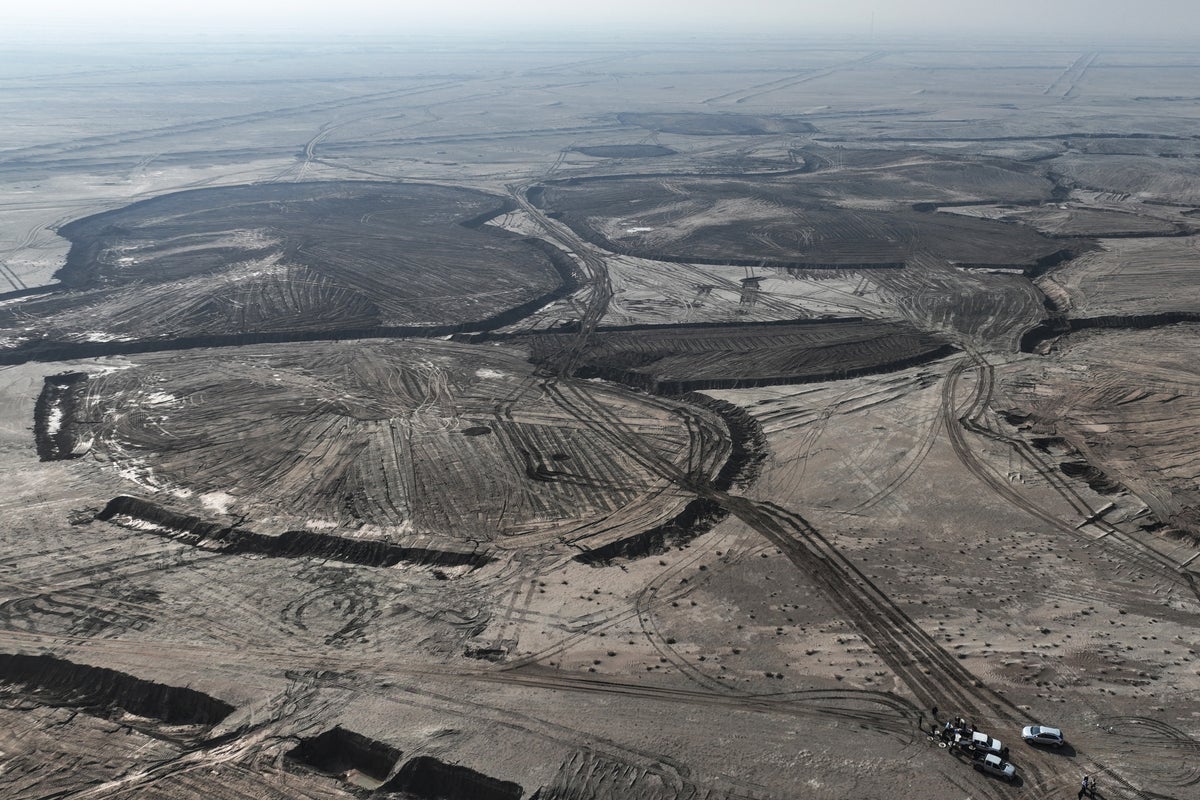
The mathematics of survival just shifted. While global markets fixate on carbon credits and the shifting price of lithium, a far more fundamental collapse is accelerating beneath our feet. The United Nations recently signaled that the world needs an additional £200 billion annually to prevent productive land from becoming permanent wasteland. This is not a simple plea for charity. It is an alarm bell for a looming capital shortfall that threatens the foundational assets of the global food system and the stability of sovereign borders. We are currently losing 100 million hectares of healthy land every year. To stop this slide, the cost of restoration and sustainable management must scale to levels that current private and public funding models are nowhere near meeting.
The Financial Void Behind the Dust
The £200 billion figure sounds astronomical until you look at the sheer scale of the neglect. For decades, industrial agriculture has operated on a model of extraction, treating soil as a medium for chemicals rather than a living biological engine. This has led to a situation where roughly 40% of the planet's land surface is now degraded.
The money currently flowing into "green" initiatives is heavily skewed toward renewable energy and electric vehicles. While those sectors are vital, they do little to address the fact that we are physically losing the ground required to sustain a population of eight billion. Land degradation is a silent bankruptcy. When the topsoil thins and the nutrients vanish, the economic value of that land drops to zero, triggering mass migration and regional instability.
Current investment into land restoration stands at a fraction of what is required. We are seeing a massive gap between the pledges made at international summits and the actual capital deployed on the ground. Most of the existing funding comes from public coffers, which are already strained by debt and inflation. The private sector remains hesitant because the "return on investment" for a restored hectare of savannah or a rejuvenated watershed takes years, if not decades, to materialize.
Why Markets Struggle With Dirt
Wall Street and the City of London are built for quarterly growth. Soil does not work on a three-month cycle. This fundamental mismatch in timing is the primary reason the £200 billion gap remains unfilled.
When an investor puts money into a solar farm, they can predict the energy output and the revenue stream with high precision. When you invest in regenerative grazing or the restoration of degraded peatlands, the variables are chaotic. You are dealing with weather patterns, local political shifts, and biological timescales.
The Subsidy Problem
Governments are currently spending hundreds of billions of dollars on agricultural subsidies that actively encourage land degradation. We are essentially paying for the destruction of our own assets. Large-scale monocropping—where a single crop is grown over vast areas year after year—is heavily incentivized because it provides cheap raw materials for the global food industry. However, this method is the primary driver of soil exhaustion.
Moving that subsidy money toward sustainable practices would solve a significant portion of the funding gap without requiring "new" money. Yet, the political inertia is immense. Agribusiness lobbies in the United States, Brazil, and the European Union are deeply entrenched, protecting a status quo that prioritizes immediate yield over long-term viability.
The Real Cost of Inaction
The UN estimates that land degradation could reduce global economic output by $23 trillion by 2050. Compared to that, a £200 billion annual investment is a bargain. It is an insurance premium against a total collapse of the supply chain.
Consider the impact on the insurance industry alone. As land loses its ability to absorb water, the frequency and severity of flash floods increase. As vegetation disappears, local temperatures rise, exacerbating droughts. The financial sector is beginning to realize that "natural capital" is not a poetic concept; it is the ultimate collateral. If the collateral turns to dust, the loans secured against it are worthless.
The Mechanics of Restoration
Saving the land requires more than just planting trees. In fact, poorly planned "reforestation" projects often do more harm than good by introducing invasive species or depleting groundwater. Real restoration is a complex, site-specific process.
In the Sahel region of Africa, the Great Green Wall project is attempting to create a 8,000km mosaic of restored land. This isn't just a line of trees; it is an effort to change how millions of people interact with their environment. It requires the implementation of water harvesting techniques, the protection of native grasses, and the development of local markets for sustainable products.
Technical Barriers
One of the overlooked factors in this crisis is the lack of localized data. We have satellite imagery that shows us where the land is turning brown, but we lack the granular soil science needed to tell us exactly how to fix it in specific micro-climates.
- Soil organic carbon mapping: Essential for understanding how much CO2 the ground can hold.
- Microbial health assessments: Identifying the fungi and bacteria necessary for nutrient cycling.
- Hydrological modeling: Predicting how water will move across a restored landscape.
Without this data, large-scale investments are risky. Investors hate uncertainty, and right now, the state of the world's soil is a massive black box of uncertainty.
The Geopolitical Fallout
Land is the one thing they aren't making any more of. As productive acreage shrinks, the competition for what remains will become increasingly violent. We are already seeing "land grabs" where wealthy, food-insecure nations buy up vast tracts of arable land in developing countries. This creates a new form of colonialism that fuels local resentment and displacement.
Degradation is a primary driver of migration. When a farmer in Central America or Sub-Saharan Africa can no longer grow enough to feed his family because the soil is dead and the rains have stopped, he moves. Multiply that by millions, and you have a global security crisis that no amount of border security can contain.
The £200 billion isn't just for the farmers. It's for the stability of the global order. If we fail to fund the restoration of the earth, we are effectively financing the next fifty years of regional wars and refugee crises.
Transforming the Investment Model
To bridge the gap, we need to move beyond "impact investing" as a niche hobby for the wealthy and integrate land health into the core of global finance. This requires a few radical shifts in how we value assets.
Sovereign Wealth and Land
Sovereign wealth funds, which manage trillions of dollars, need to move toward "long-horizon" assets. These funds are uniquely positioned to invest in land restoration because they operate on 50-year or 100-year timelines. For a country like Norway or Saudi Arabia, ensuring that the global food system remains functional is a matter of national security.
Carbon and Biodiversity Credits
The voluntary carbon market has been plagued by scandals involving "junk" credits that don't actually represent real emissions reductions. However, if regulated properly, a robust system of biodiversity credits could provide the steady cash flow needed for land management.
Imagine a system where a multinational corporation pays for the measurable restoration of a watershed as part of its cost of doing business. This wouldn't be a "donation." It would be a payment for an ecosystem service—the provision of clean water and stable climate conditions—that the corporation relies on.
The Myth of the Quick Fix
There is a dangerous tendency to hope for a technological silver bullet. People talk about "miracle crops" that can grow in salt or "mechanical trees" that can scrub the air. These are distractions.
The most effective technology for land restoration was invented billions of years ago: photosynthesis. The most efficient way to store carbon and manage water is through healthy, diverse biological systems. We don't need to reinvent the wheel; we need to fund the protection of the wheel.
The £200 billion figure is a floor, not a ceiling. As the climate continues to warm, the rate of degradation will likely increase, making restoration more expensive every year we wait. The cost of labor, seeds, and water will all rise.
The Institutional Failure
International organizations like the UN and the World Bank are excellent at producing reports and hosting summits. They are significantly less effective at moving capital to the people who actually touch the soil—the smallholder farmers who manage a huge portion of the world's land.
Much of the money currently allocated to "development" is lost in a maze of bureaucracy, consulting fees, and corrupt local administrations. For land restoration to work, the funding must reach the ground level. We need decentralized financial tools, perhaps utilizing transparent ledgers, to ensure that a farmer in East Africa actually receives the funds promised for his sustainable land management practices.
Ownership and the Commons
A significant hurdle to land restoration is the lack of clear land tenure in many of the world's most vulnerable regions. If a community does not legally own the land they live on, they have no incentive to invest in its long-term health. Why spend years planting windbreaks or improving soil structure if the land can be seized by a government or a corporation at any moment?
Securing land rights for local and indigenous communities is perhaps the single most cost-effective way to stop land degradation. These groups are often the best stewards of the land, using traditional knowledge that is often more effective than modern industrial methods. Yet, they are frequently excluded from the conversations about global funding.
The Hidden Cost of Cheap Food
At its heart, the land crisis is a byproduct of our obsession with cheap food. The prices we pay at the supermarket do not reflect the "externalities" of production—the cost of the eroded soil, the polluted groundwater, and the lost biodiversity.
If we want to stop the world from turning to dust, the price of food must reflect the cost of maintaining the land. This is a difficult truth for politicians to tell a public already struggling with a cost-of-living crisis. But the alternative is far more expensive. We can pay more for food now, or we can pay for the total collapse of the food system later.
The £200 billion gap is a choice. It represents the difference between a world that can feed itself and one that descends into a desperate scramble for the last patches of green. The wealth exists. The technology exists. The only thing missing is the collective will to treat the earth as an asset to be managed rather than a mine to be exhausted.
Stop looking at the sky for a climate solution. The answer is under your boots.