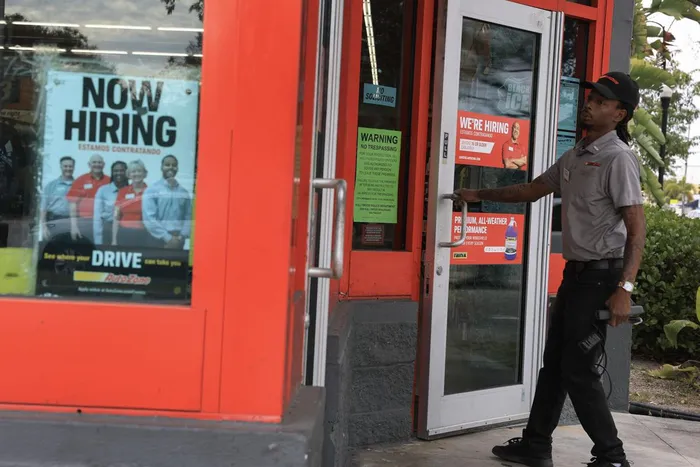
The American labor market just hit a wall, and the shockwaves are tearing through Wall Street. In February 2026, the U.S. economy unexpectedly shed 92,000 jobs, a staggering reversal that left analysts—who had predicted a modest gain of 60,000—scrambling to recalibrate their models. This wasn’t just a slight miss. It was a categorical failure of momentum that sent the Dow Jones Industrial Average plunging 900 points within minutes of the opening bell. The S&P 500 and Nasdaq followed suit, dropping more than 1.5% as investors realized that the "soft landing" narrative might be a fantasy.
While the headline number is grim, the underlying mechanics are even more concerning. This isn't merely a byproduct of a cooling economy. It is a collision of geopolitical conflict, industrial unrest, and a federal government that is shrinking by design. The immediate culprit for the sell-off is a toxic cocktail: a vanishing job market paired with a sudden spike in energy costs. As oil prices surge toward $90 a barrel due to escalating tensions in the Persian Gulf, the ghost of stagflation—low growth mixed with high inflation—has returned to haunt the trading floor. You might also find this similar article interesting: The Kevin Warsh Doctrine and the Dangerous Mirage of Central Bank Unity.
The Anatomy of a Disappearing Labor Market
To understand why the market reacted with such violence, you have to look past the -92,000 headline. The job losses were not contained to a single struggling sector. Instead, the bleed was systemic.
The Healthcare Strike and the Weather Trap
A significant portion of the decline—roughly 34,000 jobs—came from the healthcare and education sectors. This was largely driven by a massive strike involving over 30,000 healthcare workers, which occurred exactly during the Bureau of Labor Statistics (BLS) survey week. When workers are on strike and don't receive pay during that window, they vanish from the payroll count. Simultaneously, severe winter weather battered the construction and hospitality industries, artificially suppressing numbers in sectors that usually provide a floor for employment. As discussed in recent reports by The Economist, the results are worth noting.
The Silent Federal Purge
What the mainstream reports are missing is the sustained contraction of the federal workforce. Since October 2024, federal government employment has plummeted by 330,000 positions, an 11% reduction. This isn't a temporary fluctuation; it is a structural dismantling. In February alone, the federal government shed another 10,000 jobs. When you combine a shrinking public sector with a private sector that is "teetering," as some analysts now describe it, the traditional safety nets of the U.S. economy begin to fray.
The Oil Spike and the Death of the Pivot
For months, the market has been betting on the Federal Reserve to lower interest rates to support a slowing economy. Those bets are now under fire. Crude oil prices jumped more than 10% in a single session, driven by the war in Iran and the near-total halt of shipping in the Persian Gulf.
This creates a "lose-lose" scenario for the Federal Reserve. Normally, a weak jobs report would trigger an immediate rate cut to stimulate hiring. However, surging oil prices act as a massive inflationary tax on consumers. If the Fed cuts rates to save jobs, they risk letting inflation spiral out of control. If they hold rates high to fight energy-driven inflation, they might accelerate the transition from a "slowdown" into a full-blown recession.
"The market isn't trading the war as much as it's trading oil," noted one chief investment strategist. If crude hits $100, the macro story for 2026 changes from "unstable" to "disastrous."
The K Shaped Reality
While the 4.4% unemployment rate still looks low by historical standards, it masks a growing divide. Wage growth remains "sticky" at 3.8% year-over-year. This sounds like good news for workers, but for the Fed, it's a red flag. It suggests that while hiring has frozen, the cost of labor isn't dropping fast enough to cool inflation.
| Indicator | February 2026 Actual | Consensus Forecast |
|---|---|---|
| Nonfarm Payrolls | -92,000 | +55,000 |
| Unemployment Rate | 4.4% | 4.3% |
| Avg. Hourly Earnings (YoY) | 3.8% | 3.7% |
| WTI Crude Oil | $89.00+ | $78.00 |
We are seeing a "K-shaped" stagnation. High-income households, buoyed by the 2025 stock market surge, are still spending. Meanwhile, the bottom 60% of households are facing "affordability pressures" that are now being compounded by rising gas prices and a disappearing pool of new full-time jobs. The number of people working part-time for economic reasons—those who want full-time work but can't find it—is hovering at 4.4 million.
The Fed’s Paralyzed Path
The Federal Open Market Committee (FOMC) meets on March 17-18. Before this report, the consensus was a "wait and see" approach. Now, the Fed is effectively paralyzed.
On one side, you have hawks who point to 3% inflation and rising energy costs as a reason to keep rates restrictive. On the other, you have a labor market that has produced nearly zero net jobs over the last year. The three-month average for job growth is now a pathetic 6,000. For an economy that needs to add roughly 100,000 jobs a month just to keep up with population growth, this is a state of emergency.
The market has responded by jacking up the odds of a June rate cut to 50%, but that feels like a desperate guess. If the Persian Gulf conflict escalates, no amount of interest rate tinkering will offset the cost of $150 oil.
Investors need to stop looking for a "return to normal." The era of predictable cycles has been replaced by a period of "instability," where sector rotations happen in weeks rather than years. The dominance of AI and tech stocks is being tested by the raw reality of energy costs and labor unrest. Diversification isn't just a suggestion anymore; it is the only way to survive a market that can lose 900 points before you've finished your morning coffee.
Watch the price of crude. If it stays above $90, the jobs report wasn't an outlier—it was a prophecy.
Would you like me to analyze the specific impact of these job losses on the technology sector or provide a breakdown of the Persian Gulf shipping crisis?