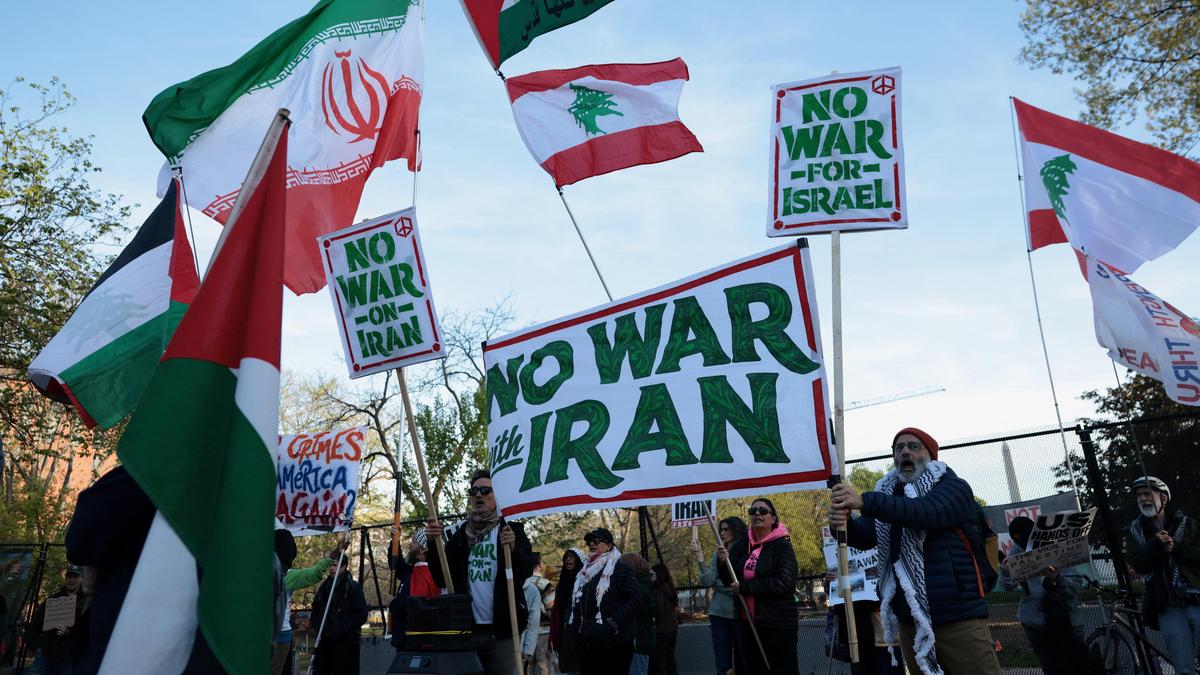
The fragile architecture of the regional ceasefire has effectively collapsed as Israel expands its air campaign into the heart of Lebanon and Iran responds by weaponizing the global energy supply. This is no longer a localized border dispute. By shuttering the Strait of Hormuz, Tehran has signaled that it is willing to burn the global economy to save its regional proxies. Meanwhile, the Israeli security cabinet appears to have concluded that diplomatic restraint is a sunk cost, opting instead for a systematic dismantling of Hezbollah’s leadership and infrastructure regardless of the humanitarian or geopolitical price.
The immediate casualty is the illusion of stability. Markets are already reacting to the closure of the world’s most vital oil artery, while the civilian population in southern Lebanon finds itself caught in the crossfire of a high-intensity war that the international community seems powerless to stop.
The Calculated Chaos of the Hormuz Shutdown
Closing the Strait of Hormuz is the ultimate "break glass in case of emergency" maneuver for the Iranian regime. It is a move born of desperation and strategic calculation. Approximately one-fifth of the world’s total oil consumption passes through this narrow waterway. By obstructing it, Iran isn't just fighting Israel; it is taking the global economy hostage.
This is a direct response to the decimation of Hezbollah’s command structure. For decades, Iran relied on its "Ring of Fire"—a network of armed proxies—to deter a direct Israeli assault on Iranian soil. With Hezbollah reeling from the expansion of Israeli strikes into northern Lebanon, Tehran’s primary shield is cracked. Shuttering the Strait is an attempt to force the hand of the United States and European powers. If the West cannot or will not restrain Israel, Iran will make sure every citizen in London, New York, and Tokyo feels the sting at the fuel pump.
The mechanics of the shutdown are simple but effective. Mining the waters or using swarms of fast-attack craft requires relatively little conventional military power compared to a full-scale naval engagement. It creates a massive risk premium for shipping insurance, effectively halting traffic even without a total physical blockade.
Israel’s Shift to Total Attrition
On the other side of the ledger, Israel has moved past the "tit-for-tat" phase of the conflict. The expansion of strikes into Lebanon reflects a fundamental change in military doctrine. The Israeli Defense Forces (IDF) are no longer aiming for a temporary quiet; they are seeking a permanent alteration of the northern border's demographics and military reality.
The intelligence failures of the past year have been replaced by a ruthless efficiency in targeting. By striking deeper into Lebanese territory—hitting logistics hubs, weapon depots, and communication centers—Israel is betting that it can degrade Hezbollah faster than Iran can resupply them. However, this strategy carries a massive risk. Every strike that hits a civilian center or a vital piece of Lebanese infrastructure fuels the very radicalization Israel claims to be fighting.
The "why" behind this expansion is rooted in internal Israeli politics as much as external security. The government is under immense pressure to return displaced citizens to their homes in the north. They have decided that the only way to achieve this is to push Hezbollah forces back beyond the Litani River, something the UN’s Resolution 1701 failed to do for nearly twenty years.
The Economic Aftershocks
We are looking at a potential $150 per barrel oil scenario if this blockade persists for more than a week. This isn't just about the price of gas. It affects the entire global supply chain. Fertilizer prices, plastics, and shipping costs will all climb, reigniting inflationary pressures that central banks have been struggling to douse for years.
The timing is particularly catastrophic for developing nations. While the G7 might be able to weather a temporary energy spike through strategic reserves, emerging markets with high debt-to-GDP ratios could see their currencies collapse. Iran knows this. They are counting on the global community's fear of a worldwide recession to override their support for Israel's military objectives.
The Failure of Traditional Diplomacy
The reason the current ceasefire talks are failing is that the participants are playing two different games. The United States and its allies are operating on a 20th-century model of diplomacy, seeking signatures on paper and "guarantees" from state actors. But the primary combatants in this conflict are either non-state actors like Hezbollah or a revolutionary state like Iran that views the international order as a tool of Western hegemony.
There is no middle ground when one side views the other's existence as a historical error. The expansion of strikes into Lebanon has effectively neutralized the moderate voices within the Lebanese government. They are now seen as irrelevant or, worse, complicit.
The Intelligence Blind Spots
One factor consistently overlooked is the role of domestic dissent within Iran and Israel. In Tehran, the decision to close the Strait is controversial even within the upper echelons of the IRGC. Some fear it will provide the ultimate justification for a direct American intervention that could topple the regime. In Israel, the military's aggressive expansion is creating friction with a protest movement that wants a hostage deal prioritized over a regional war.
The narrative often simplifies this into a clash of two unified fronts. In reality, it is a mess of competing factions. The hardliners on both sides are currently winning the argument, fueled by the belief that a "final victory" is possible. History suggests they are both wrong.
Logistics of a Long War
If this escalates into a full regional conflict, the logistical burden will be staggering. Israel’s Iron Dome and Arrow interceptors are world-class, but they are expensive and their stocks are not infinite. A sustained, multi-front barrage from Lebanon, Yemen, and Iraq could eventually overwhelm these systems through sheer volume.
Iran, meanwhile, faces a different logistical nightmare. Their economy is already crippled by sanctions. A total blockade of the Strait of Hormuz cuts off their own primary source of income as well. This is a suicide vest strategy: Iran is willing to die if it means taking its enemies down with it.
The Role of Global Power Brokers
China’s silence in this crisis is deafening. As the largest importer of Iranian oil, Beijing has the most to lose from a closed Strait. Yet, they have shown little interest in using their significant leverage over Tehran to de-escalate. They are content to watch the United States get bogged down in another Middle Eastern quagmire, draining its resources and attention away from the Indo-Pacific.
Russia, too, finds value in the chaos. Higher oil prices benefit Moscow’s war chest, and the diversion of American munitions to Israel means fewer Patriot missiles and artillery shells for Ukraine. The "axis of convenience" between Tehran, Moscow, and Beijing is more than just a diplomatic talking point; it is a functional reality that complicates any Western attempt at mediation.
The Humanitarian Cost of Strategy
Behind the maps and the military jargon, the human cost is mounting. Lebanon’s economy was already in a state of terminal collapse before the strikes expanded. Now, the country’s health system and power grid are on the verge of total failure. In Israel, the psychological toll of constant rocket fire and the uncertainty of a wider war are tearing at the social fabric.
The expansion of strikes into Lebanon often targets "dual-use" infrastructure—bridges, roads, and ports that are used by Hezbollah but are also vital for civilian survival. This is a deliberate tactic intended to turn the Lebanese population against the militia, but it frequently has the opposite effect, creating a desperate, angry populace with nothing left to lose.
The Strait as a Weapon of Last Resort
The international community's response to the Hormuz closure will be the defining moment of the decade. If the U.S. Navy attempts to forcibly reopen the waterway, it will likely lead to a direct military confrontation with Iran. If they don't, the global economy enters a freefall.
This isn't a hypothetical problem for the "landscape" of the future. It is a live-fire exercise happening right now. The tankers currently idling in the Gulf of Oman represent billions of dollars in lost productivity and millions of tons of carbon-based energy that the world is desperate to receive.
The assumption that rational actors will always choose the path of least economic resistance is being proven false. In the Middle East, ideological survival frequently outweighs economic prosperity. Iran is betting that the world's pain threshold is lower than theirs.
Breaking the Cycle
There is no "holistic" solution here. There is only the grim reality of power. To stop the expansion of the war, there must be a credible threat of force that outweighs the perceived benefits of the current escalation. For Israel, that means realizing that military might alone cannot create security. For Iran, it means understanding that the destruction of the global economy will not spare the Islamic Republic from the fallout.
The ceasefire isn't just "threatened"—it is a corpse. The focus now must shift from reviving a failed agreement to preventing a total regional conflagration that could pull the entire world into its orbit. The strikes in Lebanon and the closure of the Strait are not separate events; they are the opening volleys of a new, much more dangerous chapter in modern history.
Stop looking for a return to the status quo. That world ended when the first missiles hit Beirut and the first mines were dropped in the Gulf. The only way out is through, and the path is likely to be paved with more than just diplomatic rhetoric. It will require a fundamental reassessment of what each side is willing to lose, because the current trajectory leads to a point where everyone loses everything.
Grounding the drones and docking the tankers requires a level of courage that is currently absent from the leadership on all sides. Until that changes, the headlines will only get darker.
Prepare for a long, cold, and expensive winter.