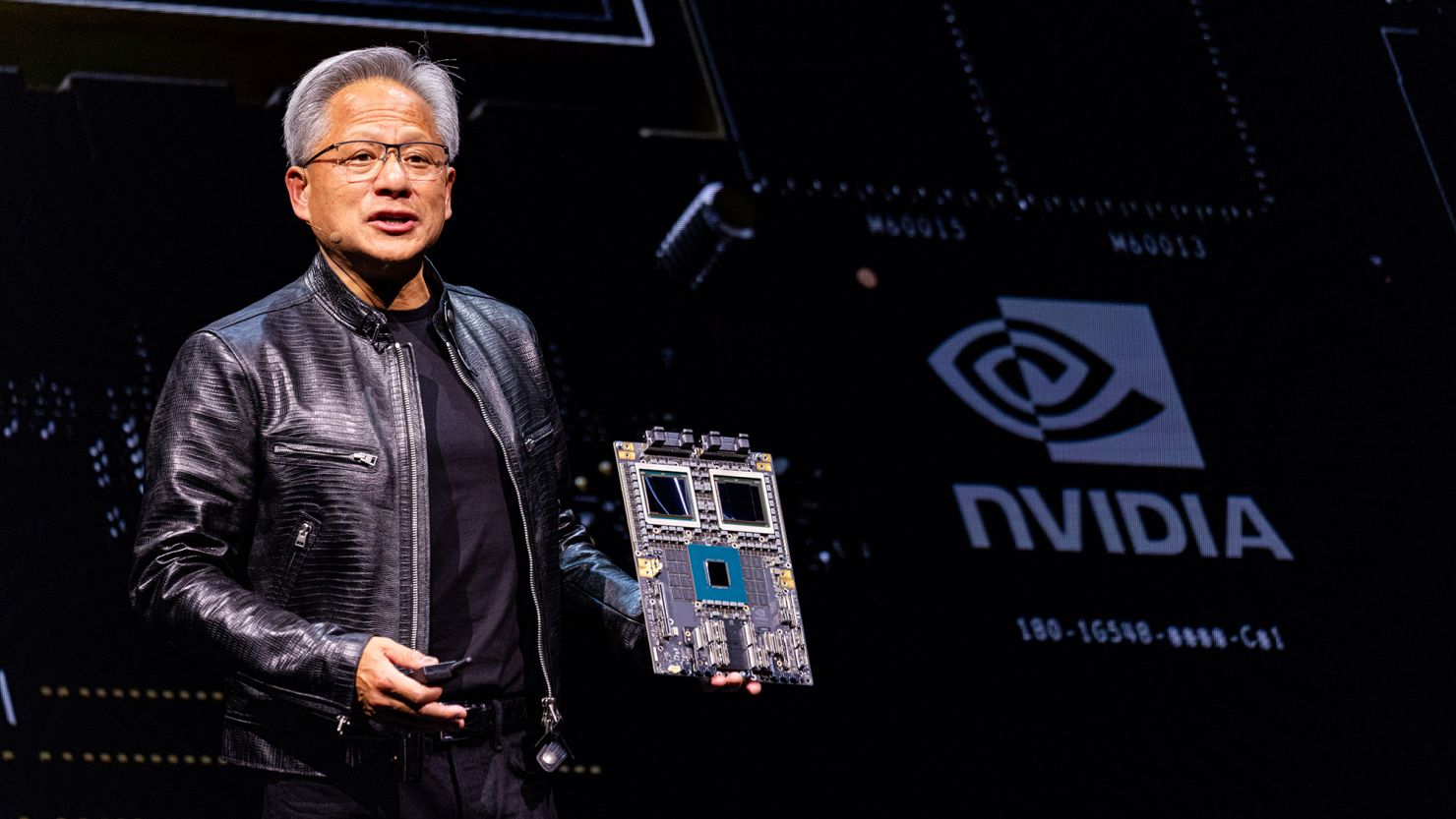
In the freezing air of an Alaskan refueling stop on Tuesday, Nvidia CEO Jensen Huang boarded Air Force One, signaling a desperate pivot in the semiconductor war. President Donald Trump, en route to Beijing for a summit with Xi Jinping, hand-picked the leather-clad executive at the last minute to join a delegation of corporate titans. The mission is simple on the surface: get China to "open up" to American business. But for Nvidia, this is not just a diplomatic junket. It is a fight for the survival of its most lucrative growth engine.
For nearly two years, the Santa Clara chip giant has been caught in a regulatory vice. While the Trump administration’s 2025 trade truce briefly allowed the sale of "compliant" H20 chips, the crown jewel—the H200—remained locked behind a wall of export licenses and executive indecision. Now, with domestic approval ratings battered by the conflict in Iran and midterm elections looming, Trump needs a win. Huang needs a market. Together, they are betting that the promise of American silicon can extract concessions from a Beijing that has spent the last year learning to live without it.
The Revenue Sharing Trap
The biggest hurdle to Nvidia’s success in China isn't just Beijing; it is a controversial "pay-to-play" scheme cooked up by the current administration. Since early 2026, the White House has moved to treat high-end chip exports as a direct revenue stream for the Treasury. Under a series of executive proclamations, Nvidia is being pressured to surrender up to 25 percent of its China-based H200 revenue to the U.S. government in exchange for the necessary export licenses.
Legal experts have already flagged this as a potential violation of the Export Clause of the Constitution. You cannot simply tax exports by executive fiat. Yet, for Huang, the math is brutal. Losing 25 percent of a sale to the Treasury is still better than losing 100 percent of the market to local Chinese competitors like Huawei and Biren Technology.
The administration’s logic is that these "fees" offset the national security risk of empowering a rival. In reality, it functions as a geopolitical protection racket. If Trump can convince Xi to drop domestic "buy local" mandates for Alibaba and Tencent, Huang might finally clear the 400,000-unit backlog currently stalled in regulatory purgatory.
The China Self-Reliance Problem
While Trump and Huang talk about opening doors, the architecture of the room has changed. Beijing didn't sit idle while the U.S. tightened the screws on GPU shipments. The 2025 "April Ban" was a wake-up call that echoed through the halls of Zhongnanhai.
Chinese hyperscalers—ByteDance, Baidu, and Tencent—have spent the last twelve months pouring billions into domestic alternatives. They are no longer just waiting for Nvidia; they are building for a future where they don't need it.
- Software Stickiness: Nvidia’s greatest moat has always been CUDA, the software platform that makes its chips easy to program. Chinese firms are now forcing a migration to open-source frameworks and domestic stacks to ensure they aren't held hostage by a single American company.
- Bundling Requirements: New Chinese regulations are expected to require companies to buy one domestic "national champion" chip for every Western chip they import. This effectively creates a permanent tax on Nvidia’s presence in the region.
If Huang expects to walk into the Temple of Heaven and find a desperate customer base, he is a year too late. The Chinese market has hardened. They want the H200, but they no longer believe it is an absolute necessity for their survival.
Geopolitics as a Business Model
The optics of Huang joining the trip at the final hour suggest a shift in Trump’s leverage. The president is no longer dictating terms from a position of absolute strength. The war in Iran has strained the U.S. economy, driving up energy costs and complicating global logistics. Trump needs the "brilliant people" of Silicon Valley to "work their magic" because his own tariff-first strategy has reached a point of diminishing returns.
By bringing Huang along, Trump is offering Xi a carrot: the most advanced AI hardware on the planet. The stick, however, is becoming brittle. U.S. courts have begun to hem in the president’s ability to levy unilateral tariffs, and the "Revenue Sharing" model is facing a barrage of lawsuits from industry groups.
The risk for Nvidia is that it becomes a permanent chip in a much larger game of poker. If the talks on Taiwan or the Iran-Tehran axis sour, the H200 export licenses will be the first thing shredded. Huang is essentially tying his company’s quarterly earnings to the unpredictable temperament of two men who view technology as a weapon first and a product second.
The H200 Bottleneck
Technically, the H200 is a marvel that China cannot currently replicate. With 141GB of HBM3e memory and nearly double the inference performance of the H100, it is the engine of the generative AI boom.
Why the H200 Matters
- Memory Bandwidth: High-end LLMs (Large Language Models) require massive throughput. China's domestic chips often struggle with the interconnect speeds necessary to link thousands of GPUs together.
- Energy Efficiency: In a world of rising power costs, the H200’s performance-per-watt remains the industry gold standard.
- Ecosystem: Almost every major AI breakthrough of the last three years was developed on Nvidia hardware.
But a chip you can't buy is useless. The "H20" variant Nvidia created to bypass earlier restrictions was widely mocked by Chinese engineers as "slow silicon." They felt insulted by the nerfed performance. If this mission fails to secure the full-fat H200 for Chinese data centers, Nvidia’s brand in the East may never recover.
A Precarious Alliance
Huang’s presence on Air Force One is a calculated risk. It aligns him closely with an administration that many in Silicon Valley view with suspicion, but it also gives him a seat at the table where his fate is being decided. He is betting that Trump’s desire for a "Great Deal" will outweigh the hawks in the Commerce Department who want to see China’s tech sector permanently crippled.
This isn't about "opening up" China in the traditional sense. It is about managed competition. The U.S. wants the money, China wants the tech, and Nvidia is the only entity that can satisfy both. But in this three-way marriage of convenience, the trust is non-existent.
The outcome of this week’s meetings in Beijing will determine if Nvidia remains a global superpower or becomes a regional player, locked out of the world's largest growing AI market by a combination of American protectionism and Chinese nationalism.
The plane has landed. The banquet is set. For Jensen Huang, the price of entry was a flight to Alaska and a 25 percent cut of his future. The only question left is whether Xi Jinping thinks the H200 is worth the cost of admission.
Stop looking for a return to the old ways of global trade. That world ended when the first export ban was signed. What we are seeing now is the birth of "Transaction Diplomacy," where every microchip is a treaty and every CEO is a diplomat without a portfolio.


