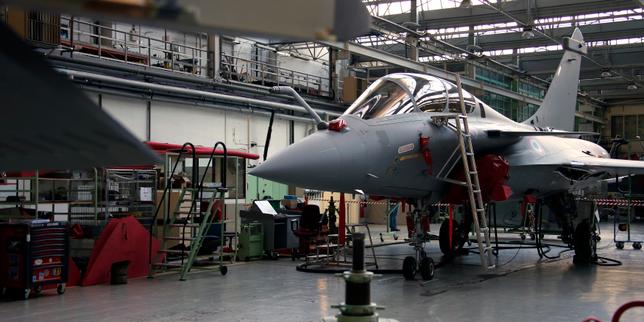
Retail investors are no longer hiding their defense stocks in the back of the drawer. For decades, the military-industrial complex was the "sin stock" pariah of the average portfolio, lumped in with tobacco and gambling as something technically profitable but socially radioactive. That era ended the moment the first missiles hit Kyiv. Today, a new wave of individual investors is aggressively moving capital into defense contractors, driven by a volatile cocktail of geopolitical anxiety, a desire for "moral" deterrence, and the cold realization that hardware is back in fashion.
This shift represents more than just a search for yield in a shaky market. It is a fundamental reordering of how the public perceives the business of conflict. While institutional giants have always maintained their positions in Lockheed Martin or BAE Systems, the surge in smaller, private accounts targeting the sector indicates a psychological break from the post-Cold War dream of a demilitarized world. Discover more on a connected issue: this related article.
The End of the Peace Dividend
The "Peace Dividend" was the economic theory that suggested the fall of the Berlin Wall would allow nations to divert military spending toward social programs and infrastructure. For thirty years, this idea governed much of Western fiscal policy and investor sentiment. It made defense stocks feel like stagnant relics.
Everything changed when traditional high-intensity warfare returned to the European continent. Investors watched as decades of depleted stockpiles were exposed in months. They saw that the world did not have enough 155mm shells, let alone the sophisticated air defense systems needed to protect civilian centers. This scarcity created a massive, urgent market. Additional reporting by Financial Times explores similar views on the subject.
Individual investors are now betting on the long-term rearmament of the West. Germany’s Zeitenwende—a 100 billion euro shift in defense policy—was the klaxon. When a nation that has spent decades avoiding military buildup suddenly pivots, the markets don't just notice; they reorganize.
The Ethical Flip
For years, the ESG (Environmental, Social, and Governance) movement actively discouraged investment in weapons. Fund managers were pressured to divest from anything that could "inflict harm." However, the narrative has undergone a startling transformation.
The new argument being whispered in brokerage offices and shouted on financial forums is that defense is the ultimate "S" in ESG. The logic is simple, if controversial: without the security provided by a strong military, no other social or environmental goals can be achieved. You cannot build a green energy grid in a country that is being occupied.
This moral rebranding has lowered the barrier to entry for the conscience-stricken investor. They aren't "investing in death"; they are "investing in sovereignty." Whether this is a genuine philosophical shift or a convenient excuse to chase 40% year-over-year gains is up for debate. The reality remains that the stigma has vanished, replaced by a sense of pragmatic necessity.
Procurement Cycles and the Reality of Backlogs
Investing in defense is not like trading tech or retail. It is a slow, bureaucratic, and highly regulated environment. A key factor many new investors overlook is the nature of the "backlog."
- Lockheed Martin and Raytheon (RTX) operate on multi-year, often multi-decade, contracts.
- A surge in orders today does not mean a surge in revenue tomorrow.
- Production bottlenecks, specifically in microelectronics and specialized chemicals, mean that companies are struggling to fulfill the demand they already have.
Small-scale investors often jump in after a major geopolitical event, expecting an immediate spike. However, the real money in this sector is made by those who understand the agonizingly slow pace of government procurement. We are currently seeing order books that extend into the 2030s. That creates a floor for the stock price, but it also means the explosive growth seen in software companies is rare here.
The Tech Transformation of the Battlefield
While the "Big Five" contractors dominate the headlines, a significant portion of the new investment interest is flowing toward the intersection of defense and technology. The war in Ukraine has functioned as a brutal laboratory for low-cost, high-impact tech.
We are seeing the rise of "Software-Defined Warfare." In the past, the value was in the hull of the tank or the airframe of the jet. Now, the value is in the AI-driven targeting systems, the encrypted communication links, and the autonomous drone swarms.
Private investors are increasingly looking at mid-cap firms that specialize in these niches. They are hunting for the company that can turn a $500 hobbyist drone into a precision-guided munition. This is where the risk lies. For every startup that secures a Department of Defense contract, fifty others will burn through their capital and vanish. The defense industry is littered with the corpses of companies that had "great tech" but couldn't navigate the "Valley of Death"—the gap between a successful prototype and a formal program of record.
The Geopolitical Map as a Portfolio Guide
The modern defense investor has to be part-time diplomat and part-time historian. You cannot understand the value of General Dynamics without understanding the tensions in the South China Sea. You cannot evaluate Rheinmetall without tracking the political stability of the EU's eastern flank.
Specific regions are driving specific investment themes:
- The Pacific Theater: Focus on naval power, long-range missiles, and undersea surveillance.
- Eastern Europe: Focus on heavy armor, artillery, and short-range air defense.
- The Middle East: Focus on anti-drone technology and missile interception (like the Iron Dome or David's Sling).
Investors are moving away from diversified "defense ETFs" and toward specific plays that align with where they believe the next flashpoint will occur. It is a cold-blooded way to look at the world, but it is the reality of the current market.
The Risk of De-escalation
The biggest risk to this investment thesis isn't a market crash—it's peace. It sounds cynical because it is. If a major diplomatic breakthrough were to occur in the world's primary conflict zones tomorrow, the "urgency premium" currently baked into defense stocks would evaporate.
However, many analysts argue that we have moved past the point of no return. The trust between major powers has fractured so deeply that even if current wars end, the desire to re-arm will persist. Nations have realized that their "just-in-time" supply chains for defense were a catastrophic mistake. They are now moving toward "just-in-case" inventory. This means years of sustained spending to refill empty warehouses, regardless of the immediate tactical situation.
Assessing the Financial Hard Power
The numbers are staggering. Global military spending reached an all-time high of over $2.4 trillion last year. For the individual investor, the challenge is identifying which companies actually benefit from this spend.
Much of that $2.4 trillion goes toward personnel, pensions, and maintenance—money that doesn't necessarily flow to shareholders. The "smart" money is looking at Research and Development (R&D) budgets. That is where the future high-margin products are born. If a company is seeing its R&D funded by the government, that is a massive de-risking event for the private investor.
The New Guard of Defense Stocks
We are seeing a divergence between the "Old Guard" (the massive, slow-moving platforms) and the "New Guard" (the agile tech-heavy disruptors).
- Old Guard: Reliable dividends, massive moats, but limited upside. They are essentially utilities with wings.
- New Guard: High volatility, no dividends, but the potential to redefine how wars are fought.
The private investors flooding into the market are split between these two camps. The older demographic, looking for "safety" in an unsafe world, gravitates toward the legacy giants. The younger, more aggressive traders are looking for the "Palantir of the battlefield"—companies that use data as a weapon.
The Illusion of the "Safe Haven"
It is a mistake to view defense stocks as a guaranteed safe haven. They are subject to the same inflationary pressures as any other manufacturing business. The cost of specialized steel, titanium, and labor has skyrocketed. Because many defense contracts are "fixed-price," the contractors themselves often have to eat those cost overruns.
In a high-inflation environment, a massive government contract can actually become a liability if the cost to build the product exceeds the agreed-upon price. This is the "hidden trap" that has caught several major players off guard in recent years. Investors must look at the contract structures, not just the topline numbers.
Beyond the Ticker Symbol
Investing in the defense industry is a decision that forces an individual to confront the darkest aspects of the human condition. It requires acknowledging that the world is currently moving toward more conflict, not less.
The people buying these stocks today aren't necessarily war hawks. Many are simply terrified of the alternative. They see a world where the old rules no longer apply and where the only thing that guarantees security is the ability to project force.
When you buy a share of a defense company, you are placing a bet on the persistence of human friction. You are betting that the diplomacy of the future will be backed by the hardware of the present. It is a somber realization, but for a growing number of people, it is the only logical response to a world that has forgotten the lessons of the past.
The capital is moving. The factories are spooling up. The geopolitical reality is that the business of defense is no longer a niche corner of the market—it is the engine of the new global economy.
Stop looking for a return to "normal." This is the new normal.