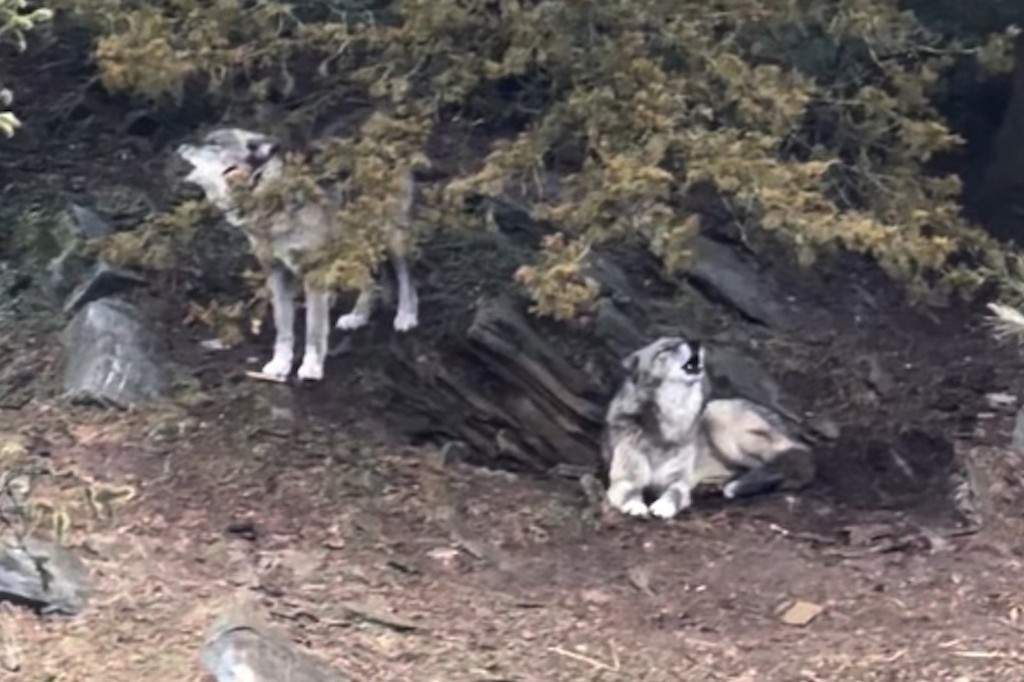
The thin line between a family outing and a criminal court date has vanished. Recent charges filed against parents after a toddler was mauled by a wolf at a local zoo highlight a systemic failure that goes far beyond a single momentary lapse in judgment. This isn't just about a broken fence or a hungry predator. It is the result of a cultural shift where wild animals are viewed as stage props and safety barriers are treated as mere suggestions. The legal system is finally catching up to a reality that zookeepers have feared for years: the entitlement of the modern visitor has become a lethal liability.
When the news broke that a two-year-old had been injured after being hoisted over a safety railing, the public reaction followed a predictable script. One camp blamed the facility’s infrastructure, while the other demanded the parents face prison time. But as an investigative eye turns toward the deposition rooms and the incident reports, a much grimmer picture emerges. This wasn't an "accident" in the traditional sense. It was a calculated risk taken by adults who prioritized a social media photo op over the biological reality of a pack predator.
The Myth of the Glass Wall
We have raised a generation of adults who believe the world is buffered. Because we see lions through reinforced plexiglass and bears on 4K television screens, the primal fear that kept our ancestors alive has been bred out of the suburban psyche. Zoos have spent decades trying to make their exhibits feel "immersive." They remove bars, use hidden moats, and plant lush vegetation to hide the reality of captivity.
The unintended consequence is a dangerous psychological smoothing.
If it looks like a park, people treat it like a park. They forget that the timber wolf on the other side of that wooden rail isn't a husky. It is a highly efficient killing machine with a bite force of roughly 1,500 pounds per square inch. When a parent lifts a child over a secondary "stand-off" barrier to get a closer look, they are effectively disabling the only thing standing between a toddler and a predator's natural instinct to snatch small, high-pitched prey.
Negligence Under the Microscope
The decision by prosecutors to move forward with child endangerment charges marks a turning point in how we handle these incidents. Historically, zoos often settled these cases quietly to avoid the PR nightmare of being the "place where a kid got hurt." They would pay out a settlement, tweak their insurance policy, and move on. Not anymore.
The legal standard for child endangerment hinges on the "reckless creation of a substantial risk." In the case of the wolf exhibit, the presence of a double-fence system is the smoking gun. A primary fence keeps the animal in; a secondary fence—the stand-off barrier—is designed to keep humans out of reach. Crossing that second line isn't a mistake. It is a deliberate act of trespassing into a hazard zone.
Why Prosecutors Are Playing Hardball
- Precedent: If parents aren't held accountable, the liability falls entirely on the institution, which threatens the existence of every educational animal facility in the country.
- Video Evidence: In an era of ubiquitous smartphones, the "I didn't see the sign" defense is dead. Most of these incidents are captured by bystanders, showing clear warnings being ignored.
- Deterrence: The court of public opinion is no longer enough. The legal system is using these charges to send a message to every visitor: the fence is the law.
The Architecture of False Security
Industry analysts have pointed out a flaw in zoo design that many don't want to talk about. To remain competitive against digital entertainment, zoos have felt pressured to bring the "action" closer to the guest. This has led to the rise of low-profile barriers that look great for photography but are physically easy to breach.
I’ve walked these grounds with safety auditors who point out "hot spots" where the grade of the land makes it easy for a tall adult to lean over a precarious ledge. These are design vulnerabilities. However, building a twenty-foot concrete wall around every animal would destroy the educational mission of the zoo. We are stuck in a stalemate between aesthetic immersion and the raw stupidity of the few.
If a zoo makes it impossible for a human to get hurt, they usually make it impossible for the human to see the animal.
The Social Media Toll
The "Pic or it didn't happen" mentality is a literal death trap. In several documented cases of animal-human conflict at public parks and zoos, the adult involved was holding a phone in one hand and a child in the other. The desire to capture a "National Geographic moment" for a feed of five hundred followers overrides the basic instinct to protect one's offspring.
The wolf didn't choose to be a villain in this story. It reacted to a breach of its territory. When a small, struggling creature enters the "flight or fight" radius of a canine predator, the outcome is biologically determined. The tragedy is that the child bears the physical scars while the adults argue over who is at fault in a courtroom.
Insurance and the Death of the Local Zoo
Behind the headlines of the criminal case lies a massive financial tremor. Insurance premiums for zoological facilities have skyrocketed by nearly 40% in some regions over the last five years. These increases are directly tied to "guest-initiated incidents." When a parent ignores a sign and a child gets hurt, the legal fees alone can cripple a mid-sized non-profit zoo.
We are reaching a tipping point where the cost of insuring a wolf or a tiger exhibit will outweigh the revenue it brings in. If the trend of parental negligence continues, we will see the "Sanitization of the Zoo." All dangerous predators will be moved to off-site breeding facilities, leaving the public with nothing but goats and chickens to look at through double-paned glass.
The Breakdown of Liability
| Party | Responsibility | Current Status |
|---|---|---|
| The Zoo | Maintain structural integrity and clear signage. | Meeting standards, but fighting a losing battle against guest behavior. |
| The Parent | Supervise and adhere to posted safety protocols. | Rapidly declining compliance due to "main character syndrome." |
| The State | Enforce child safety laws. | Increasing criminal prosecutions to shift the burden of responsibility. |
The Biological Reality Check
It is time to stop pretending that every environment can be made "safe." Nature is not safe. A wolf is a predator that sees a thirty-pound child as a meal, not a friend. This is not "Disneyfied" reality; it is the fundamental law of the wild. By shielding parents from the consequences of their choices, we have allowed a dangerous delusion to take root.
The charges filed in this case aren't just about punishment. They are a desperate attempt to reintroduce a sense of consequence into a society that has forgotten that actions have physical, often bloody, results. The toddler will likely recover from the physical wounds, but the institutional damage to the zoo and the legal precedent for the parents will linger for decades.
Beyond the Warning Signs
We can’t solve this with more signs. We can’t solve it with taller fences unless we want to turn our centers of conservation into high-security prisons. The solution requires a brutal reassessment of the "customer is always right" philosophy in spaces where the "product" can eat you.
Zoos must be empowered to kick out guests at the first sign of a barrier breach, with zero refunds and permanent bans. Security shouldn't be a polite suggestion; it should be an aggressive enforcement of boundaries. If you can’t trust a parent to keep their child on the right side of a marked fence, you cannot trust them to be on the premises at all.
The era of the "unfortunate accident" is over. We are now in the era of the "avoidable crime." If you hoist your child over a railing to get a better look at a predator, you aren't a "dedicated parent" trying to provide an experience. You are a defendant.