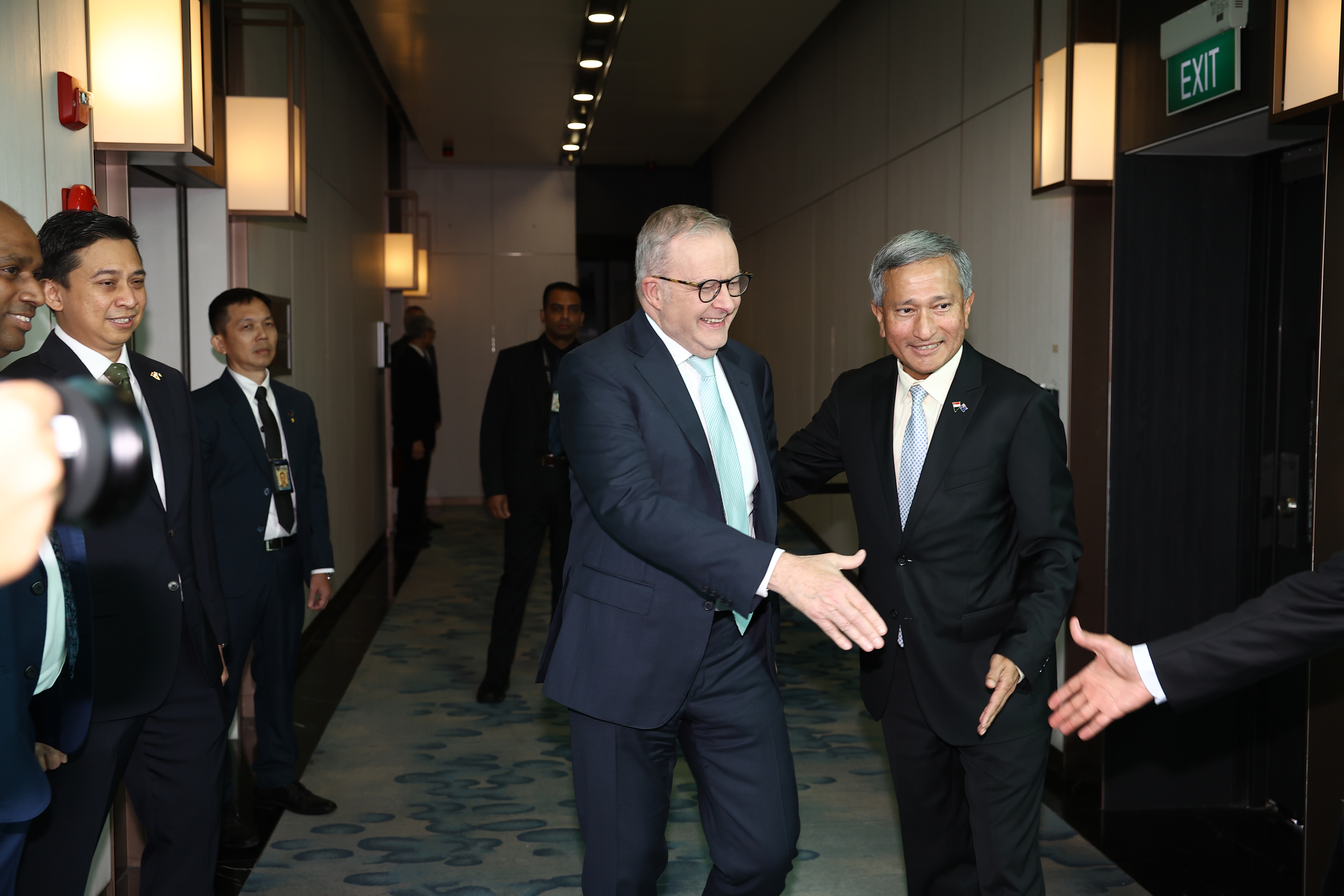
The Prime Minister’s recent diplomatic mission to Singapore and neighboring Southeast Asian energy hubs isn't just about handshakes and trade communiqués. It is a desperate scramble to secure a lifeline for a country that has effectively outsourced its survival. For decades, the narrative of energy independence has been a convenient political fiction. The reality is far more precarious. Nearly half of our national petrol and diesel supply now flows through a single corridor, tied to the refining capacity of regional neighbors who hold all the cards.
This dependency is not an accident of geography. It is the result of a long, calculated retreat from domestic manufacturing and a blind faith in "just-in-time" global logistics. When the Prime Minister sits down with regional leaders, he isn't just discussing "partnership." He is negotiating for the continued privilege of keeping our transport networks moving. We have reached a point where a single shift in maritime policy or a refinery strike in a foreign port could paralyze our economy within weeks.
The Death of Domestic Refining
The core of our current crisis lies in the shuttering of local refineries. It was once considered a matter of national security to process crude oil on home soil. However, the economics of the last twenty years favored the mega-refineries of Asia, which operate at a scale and cost domestic plants couldn't match. As local facilities closed their gates, we traded resilience for a slight reduction in the price per liter.
That trade now looks like a catastrophic error in judgment. Without the ability to refine our own fuel, we are no longer customers of a global market; we are dependents. We are importing finished product—petrol and diesel that is ready to be pumped into tanks—rather than crude oil that can be stored and processed according to our own needs. Finished fuel has a shelf life. It is harder to store long-term than crude. This means our national strategic reserve is effectively floating on tankers at sea, subject to the whims of weather, piracy, and geopolitics.
The Singapore Bottleneck
Singapore serves as the central nervous system for Asian energy trading. While it is a stable and sophisticated partner, the sheer volume of our reliance on this single point of failure is staggering. It is the definition of putting all our eggs in one basket. If the Straits of Malacca face a blockade or if regional tensions escalate, the flow of refined product slows to a trickle.
Our current strategy assumes that the seas will always be open and the refineries will always be online. It ignores the reality of a world where energy is increasingly used as a weapon of statecraft. By failing to diversify our supply lines or maintain a credible domestic fallback, we have handed a "kill switch" to our neighbors. The Prime Minister’s trip is a recognition that we are vulnerable, and that vulnerability is being priced into every diplomatic interaction.
The Storage Illusion
Government officials often point to our mandatory fuel holdings as a safety net. They claim we have weeks of supply held in reserve. What they fail to mention is that much of that "reserve" is technically owned by private companies and is already earmarked for immediate commercial use. It is not a stagnant pool of emergency fuel; it is the working inventory of the industry.
Furthermore, a significant portion of these reserves is held offshore under "tick-the-box" agreements. We pay to have a certain amount of fuel stored in foreign tanks, under the assumption that we can call it back during a crisis. In a true global supply crunch, do we honestly believe those host nations will prioritize our fuel needs over their own? History suggests otherwise. Paper reserves provide political cover, but they don't power trucks when the pumps run dry.
The Cost of Inaction
Rebuilding a domestic refining industry is not a quick or cheap endeavor. It requires billions in investment and a regulatory environment that doesn't penalize heavy industry into oblivion. Yet, the cost of doing nothing is infinitely higher. We are seeing the erosion of our sovereign capability in real-time.
When the transport sector is held hostage by foreign supply chains, every other industry suffers. Agriculture, emergency services, and food distribution are all tethered to the same fragile thread. If we cannot guarantee the arrival of tankers from the north, we cannot guarantee the stability of our own society. The "market-led" approach to energy security has failed because the market does not account for the survival of the state.
The Missing Strategy
A real solution requires more than just high-level visits and vague promises of cooperation. We need a radical shift in how we view energy. This means:
- Mandating significant, physical on-shore storage of finished fuels that are owned and controlled by the state, not just private entities.
- Investing in sovereign refining capability, even if it requires government subsidies to remain competitive. This is an insurance premium, not a commercial venture.
- Diversifying import routes to ensure that we are not entirely dependent on the stability of a single maritime corridor.
We have spent years patting ourselves on the back for our transition to renewables, but the hard truth is that our economy still runs on liquid fuels and will for the foreseeable future. Ignoring the security of that supply while chasing long-term targets is a recipe for a medium-term disaster.
The Geopolitical Chessboard
The Prime Minister’s neighbor is well aware of our predicament. In the world of high-stakes diplomacy, dependency is leverage. Every time we ask for guaranteed supply, we are expected to give something up in return—be it in security cooperation, trade concessions, or diplomatic alignment. Our lack of energy independence has become a tax on our foreign policy.
We are no longer negotiating from a position of strength. We are a supplicant, hoping that the regional status quo remains unchanged. But the world is changing rapidly. New alliances are forming, and old certainties are dissolving. If we continue to treat our fuel supply as a secondary concern, we shouldn't be surprised when we find ourselves at the mercy of those who were smart enough to keep their refineries running.
The Prime Minister may come home with a signed agreement and a smile for the cameras. But until we see the construction of massive storage tanks on our own soil and the reactivation of domestic processing, we remain one maritime incident away from a national standstill. We have outsourced our heartbeat, and we are now discovering that the pulse is getting faint.
Stop looking at the price at the pump and start looking at the horizon. The tankers are still coming for now, but the line between "business as usual" and "national emergency" has never been thinner.


