The air at 7,000 feet does something to the sound of a bell. In Shimla, when the bronze is struck, the note doesn’t just ring; it hangs in the thin, sharp atmosphere, vibrating against the cedar trees and the weathered stones of the Ridge. On this particular morning, the sound carried the weight of several centuries. It was Buddha Purnima. For most of the world, it was a date on a calendar. For the thousands of Tibetan and Himalayan Buddhists moving through the mist of the Himachal capital, it was the pulse of a living history.
I watched an elderly woman, her face a map of deep-etched lines and sun-darkened skin, adjust her chuba. Her hands, gnarled like the roots of the deodars surrounding us, held a string of prayer beads with a grip that suggested they were the only things keeping her anchored to the earth. She wasn't just praying for herself. She wasn't even praying for her family in the way most of us understand it. As she turned her prayer wheel, the copper glinting in the pale Himalayan sun, she was whispering for the peace of people she would never meet in cities she would never visit. You might also find this connected coverage useful: The Tourism Paranoia Trap Why Your Fear of Global Travel Disasters Is Completely Wrong.
This is the central paradox of the celebration in Shimla. It is a deeply local event, rooted in the specific soil of the Indian Himalayas, yet its gaze is fixed firmly on the horizon of the entire planet.
The Geography of Exile and Devotion
Shimla is a city built on layers. There is the British colonial layer, with its mock-Tudor architecture and grand post offices. There is the modern Indian layer, bustling with tourists and commerce. Then there is the spiritual layer, thick and fragrant with the scent of burning juniper and butter lamps. As reported in recent articles by Lonely Planet, the results are notable.
When the Tibetan diaspora settled here decades ago, they brought more than just their belongings. They brought a specific way of perceiving the world. On Buddha Purnima—the day marking the birth, enlightenment, and passing of Gautama Buddha—that perception becomes visible. The monasteries, like Dorje Drak and Jonang Takten Phuntsok Choeling, become the beating hearts of the hill station.
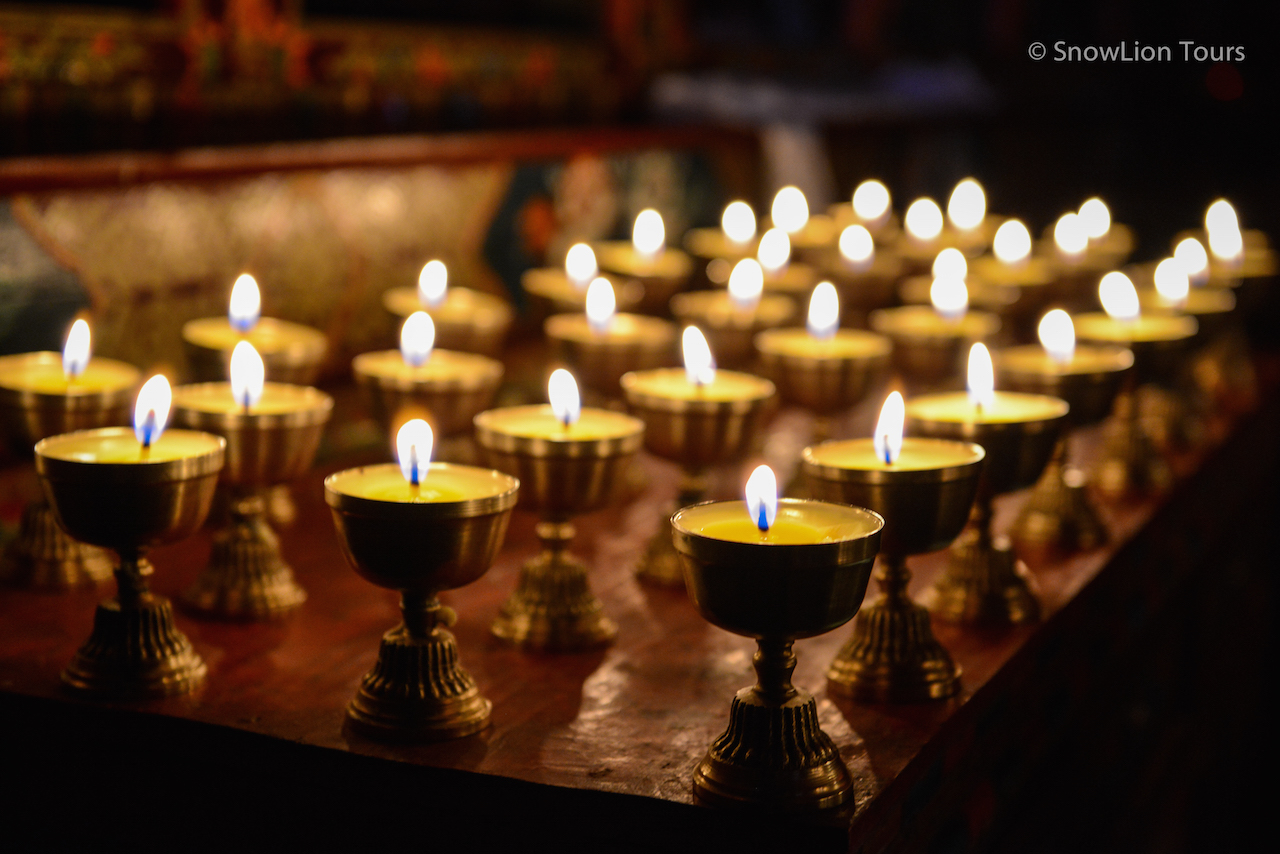
Consider a hypothetical young man named Tenzin. He is third-generation Tibetan, born in the thin air of Himachal Pradesh. He wears sneakers and carries a smartphone, but today, he walks the Kora—the circumambulation of a holy site. To Tenzin, the "global peace" mentioned in news headlines isn't an abstract political concept. It is a practical necessity. His community knows what happens when peace evaporates. They carry the memory of displacement in their very marrow. When he lights a butter lamp, he isn't just performing a ritual; he is participating in a defiance of darkness.
The Chemistry of a Prayer
The rituals are sensory. They are tactile. You feel the heat of the lamps. You smell the heavy, slightly nutty aroma of the flickering wicks. You hear the low, guttural chant of the monks, a sound that seems to vibrate in your chest rather than your ears.
It is easy to look at a crowd of people chanting and see only the surface. But look closer at the demographics on the Ridge. You see the Kinnauris, the Lahaulis, and the Spitians—the mountain people of the high Himalayas who have shared a spiritual DNA with Tibet for a millennium. Their presence in Shimla on this day turns the city into a crossroads.
Why does this matter to someone sitting in a skyscraper in London or a suburb in Ohio?
Because the philosophy being practiced on these slopes is the ultimate counter-narrative to our modern era of hyper-individualism. The prayers offered here are structurally designed to be unselfish. In the Buddhist tradition, "merit" gained from prayer is "dedicated" to the welfare of all sentient beings. It is a spiritual version of a global stimulus package. The belief is simple: my peace is impossible if you are suffering.
The Invisible Stakes
We live in a time of jagged edges. Our news cycles are dominated by friction—border disputes, economic collapses, and the slow-motion tragedy of environmental decay. Against this backdrop, the sight of thousands of people gathered in the quiet Shimla morning to talk about "Universal Peace" can seem almost quaint. Or perhaps, it is the only thing that isn't.
The stakes are higher than they look. If we lose the capacity to gather for the sake of a collective well-being, we lose the glue that holds civilization together. In Shimla, the Buddhists are maintaining that glue. They are practicing the art of "Metta," or loving-kindness.
Imagine the mental discipline required to stand in the cold air, surrounded by the ghosts of colonial history and the noise of modern tourism, and genuinely wish for the happiness of your enemies. It is a radical act. It is a psychological marathon.
The monks in their crimson robes move with a deliberate slowness. This slowness is a message. It says that the chaos of the world is a storm on the surface of the ocean, but the depths remain still. By marking Buddha Purnima with such intensity, the Himalayan community is inviting the rest of us to look at the depths.
A City Transformed
By midday, the sun had burned off the mist, revealing the snow-capped peaks of the inner Himalayas in the distance. The Ridge was a sea of colors. The yellow and red of the monastic robes clashed beautifully with the vibrant greens of the cedar forests.
There is a specific kind of silence that happens in a crowd during prayer. It isn't the absence of noise—monkeys were still chattering in the trees, and the distant hum of traffic stayed constant—but a presence of focus.
The pilgrims offered "Arghyam" (water), "Pushpam" (flowers), and "Dhupam" (incense). Each gesture is a symbolic shedding of the ego. In the essayist's view, this is the most "human" part of the story. We are all burdened by our egos, our petty grievances, and our local fears. But for a few hours in Shimla, thousands of people tried to set those burdens down.
They prayed for the end of wars in lands they have only seen on flickering television screens. They prayed for the healing of the earth. They prayed for the wisdom of leaders who seem, more often than not, to be stumbling in the dark.
The Residue of the Day
As evening approached, the large-scale ceremonies began to wind down, but the individual devotions continued. The butter lamps stayed lit, tiny pinpricks of gold against the encroaching blue of the Himalayan twilight.
Walking away from the Ridge, down the steep, winding lanes of the lower bazaar, the smell of the incense followed me. It clung to my jacket. It stayed in my hair.
We often think of "news" as something that happens to other people in far-off places. We think of "peace" as something negotiated by men in suits behind closed doors. But the people of Shimla, the Tibetans and the Himalayan Buddhists, remind us that peace is a bottom-up process. It starts with a single person, a single breath, and a single lamp.
The importance of this gathering isn't found in the number of attendees or the celebrity of the speakers. It is found in the quiet persistence of a tradition that refuses to give up on the world, even when the world seems intent on giving up on itself.
The elderly woman I saw earlier was still there as the sun dipped below the horizon. She was slower now, her steps more measured, but the prayer wheel was still turning. Each revolution was a silent plea. Each spark of the lamp was a refusal to let the darkness have the final word.
The bell rang once more, the sound disappearing into the vast, darkening valleys of Himachal. It left behind a silence that felt less like an empty space and more like a promise kept. In the heart of a busy hill station, among the tourists and the shops and the noise of the twenty-first century, a ancient rhythm had held its ground. Peace, it turns out, isn't a destination. It is a vibration. And in Shimla, on the day of the Buddha’s birth, that vibration was loud enough to shake the stars.