The 98th Academy Awards were not a celebration of cinema. They were a sophisticated laboratory experiment in audience retention. While casual observers fixated on the Bridesmaids reunion or the surreal sight of a puppet from the Star Wars universe wandering the Dolby Theatre, the real story was unfolding in the control room. Producers have finally realized that the only way to save the Oscars is to stop treating it like a prestigious ceremony and start treating it like a high-velocity variety show.
The shift is jarring. For decades, the Academy of Motion Picture Arts and Sciences (AMPAS) clung to a rigid, reverent structure that prioritized the "sanctity" of the craft. That sanctity, however, resulted in a decade of plummeting ratings and a growing disconnect with anyone under the age of forty. This year’s broadcast didn't just include "bits you might have missed"—it was built entirely out of them. By weaving together viral-ready cameos, internet-born memes, and aggressive nostalgia, the producers effectively turned the show into a three-hour social media feed.
The Death of the Monolith
The traditional Oscar broadcast relied on a captive audience. In the pre-streaming era, you watched the show because it was the only place to see your favorite stars. That leverage has vanished. Today, if a viewer feels a lull during the Best Sound Editing presentation, they are gone. They are on TikTok or YouTube within seconds.
To combat this, the "variety show" model uses what industry insiders call micro-hooking. This involves placing a high-interest celebrity or a bizarre visual gag every eight to twelve minutes. It isn't accidental. It is a desperate, data-driven attempt to prevent "channel drift." When Baby Yoda appears, it isn’t for the sake of the narrative; it is a tactical deployment of IP designed to trigger a spike in social media mentions, which in turn acts as a siren song to lure passive scrollers back to the live broadcast.
The Nostalgia Trap
The Bridesmaids reunion served a similar, albeit more demographic-specific, purpose. It targeted the millennial audience that has largely abandoned linear television. By grouping Kristen Wiig and Maya Rudolph, the show organizers weren't just presenting an award; they were creating a "clipable" moment. These moments are the true currency of the modern Oscars. The actual winners of the trophies have become secondary to the engagement metrics generated by the presenters.
This creates a dangerous precedent for the industry. When the "bits" become the backbone of the evening, the art being honored begins to feel like an interruption. We are witnessing the commodification of the ceremony, where the prestige of the Oscar is being traded for the fleeting attention of a distracted public.
The Ballet Bites Back and the Illusion of High Culture
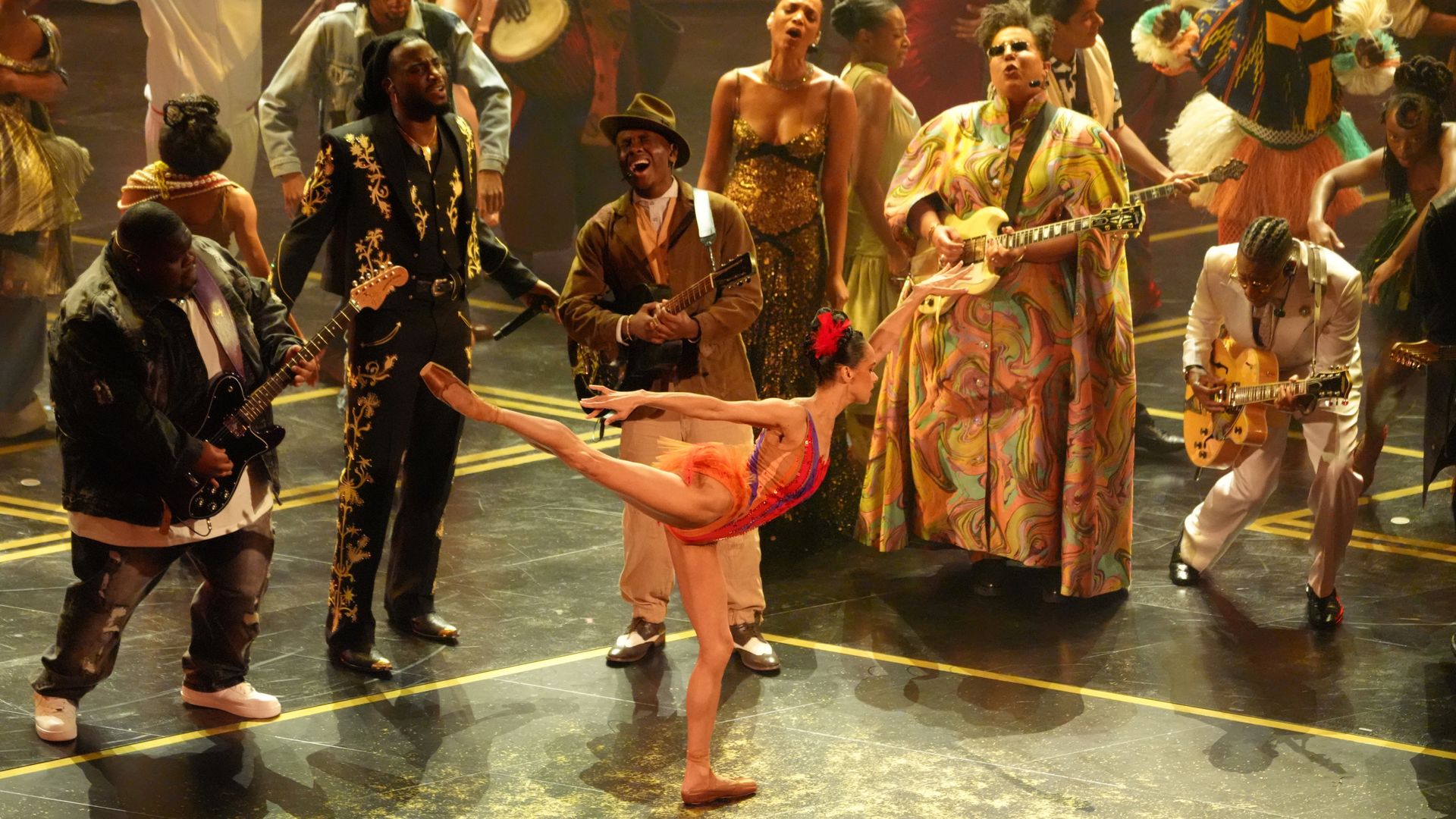
One of the more overlooked segments involved a sharp, almost aggressive integration of high-art performance, specifically ballet, into the kitsch of the evening. Critics often frame these moments as the Academy "returning to its roots" or honoring the multidisciplinary nature of film. This is a polite fiction.
In reality, these high-brow interludes serve as brand protection. The Academy knows it is sliding into the realm of the People's Choice Awards. To maintain its status as the "Gold Standard," it must pepper the broadcast with reminders of "Serious Art." The ballet sequence wasn't just a performance; it was a defensive maneuver. It allows the Academy to argue that despite the puppets and the comedy sketches, it still maintains an elevated palate.
It is a delicate balancing act that is increasingly leaning toward the absurd. You cannot have a somber, classically choreographed tribute to the history of dance followed immediately by a gag about a superhero’s costume. The tonal whiplash is palpable, yet it is exactly what the modern viewer expects. We live in an era of context collapse, where the high and the low exist on the same horizontal plane.
The Hidden Economy of the Oscar Cameo
There is a significant financial architecture behind these "spontaneous" moments. The appearance of a character like Grogu (Baby Yoda) involves a complex negotiation between the Academy, the network (ABC), and the parent company (Disney). It is essentially a multi-million dollar in-program advertisement disguised as entertainment.
The Brand Alignment Strategy
- Vertical Integration: Disney-owned ABC broadcasts the Oscars. Therefore, the presence of Disney-owned characters is a form of house-advertising that costs the network nothing but yields massive brand impressions.
- The Presenter's Price: A-list presenters rarely show up just for the "honor" anymore. Their appearances are often tied to upcoming project launches, contractual obligations, or "favor-trading" between powerful agencies like CAA and WME.
- Social Amplification: Every "bit" is designed to be shared. If a moment doesn't have "meme potential," it is often cut or relegated to the technical categories that are announced during commercial breaks.
This shift toward advertorial entertainment means the show is no longer being produced for the people in the room. It is being produced for the algorithm. The winners are the people who manage to trend on X (formerly Twitter) for more than twenty minutes. The losers are the filmmakers whose life’s work is reduced to a thirty-second acceptance speech that is frequently played off by the orchestra to make room for more "bits."
Why the Current Strategy is Failing Long-Term
While the variety-show approach might provide a temporary bump in the Nielsen ratings, it is eroding the very foundation of the Academy’s power. The "Oscar" used to mean something because it stood apart from the noise of the entertainment industry. It was the one night where the business took itself seriously.
By leaning into the "bits," the Academy is admitting that film, on its own, is no longer enough to hold the public's interest. They are signaling that the art is the boring part and the celebrities are the fun part. This is a suicide pact with the digital age. Once you become just another content provider, you lose the "prestige" that allowed you to command the world's attention in the first place.
The Counter-Argument for Boredom
There is a growing school of thought among industry veterans that the Oscars should actually be more boring. Or, at least, more focused. By shortening the "bits" and lengthening the tributes to the craft—the writers, the cinematographers, the editors—the Academy could reclaim its identity as an elite guild.
The current "bits you might have missed" approach is a race to the bottom. It assumes the audience has the attention span of a toddler. But history shows that audiences are actually quite capable of sitting through long, dense narratives if they feel they are witnessing something of historical importance. The problem isn't the length of the Oscars; it's the lack of conviction. The show feels like it's apologizing for its own existence, trying to crack jokes and pull stunts to keep us from changing the channel.
The Technical Execution of the "Bit"
Watch the camerawork during the Bridesmaids segment or the puppet appearance. It is frantic. The director is cutting every three seconds to a reaction shot in the audience. They are looking for the "viral face"—the celebrity caught off guard, the star who looks confused, the actor who is laughing too hard.
This is Reaction-Economy Filmmaking. The goal is not to document the event, but to provide raw material for creators to use in "The 10 Best Moments You Missed" videos. The broadcast is being reverse-engineered to fit the format of a YouTube countdown list. This is why the choreography feels so staged. Even the "spontaneous" interactions in the aisles are pre-blocked and rehearsed during the technical run-throughs on the Friday before the show.
The Illusion of Access
The most successful bits are those that provide the "illusion of access." When actors engage in bit-heavy banter, they are performing a version of themselves that feels "authentic" to the viewer. It’s the "stars are just like us" trope, amplified to a global scale. We see them eating pizza, taking selfies, or interacting with puppets, and we feel a sense of parasocial intimacy.
This intimacy is a product. It is a carefully managed asset designed to keep the audience invested in the celebrity ecosystem. The moment the curtain falls, that intimacy vanishes, replaced by the reality of iron-clad NDAs and guarded estates. The Oscars are the one night a year where the walls are lowered just enough to keep the consumer interested, but not enough to actually reveal anything of substance.
The Reality of the Modern Awards Circuit
The Academy Awards are no longer an isolated event. They are the finale of a grueling, six-month marketing campaign known as "Awards Season." By the time we reach the Dolby Theatre, we have already seen these actors give the same speeches at the Golden Globes, the SAG Awards, and the BAFTAs.
This repetition fatigue is what necessitates the desperate "bits." Because the winners are almost always predictable—thanks to the data-driven "Oscar-prediction" industry—the show has to rely on spectacle to provide any sense of surprise. If everyone knows who is going to win Best Actress, the only way to keep them watching is to promise them a Star Wars cameo or a comedy reunion.
We are watching the slow-motion collapse of a legacy brand trying to pivot to a digital-first world. The Academy is trying to be both the Harvard of film and the TikTok of the year. It is a contradiction that cannot hold. The more they lean into the "bits you might have missed," the more they become an institution that can be safely ignored, because all the "good parts" will be on your phone the next morning anyway.
The real "bits you missed" aren't the jokes or the puppets. They are the subtle ways the industry is shifting its priorities away from the art of storytelling and toward the science of engagement. The Oscars are no longer about who made the best movie. They are about who can provide the most efficient distraction for a world that has already moved on to the next thing.
Stop looking for the hidden gems in the broadcast and start looking at the broadcast itself. It is a mirror reflecting an industry that has lost its nerve, terrified that if it stops dancing for a single second, the world will finally realize the party ended years ago.