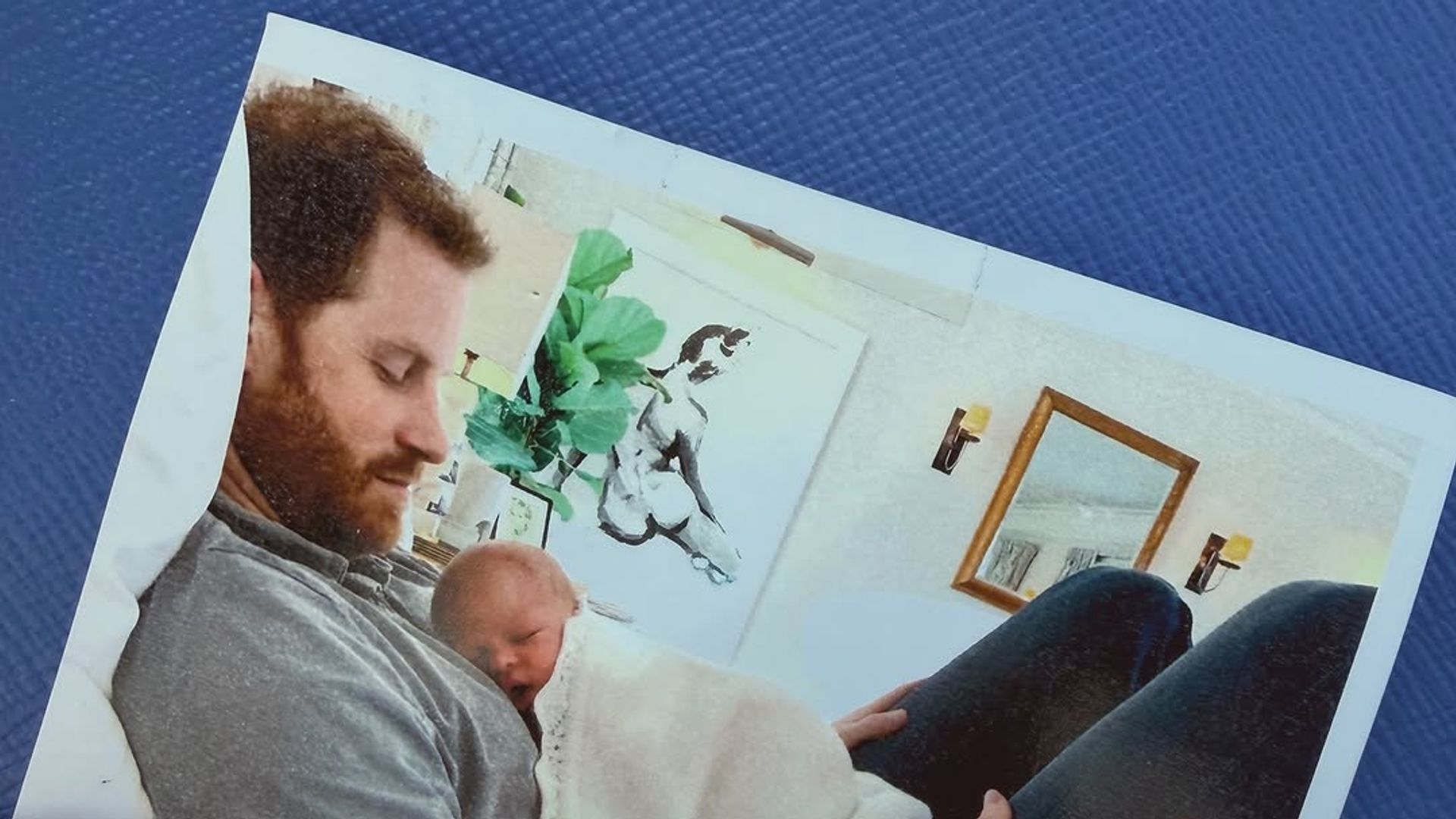
The release of a private, grainy photograph showing a young Archie Mountbatten-Windsor asleep on Prince Harry’s chest is not a simple act of parental nostalgia. In the high-stakes world of global branding, nothing is accidental. This specific image, shared by Meghan Markle, serves as a tactical reminder of the family’s humanity at a moment when their public narrative risks becoming overshadowed by legal battles and commercial pivots. By bypassing traditional royal communications channels and opting for a direct-to-consumer emotional appeal, the Duchess of Sussex is reinforcing a brand built on intimacy rather than institutional distance.
For those who have spent decades tracking the intersection of power and publicity, the timing of such "unseen" glimpses is the real story. It isn't about the baby. It’s about the benchmark of relatability.
The Economy of Intimacy
The Sussexes have pioneered a new financial model for fame. Unlike the working royals who trade public access for taxpayer funding through the Sovereign Grant, Harry and Meghan operate in a private equity-style attention economy. In this marketplace, "authenticity" is the primary currency. A polished, professional portrait by a court photographer feels cold and staged to a modern audience. Conversely, a candid, slightly out-of-focus shot taken on a smartphone feels like a secret shared between friends.
This perceived intimacy is what drives value for their various media deals. When a brand is built on "speaking one's truth," the visual evidence must support that claim. The image of a sleeping child on a tired father’s chest is a universal symbol of vulnerability. It creates a psychological bridge between a billionaire-adjacent lifestyle and the everyday struggles of parents worldwide.
However, this strategy carries an inherent risk. When you monetize your personal life, the line between "sharing" and "selling" becomes dangerously thin. Every time a private moment is released to bolster a public image, the scarcity of that privacy diminishes. The public begins to view these moments not as genuine gestures, but as part of a recurring PR cycle.
Weaponizing the Narrative Arc
To understand why this image matters now, one must look at the broader Sussex timeline. The couple has faced a series of professional setbacks, including the end of high-profile partnerships and a fluctuating approval rating in both the UK and the US. In the world of crisis management, the "pivot to family" is a classic maneuver. It softens the edges of a litigious reputation.
Breaking the Royal Mold
For generations, the British Royal Family controlled their image through the "Royal Rota," a system that gave specific UK newspapers access to events. Harry and Meghan burned that bridge long ago. By releasing images through their own platforms or carefully selected documentaries, they have seized the means of production.
They are no longer subjects of the media; they are the media.
This shift has profound implications for the future of celebrity culture. It demonstrates that with a large enough following, an individual can effectively bypass the gatekeepers of traditional journalism. Yet, this independence comes at a price. Without the buffer of an institution, the Sussexes are solely responsible for their own press. When the narrative turns sour, there is no palace spokesperson to hide behind.
The Logistics of Controlled Leaks
Behind every "unseen" photo is a vetting process that would rival a government agency. Before an image like the one of Archie and Harry reaches the public, it is analyzed for what it reveals and, more importantly, what it conceals.
- Background Details: Every item in the frame is checked to ensure no unintended wealth signals or security vulnerabilities are present.
- The Emotional Hook: Does the photo evoke the specific feeling required for the current campaign?
- Metadata Management: Stripping the digital footprint of the image to prevent sleuths from identifying the exact time and location of the shot.
This isn't just photography. It is visual engineering. The goal is to make the highly calculated look effortless. When the audience says, "They're just like us," the mission is accomplished, regardless of the fact that the photo was likely curated from a library of thousands of similar shots kept in reserve for the right news cycle.
The Architecture of Public Sympathy
There is a specific psychological mechanism at play when we see a father and child. In the context of Prince Harry’s well-documented struggles with his own father, King Charles III, images of him being a present, affectionate parent serve as a silent rebuttal to his past. It is a visual manifestation of "breaking the cycle," a theme he has returned to repeatedly in his memoir and interviews.
By highlighting these moments, the Sussexes are not just showing a baby; they are telling a story of redemption. They are positioning themselves as the architects of a new, healthier lineage. This appeals deeply to a demographic that values emotional intelligence and mental health awareness.
The Counter Argument
Critics argue that this constant drip-feed of private life contradicts the couple's stated desire for privacy. However, a veteran analyst would point out that Harry and Meghan have never actually asked for total privacy. They have asked for control.
The grievance isn't that people are looking at them; it’s that they want to be the ones holding the camera. This distinction is lost on many, but it is the cornerstone of their legal and social strategy. They are litigating to ensure that the only "private" moments the world sees are the ones they have authorized. It is a sophisticated, if polarizing, attempt to rewrite the rules of fame in the 2020s.
The Commercial Reality of Royal Proximity
At the end of the day, the Sussex brand relies on its connection to the monarchy, even as it maintains a distance from it. Archie’s status as a Prince is a significant part of the global interest in his upbringing. Without the royal titles and the history that accompanies them, a photo of a father and son is just a photo.
The "unseen" nature of these images is what gives them their market value. If we saw Archie every day, the intrigue would vanish. By keeping their children largely out of the spotlight, Harry and Meghan ensure that when they do choose to share a glimpse, it becomes a global news event. This scarcity keeps the brand "premium."
It is a difficult balancing act. Release too much, and you become a reality TV trope. Release too little, and you become irrelevant.
The Future of the Sussex Visual Brand
As the Sussex children grow older, the couple will face a new set of challenges. The "sleeping baby" era is a safe harbor. It is easy to project onto an infant. As the children develop their own personalities and public identities, the degree of control the parents can exert will inevitably wane.
Furthermore, the public's appetite for these glimpses is not infinite. To sustain a multi-decade media presence, the Sussexes will eventually need to produce content that does not rely on their personal lives or their grievances with the Royal Family. They need to transition from "royals in exile" to "producers of substance."
The release of this image suggests they are not quite ready to make 그 transition yet. They are still leaning on the most powerful tool in their kit: the raw, emotional pull of the family unit. It is a reliable tactic, a "break glass in case of emergency" button that guarantees headlines and social media engagement.
In the chess game of global PR, the sleeping Archie photo is a defensive move. It centers the conversation back on the family’s humanity, providing a brief respite from the more complicated and controversial aspects of their public life. It reminds the audience why they cared in the first place, stripping away the lawyers and the contracts to show a simple, relatable moment of fatherhood.
The brilliance of the move lies in its simplicity. You cannot argue with a sleeping child. You cannot litigate a father's affection. You can only watch, react, and in doing so, remain engaged with the Sussex brand for another cycle.
The question is no longer whether they want privacy, but rather how much the public is willing to pay—in attention and data—to keep getting these "private" glimpses. The Sussexes have bet their future on the idea that the world will never stop looking.
Protecting your brand is not about silence; it is about choosing the right noise.