The Myth of "Senseless Violence"
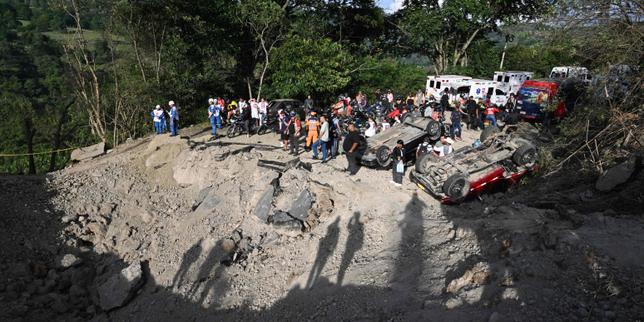
Media outlets love the word "senseless." They use it like a safety blanket whenever a car bomb levels a police station in Morales or a roadside IED shreds a convoy in the Cauca valley. When 14 people die and dozens more are rushed to overstretched clinics, the headlines paint a picture of a country spiraling into random, uncalculated mayhem.
They are lying to you. Or worse, they are too lazy to look at the map.
The recent bombing in Cauca wasn't an act of madness. It was a sophisticated, high-ROI military operation. To call it "senseless" is to ignore the cold, hard logic of insurgent territorial control. If you want to understand why Colombia is bleeding, you have to stop looking at the blood and start looking at the supply chains.
The "State of Emergency" isn't a sign that the government is losing control. It's a sign that the government never had it. We keep treating these events as interruptions to peace. In reality, they are the heartbeat of a thriving, multi-billion-dollar narco-economy that requires tactical instability to breathe.
Cauca is a Corporate Boardroom with Guns
The common narrative focuses on the "FARC dissidents" or the "ELN" as if they are mere ideological relics. That’s a 1990s perspective. Today, the groups operating in the Cauca region—specifically the Estado Mayor Central (EMC)—function more like logistics firms than guerilla movements.
Cauca isn't just a "region." It is a strategic corridor connecting the Andean highlands to the Pacific coast. It is the jugular vein of the global cocaine trade. When a bomb goes off in a town like Morales, the goal isn't just to kill police officers. The goal is to enforce a strategic vacuum.
- Territorial Hegemony: Violence is a communication tool. A bomb tells the local population that the state's protection is an illusion.
- Resource Diversion: By forcing the military to consolidate in urban centers after an attack, the rural "backroads" are left wide open for transit.
- Political Leverage: Every explosion is a seat at the negotiating table. The EMC isn't trying to overthrow the government; they are trying to manage it.
I’ve spent years analyzing security data in Latin America. I’ve seen the same pattern from Michoacán to the Darién Gap. We see a tragedy; they see a cost-of-doing-business expense that cleared a path for a 20-ton shipment.
The Peace Fallacy
The "Total Peace" policy pushed by the current administration is built on a flawed premise: that these groups want to stop fighting.
Why would they?
Peace is expensive for a warlord. Peace means competition. Peace means regulation. Conflict, on the other hand, provides a monopoly. When the competitor article laments the "breakdown of ceasefire agreements," it misses the point. The ceasefires were never meant to be permanent. They were tactical pauses used by the EMC to recruit, re-arm, and map out the very police stations they just leveled.
If you are an investor or a policy analyst looking at Colombia, you have to stop asking when the violence will end. Start asking who profits from its continuation. The violence is the product.
The Logistics of a Car Bomb
Let’s talk about the math of the Morales attack.
A standard improvised explosive device (IED) used in these contexts costs roughly $500 to $2,000 to assemble, depending on the grade of the ammonium nitrate and the sophistication of the trigger. The "return" on that investment is the complete paralysis of a regional trade hub for 48 to 72 hours. During that window, local intelligence (the eyes and ears of the state) is blinded.
The media focuses on the 14 deaths because bodies are easy to count. They don't count the hundreds of kilos of base paste that moved through the perimeter while the first responders were digging through rubble.
We are not witnessing a "security failure." We are witnessing a highly efficient system of asymmetric governance.
Stop Asking "Why" and Start Asking "Where"
People often ask: "Why would they kill their own neighbors?"
This is the wrong question. The premise assumes the insurgents view the locals as "neighbors." They don't. They view them as infrastructure. To a commander in the Cauca, a village is just a checkpoint. A civilian is either a lookout or an obstacle.
If you want to predict the next bombing, don't look at political speeches. Look at the topographic maps of the Naya corridor. Look at the price of coca leaf in the canyon. Look at the proximity of the Pan-American Highway to the jungle canopy.
The violence happens exactly where the geography makes the state's presence most expensive. The insurgents don't fight the military where the military is strong; they fight the military where the military is slow.
The Hard Truth About Intervention
The international community loves to throw money at "crop substitution" programs. It’s a feel-good strategy that fails every single time. Why? Because you cannot substitute a high-value, illicit commodity with coffee or cacao when the infrastructure to move the legal goods doesn't exist, but the infrastructure to move the illegal ones is enforced by car bombs.
To "fix" Cauca, you don't need more peace talks. You need to make the logistics of violence more expensive than the logistics of peace. Right now, the math favors the bomb.
Until the Colombian state—and its international backers—admit that they are fighting a war against a sophisticated logistics network rather than a "terrorist" group, they will continue to be surprised by the next explosion.
The bombing wasn't a sign of a broken system. It was the system working exactly as intended.