The "China Shock 2.0" narrative is a security blanket for lazy boardrooms and terrified politicians. Every mainstream analyst is currently reciting the same tired script: China has massive overcapacity, their state subsidies are "unfair," and if we don't erect a digital Great Wall of tariffs, the Western middle class will vanish.
This isn't just wrong. It’s a deliberate distraction from the real crisis of incompetence.
While Washington and Brussels scramble to hike tariffs to 100%, they are missing the fundamental shift. We aren't being "flooded" with cheap junk. We are being out-engineered by a country that treated the energy transition like a war while we treated it like a PR campaign. If you think a 10% or even 50% tariff saves Ford or Volkswagen, you haven't been paying attention to the supply chain.
The Overcapacity Myth Is a Cop-Out
The loudest argument against the current Chinese export surge is "overcapacity." The logic goes like this: China’s domestic economy is slowing down, so they are dumping excess products on global markets at a loss just to keep their factories running.
It’s a neat story. It’s also a fantasy.
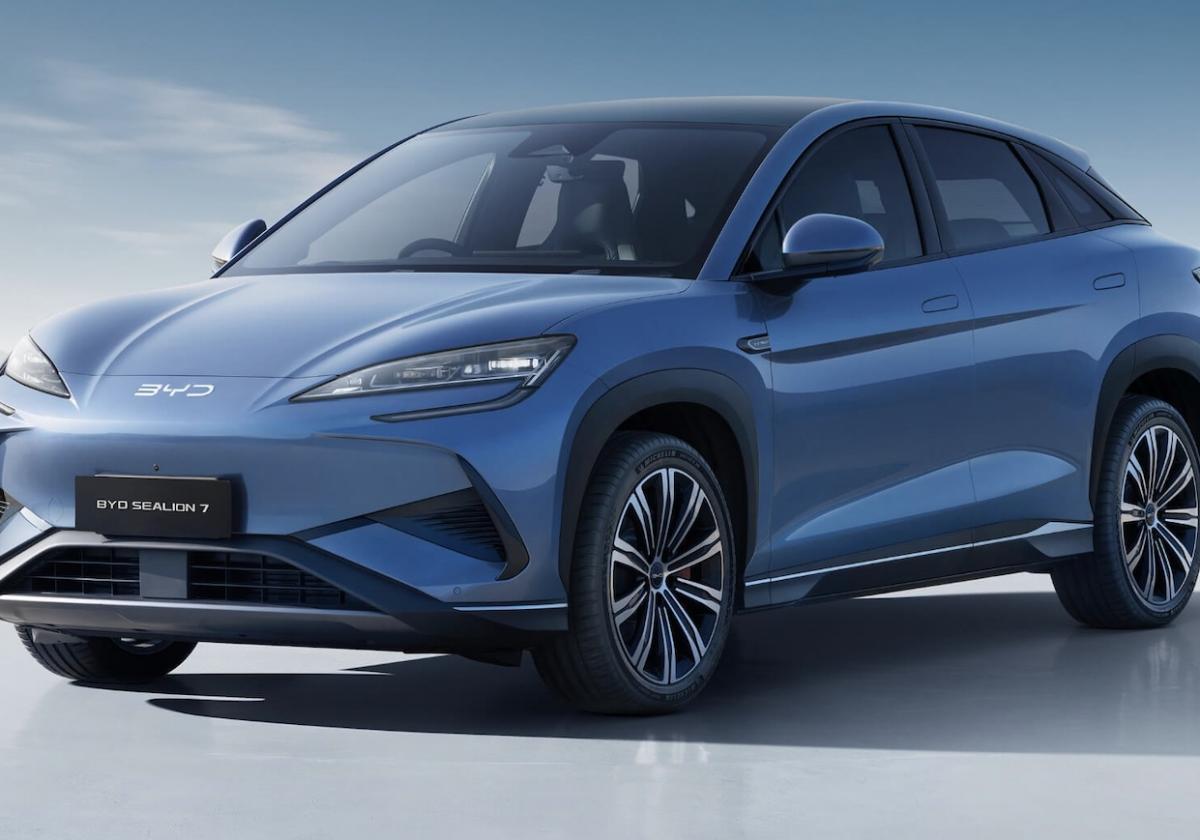
When BYD or Xiaomi releases a car that outperforms a Tesla at two-thirds the price, that isn't just "excess inventory." That is a superior manufacturing ecosystem. To call it overcapacity is to ignore that their utilization rates in high-end EV plants often dwarf those of traditional American "Big Three" internal combustion lines.
The West is conflating efficiency with dumping.
I’ve spent years looking at the cost structures of tier-one automotive suppliers. The Chinese advantage isn't just cheap labor—that’s a 1995 mindset. The advantage is vertical integration. BYD makes their own batteries, their own semiconductors, and their own software. While Western OEMs (Original Equipment Manufacturers) spend years negotiating with thirty different legacy suppliers for a single dashboard component, the Chinese are iterating in weeks.
Protectionism Is a Tax on Innovation
Tariffs are the morphine of the industrial world. They dull the pain, but they don't fix the wound.
By shielding domestic manufacturers from Chinese competition, we are effectively subsidizing mediocrity. If General Motors doesn't have to compete with a $12,000 EV that actually works, they have zero incentive to fix their bloated legacy cost structures.
Consider the "Solar Guardrail" era. We slapped tariffs on Chinese solar panels a decade ago. Did it create a dominant US solar manufacturing industry? No. It just made solar installations more expensive for American consumers and slowed down the transition. Meanwhile, China kept scaling, kept innovating, and now they own 80% of the global solar supply chain anyway.
We are repeating the exact same mistake with EVs and lithium-processing.
Every time a politician screams about "leveling the playing field," they are actually asking to keep the price of progress artificially high. If the goal is to decarbonize the economy, why are we making the tools to do so twice as expensive as they need to be? It’s a policy contradiction that would be hilarious if it weren't so damaging to the actual consumer.
The Subsidy Hypocrisy
The most "cringe" argument in the China Shock 2.0 discourse is the hand-wringing over state subsidies.
"China is cheating because the government gives them money!"
Have we looked in the mirror lately? The Inflation Reduction Act (IRA) in the US is one of the largest industrial subsidy packages in human history. We are literally printing money to bribe companies to build factories in Ohio and Georgia. Europe has its own versions.
The difference isn't that China subsidizes and we don't. The difference is that China’s subsidies are tied to brutal, Darwinian competition. They let hundreds of EV companies start, let 90% of them go bankrupt, and then the three or four survivors are the toughest, leanest entities on the planet.
In the West, we use subsidies to keep "national champions" on life support. We subsidize the losers to keep them from failing. China subsidizes the sector and lets the market execute the weak.
The Logistics of the New World Order
The "China Shock" isn't just about what is being made; it’s about how it’s being moved.
While Western analysts focus on the sticker price of a car in a showroom in Munich, they are ignoring the "Belt and Road" 2.0. China is building the ports, the railways, and the digital infrastructure across the Global South.
The real threat isn't that China will take over the US car market—tariffs might actually stop that in the short term. The threat is that China will take over the rest of the world.
Imagine a scenario where Brazil, Indonesia, Nigeria, and Thailand are all running on Chinese 5G, driving Chinese EVs, and using Chinese digital payment systems. The US and Europe will be left as high-priced islands of legacy technology, trading with each other while the other 6 billion people on earth move to a different standard.
We are literally tariff-ing ourselves into irrelevance.
Why the "National Security" Argument is a Red Herring
"But what about data privacy? These cars are rolling spy machines!"
This is the ultimate "break glass in case of emergency" argument. Yes, hardware security matters. Yes, we need to vet software. But the idea that we can’t secure a car's operating system while we all carry Chinese-made smartphones in our pockets is a joke.
This isn't about security; it's about market share.
If we were serious about security, we would be building open-source standards for vehicle data that any manufacturer must follow. Instead, we are using "security" as a catch-all excuse to block competition. It’s a protectionist wolf in a "national interest" sheep’s clothing.
The Brutal Reality of the Supply Chain
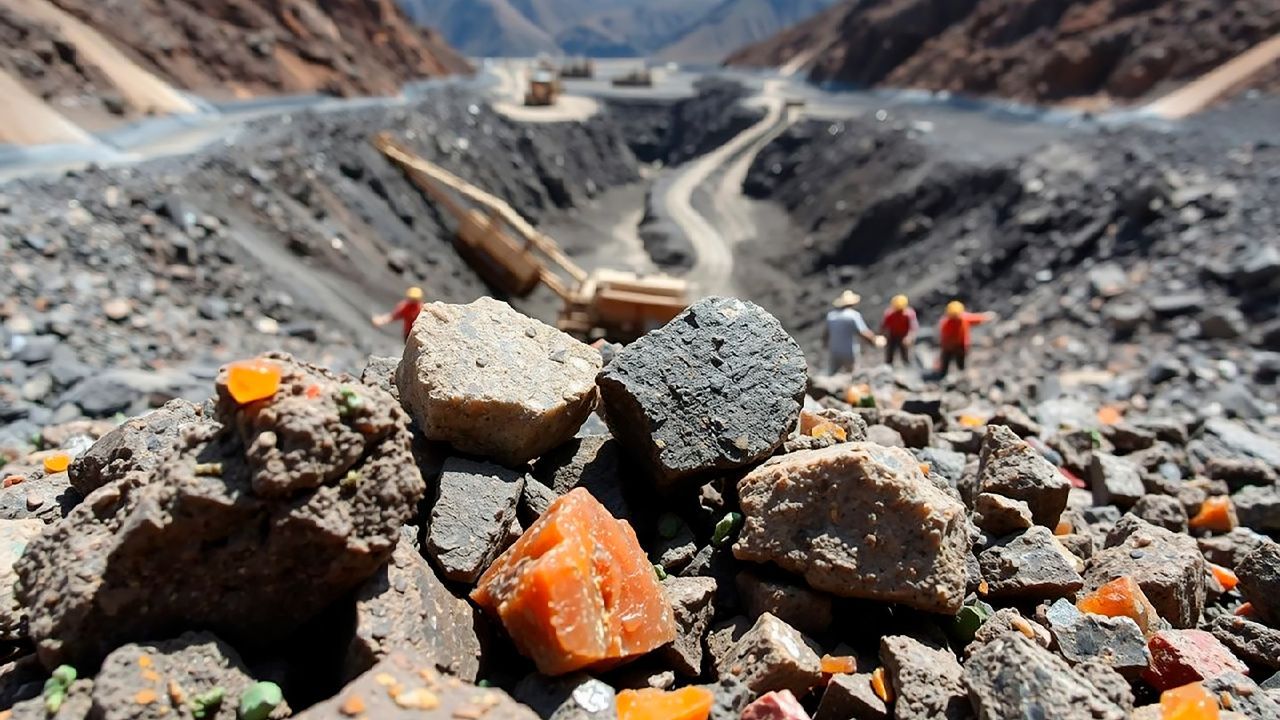
Let’s talk about the minerals. This is where the contrarian truth gets really uncomfortable.
You can ban the Chinese car. You can’t ban the Chinese battery components without collapsing your own industry.
China controls:
- 70% of global lithium refining.
- 85% of anode and cathode production.
- The vast majority of rare earth processing.
Even if you build a Ford Lightning in Michigan, the guts of that battery likely have a Chinese fingerprint. By engaging in a trade war, we aren't "de-risking." We are just making the supply chain more opaque and more expensive.
True de-risking would involve a 20-year plan to build our own refining and processing capacity. Instead, we are doing the 2-week plan: complaining on the news and hiking taxes at the border. One of these requires actual work; the other requires only a press release.
Stop Trying to "Win" the Trade War
You don't win a trade war with a country that has a higher manufacturing output than the next three countries combined. You win by out-pacing them.
The 1980s "Japan Shock" didn't destroy the American auto industry. It forced it to get its act together. Toyota and Honda taught Detroit how to build cars that didn't fall apart after 40,000 miles. It was painful, but it led to better products for everyone.
The China Shock 2.0 is the same thing, just faster and with more software.
Instead of crying about "dumping," Western companies need to:
- Kill the 7-year product cycle. If it takes you seven years to go from concept to production, you are already dead.
- Fire the "Compliance" committees. In China, engineers run the show. In the West, the lawyers and the ESG consultants run the show.
- Adopt a "Software First" architecture. Most Western EVs are just internal combustion cars with the engine ripped out and a battery shoved in. They are heavy, inefficient, and the UI looks like it was designed in 2005.
The consumer doesn't care about your "legacy of craftsmanship." They care that the Chinese car has better range, better software, and costs half as much. If you can’t beat that, you don't deserve to exist.
The Real Cost of "Saving" Jobs
Politicians love to say they are saving manufacturing jobs.
But for every one job saved in a legacy auto plant by a tariff, five jobs are lost in the broader economy because of higher costs and retaliatory trade measures. We are protecting the past at the expense of the future.
We are telling our young engineers, "Don't worry about being the best; we'll just make sure the best people aren't allowed to sell here." That is a recipe for long-term civilizational decay.
The "China Shock" isn't a crisis. It’s a mirror.
It’s showing us exactly how much we’ve let our own industrial base rot while we were busy optimizing for quarterly dividends and stock buybacks. You can't fix a decade of financial engineering with a 100% tariff.
The only way out is through. If we want to compete, we have to actually be competitive. Not on paper, not in a lobbying meeting, but on the factory floor and in the code.
Anything else is just a slow-motion surrender.
Stop blaming the "dumping" and start looking at the drawings. The problem isn't that they are selling them too cheap. The problem is that we’ve forgotten how to build them better.
The trade war is a distraction. The real war is in the R&D lab, and currently, we are losing because we're too busy filling out paperwork for a government grant to actually build something that works.
Buy a BYD, take it apart, and realize how far behind you actually are. That's the only lesson that matters.
_