Western leaders keep talking about de-risking and decoupling, but the numbers tell a different story. If you want to see who really holds the cards in the global economy, don't look at oil or gold. Look at antimony, tungsten, and gallium. These three niche commodities are currently seeing price spikes that should make every tech CEO and defense contractor in the West lose sleep.
Prices aren't just drifting up. They're jumping.
China isn't just a participant in these markets. It's the landlord. When Beijing decides to tighten export controls—as it has recently with antimony—the rest of the world scrambles. This isn't a theoretical supply chain "hiccup." It's a fundamental shift in how power is exercised in the 2020s. We've spent decades optimizing for cost, and in doing so, we've handed the keys to the kingdom to a single geopolitical rival.
The sudden explosion of antimony prices
Antimony is the most important metal you've probably never heard of. It's essential for everything from flame retardants to lead-acid batteries and, most critically, military hardware like night-vision goggles and armor-piercing ammunition.
In late 2024 and heading into 2026, antimony prices hit record highs, doubling in a matter of months. Why? Because China, which produces nearly half of the world’s supply, slapped on export restrictions.
I’ve watched market analysts try to downplay this as a "temporary supply-side adjustment." It’s not. It’s a strategic signal. When you control 48% of the mine production and a massive chunk of the refining capacity, you don't just sell a product. You set the rules of the game.
The U.S. has almost zero domestic antimony mining. We rely on recycled scrap and imports from places like Tajikistan or, you guessed it, China. When the tap shuts off, the price doesn't just go up; the availability vanishes. If you're running a defense firm and you can't get high-purity antimony, your production line stops. Period.
Tungsten and the hardening of Chinese dominance
Tungsten is another beast altogether. It's almost as hard as diamond and has the highest melting point of all elements. You need it for drill bits, turbine blades, and kinetic energy penetrators. Basically, if you want to cut through something or blow something up, you need tungsten.
China controls over 80% of global tungsten production. That is a staggering level of concentration.
For years, the West was happy to let China do the "dirty work" of mining and processing because it kept prices low. We traded our industrial independence for cheap components. Now, as the Chinese government consolidates its state-owned enterprises to have even tighter control over "strategic minerals," that cheap supply is being used as leverage.
Prices for tungsten concentrates have been climbing steadily. It's a slow-motion car crash. We see it happening, but opening a new mine in Canada or Australia takes ten years of permitting and billions in capital. China can ramp up or throttle down in a week.
Gallium and the semiconductor choke point
If antimony and tungsten are about heavy industry and defense, gallium is about the future of computing and green energy. Gallium nitride (GaN) is the "miracle" material making power electronics smaller and more efficient. It's in your fast-charging phone brick and it's in the radar systems of F-35 fighter jets.
China produces about 98% of the world’s primary gallium. Let that sink in.
When Beijing implemented export licensing requirements for gallium in late 2023, the message was clear: "We know you need this for your semiconductor dreams, and we're the only ones who have it."
We're seeing a bifurcation of the market. There's the "official" price and then there's the "I actually need to buy some right now" price. International buyers are now forced to navigate a maze of Chinese bureaucracy just to get the raw materials needed for high-end chips. It's a bottleneck by design.
Why the West can't just mine its way out
You'll hear politicians say we need to "drill, baby, drill" or "mine our way to freedom." It's a nice sentiment. It's also mostly fantasy in the short term.
Mining isn't the hard part. Processing is.
China's real grip isn't just on the holes in the ground; it's on the chemical plants that turn raw ore into high-purity metal. Even if we dug up all the tungsten we needed in Idaho tomorrow, we’d likely have to ship it to China to get it refined into a usable form.
Building that processing infrastructure requires three things the West currently lacks:
- Tolerance for environmental impact: Refining these metals is toxic.
- Cheap energy: China subsidizes the massive electricity costs required for smelting.
- Expertise: We’ve exported our metallurgical talent for two generations.
We're not just behind. We're decades behind.
The myth of the free market in commodities
We often talk about "market forces" as if they're some natural law like gravity. In the world of niche commodities, market forces are whatever the Chinese Communist Party decides they are.
They play the long game. They’re willing to flood the market to crash prices and drive Western competitors out of business—which they did successfully in the 2010s. Once the competition is dead, they tighten the screws.
It’s a classic monopoly play, but on a global, geopolitical scale. If you're an investor or a supply chain manager, you have to stop looking at these price spikes as anomalies. They are the new baseline. Volatility is the feature, not the bug.
What happens when the "niche" becomes the "norm"
The term "niche" is actually dangerous here. It implies these materials are optional. They aren't. As we move toward a more electrified, digitized, and militarized world, these "niche" metals become the primary ingredients of national sovereignty.
If you can't build a transformer without certain metals, or a missile without others, you aren't a superpower. You're a customer. And right now, the customer is getting a very bad deal.
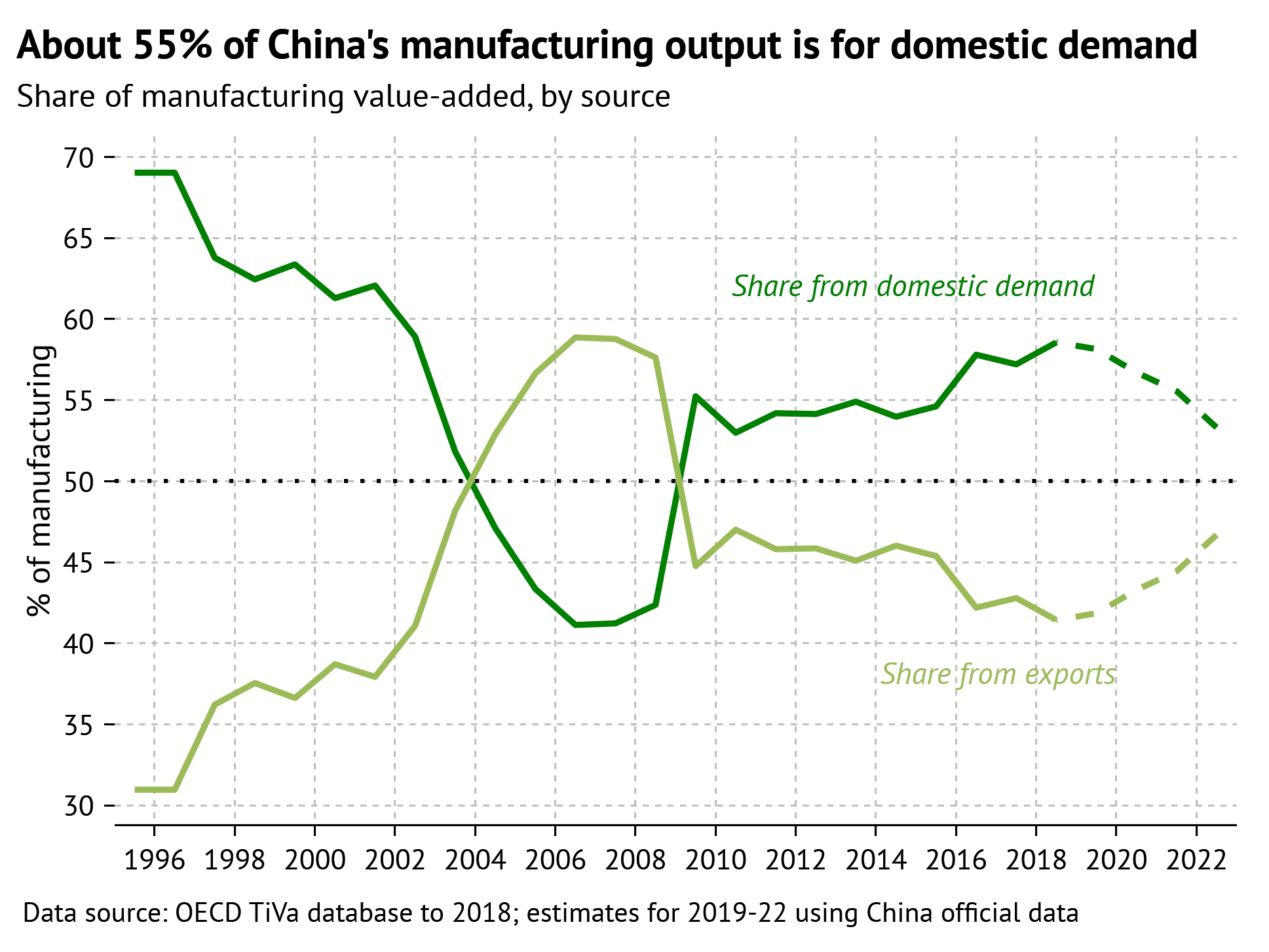
We’re seeing the emergence of a "Two-Tier" supply chain. One tier is for the Chinese domestic market, which remains well-supplied and relatively stable. The second tier is the global export market, which is subject to political whims, export quotas, and skyrocketing premiums.
Real steps to survive the supply crunch
If you're waiting for the government to solve this with a new treaty, you're going to be waiting a long time. You need to act on the assumption that China will continue to use its commodity grip as a diplomatic weapon.
First, stop "just-in-time" inventory for strategic materials. It’s a relic of a peaceful era that no longer exists. Build "just-in-case" stockpiles. It’s expensive, but it’s cheaper than a total production halt.
Second, invest in substitution research now. Can you use silicon carbide instead of gallium nitride? Can you find a polymer that replaces antimony in your flame retardants? It might cost more today, but it buys you insurance against a total export ban tomorrow.
Finally, look at "friend-shoring" with a critical eye. Moving a factory to Vietnam doesn't help if Vietnam still gets its raw materials from China. You have to trace the supply chain all the way back to the dirt. If the dirt is in China, you're still at risk.
The price spikes we’re seeing in antimony, tungsten, and gallium aren't just numbers on a screen. They’re the sound of the door closing on the era of easy globalization. Pay attention. The world just got a lot more expensive, and a lot more complicated.