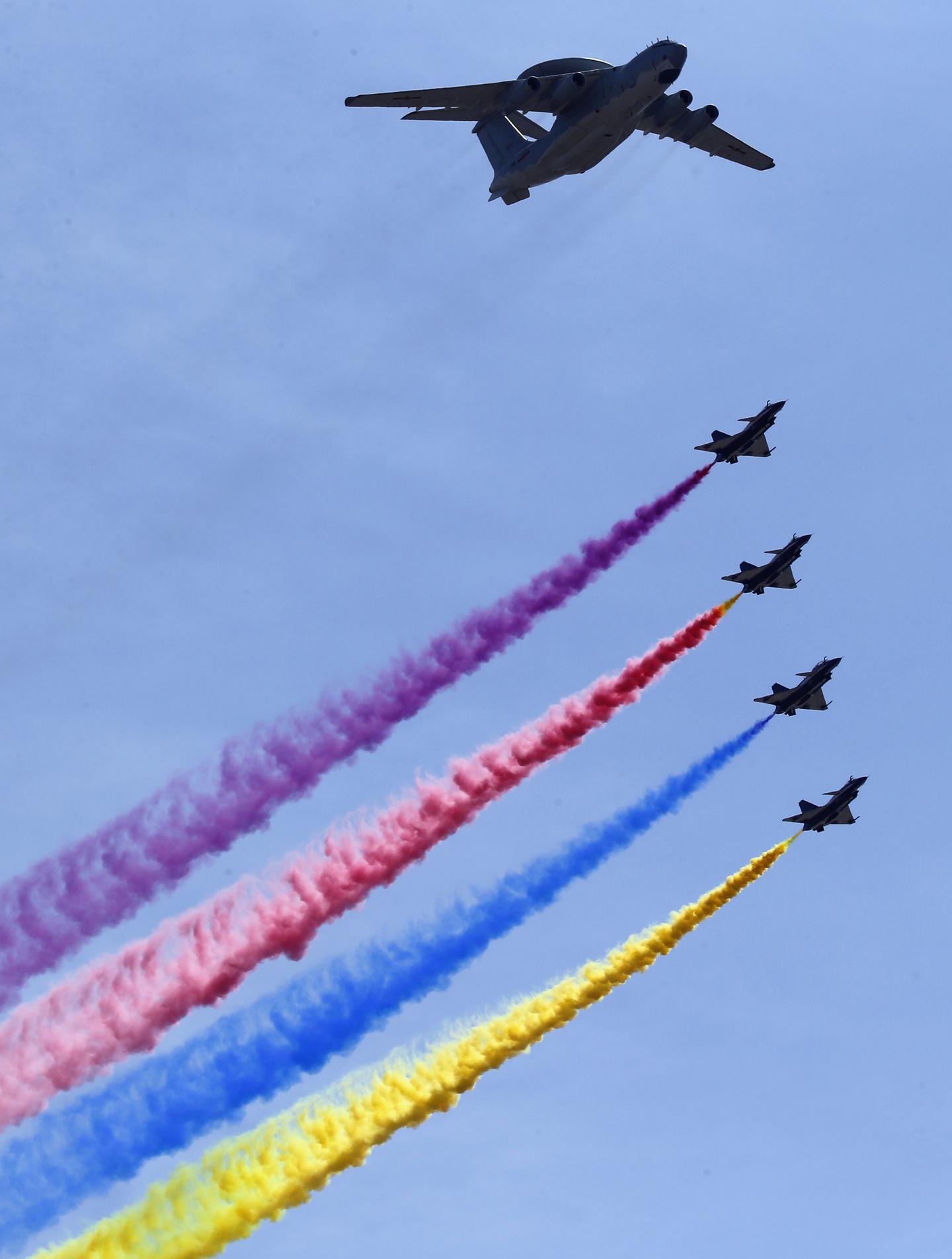
Buying Chinese military hardware used to feel like a smart hack for nations on a budget. You'd get 80% of the capability of American tech for about 40% of the price. At least, that was the sales pitch. But in 2026, that bargain is looking like a massive liability. From the skies over Pakistan to the coastal radars of Venezuela and the high-tension theater in Iran, Beijing’s "cutting-edge" defense systems are failing when the shooting actually starts.
It’s not just a few glitches. We're seeing a pattern of systemic failure that suggests China’s military-industrial complex might be more of a marketing machine than a technological powerhouse. If you're a nation relying on Chinese HQ-9 missiles or YLC-8E radars to keep your rivals at bay, you're probably having some very uncomfortable meetings right about now.
The Operation Sindoor Disaster
The cracks really started to show during India’s Operation Sindoor in May 2025. Following a major terror attack in Pahalgam, the Indian Air Force launched precision strikes across the border. Pakistan had spent billions on Chinese tech, specifically the HQ-9 air defense system—widely touted as a "S-300 killer"—and the YLC-8E anti-stealth radar.
The result? Total silence.
Indian BrahMos missiles, flying at ultra-low altitudes, sliced right through the defense network. The YLC-8E, which Beijing claimed could spot F-35s from hundreds of kilometers away, couldn't even handle Indian decoys. When the dust settled, Pakistan was left with a pile of charred Chinese electronics and a very public embarrassment. Fragments of the Chinese PL-15E air-to-air missiles recovered by India even showed guidance errors and motor flaws. It turns out that looking good in a parade in Beijing doesn't translate to working in the heat of a South Asian dogfight.
Venezuela and the Stealth Capture
While Pakistan was reeling, Venezuela provided another data point. During a high-stakes US operation that led to the capture of Nicolás Maduro, the Venezuelan air defense network—stacked with Chinese JY-27A "meter-wave" radars—remained effectively blind.
The JY-27A was marketed specifically as the ultimate counter to American stealth technology. Yet, US special forces and stealth aircraft operated with such impunity it was as if the radars weren't even turned on.
Why Venezuela's Tech Failed
It wasn't just poor tech; it was poor support. Reports indicate that over 60% of Venezuela's Chinese-made radars were offline before the raid even began.
- Stingy Spares: Beijing’s "after-sales service" is notoriously thin.
- Corrosion: Systems weren't hardened for the tropical humidity of South America.
- Training Gaps: Venezuelan crews didn't have the technical depth to fix software bugs that Chinese engineers refused to address remotely.
Iran and the HQ-9B Collapse
The final nail in the coffin for China’s defense prestige came during the recent US-Israeli strikes on Iran. Tehran had high hopes for the HQ-9B, the latest "upgraded" version of China's primary surface-to-air missile system. They bought it after their Russian S-300s were humiliated by Israeli F-35s.
Instead of a shield, the HQ-9B proved to be a target. The system’s reaction time was sluggish—taking roughly 20 seconds to respond to a threat compared to the 6 seconds typical of a US Patriot system. US wide-band jammers easily overwhelmed the Chinese seekers. In a matter of minutes, six HQ-9B batteries were destroyed before they could even get a lock.
The Problem With the Chinese Model
Why does this keep happening? I've looked at the data, and it boils down to three core issues that China can't easily fix.
1. Zero Combat Hardening
Unlike American or even Russian gear, most Chinese export tech has never seen a real war. It’s designed in a vacuum. US systems are constantly tweaked based on data from actual combat zones. China’s tech is based on simulations and stolen blueprints, which means they miss the messy realities of electronic warfare and environmental stress.
2. Sluggish Software Integration
In modern war, it’s all about data-linking. A radar needs to talk to a missile battery, which needs to talk to a command center. Iranian and Pakistani networks suffered from "hand-off" delays. The software simply isn't fast enough to manage the data flow of a high-intensity saturated attack.
3. The Export Version Trap
China often sells "monkey models"—stripped-down versions of their own tech—to foreign buyers. They keep the best stuff for the People's Liberation Army (PLA). While every country does this to some extent, the gap between what China promises and what it actually ships is massive.
The Strategic Fallout
The reputational damage is real. China is currently the world’s third-largest arms exporter, but who’s going to buy a "stealth-killer" radar that can't see a stealth jet? Middle Eastern and African nations that were eyeing Chinese gear as a "cheap" alternative are now looking at the bill and realizing they're buying expensive paperweights.
Beijing’s silence on these failures is deafening. While they continue to push the Belt and Road Initiative and "All-Weather Partnerships," their partners in Islamabad, Caracas, and Tehran are learning a hard lesson: China will take your money and your oil, but they won't—or can't—provide the tech to actually protect you.
If you're tracking global defense trends, watch the next round of procurement in Southeast Asia and the Middle East. You’ll likely see a sharp pivot back to Western or indigenous systems. The era of the "budget superpower" might be over before it truly began.
Check the maintenance logs and spare parts availability before signing any defense contract. If the manufacturer won't guarantee on-site tech support for software glitches, the "low price" is just a down payment on a future disaster.