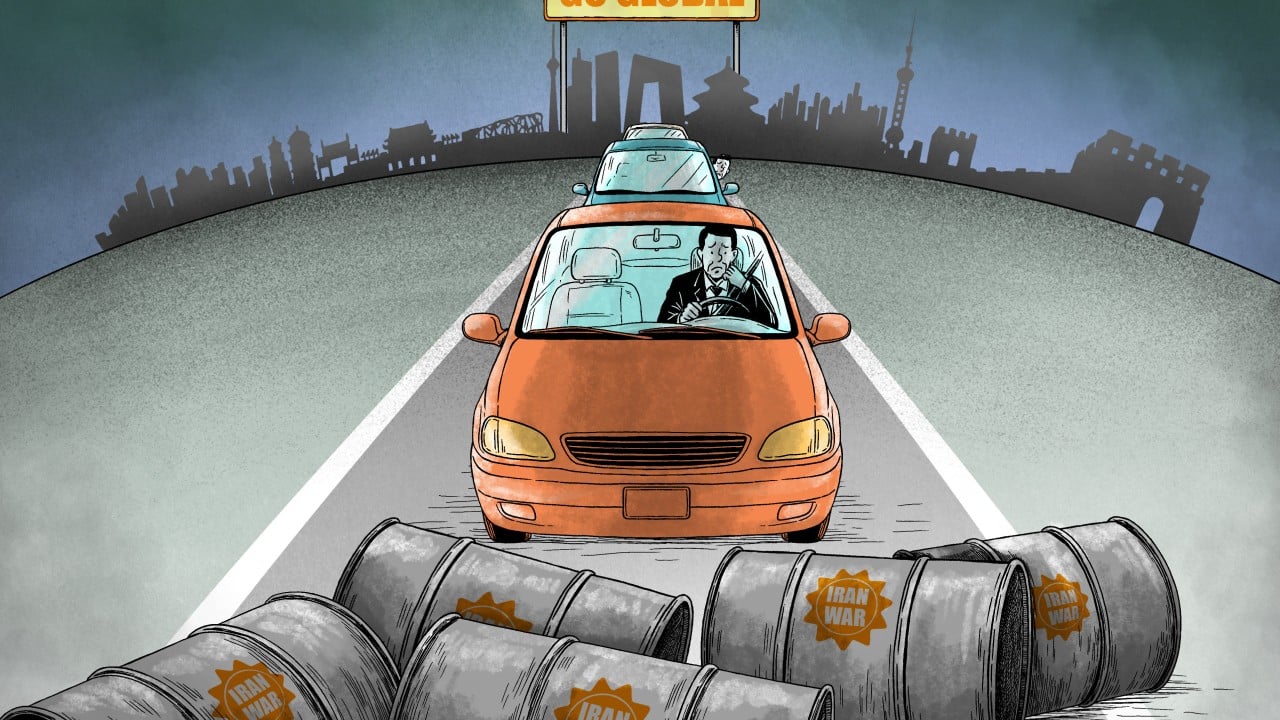
The era of blind global expansion is dead. For a decade, "going global" was the mandatory mantra for every ambitious Chinese factory owner from Shenzhen to Suzhou. They chased cheap labor in Southeast Asia and tapped into high-spend markets in the Middle East. Then the war in Iran happened. It didn't just disrupt shipping lanes; it shattered the assumption that the world would stay open for business forever.
I’ve watched these companies for years. They used to think a factory in a foreign land was an asset. Now, they're realizing it might just be a liability waiting to be seized or shelled. The conflict in the Middle East has forced a massive, quiet retreat. Chinese manufacturers are no longer just looking for the lowest costs. They’re looking for places where their machines won't get caught in the crossfire of someone else’s geopolitical grudge.
The sudden death of the Middle Eastern hub
For years, the Middle East looked like a golden goose for Chinese tech and heavy industry. Countries like Iran were supposed to be the bridge between the East and Europe. Thousands of Chinese firms set up shop there, drawn by energy subsidies and strategic location. The war changed the math overnight.
When the bombs started falling, the supply chains didn't just slow down. They vanished. Small and medium-sized enterprises (SMEs) found themselves with millions of dollars in equipment stuck behind borders that were suddenly closed. You can't run a lean manufacturing operation when your raw materials are sitting in a shipping container in a blockaded port. Many of these business owners are now realizing that being a "strategic partner" in a volatile region is a great way to lose your shirt.
I’m seeing a massive pivot back toward "safe" zones. But even those aren't what they used to be. The definition of safety is changing from "low crime" to "low geopolitical risk." It's a fundamental shift in how Chinese capital moves across the map.
Why the old strategy failed so fast
Chinese companies made a classic mistake. They treated international expansion like a domestic land grab. They assumed that because they could build a factory in three months in Guangdong, they could do the same in a completely different political environment and expect the same stability. They didn't account for the "fragility" of the global trade system.
The Iran war exposed three major flaws in the standard Chinese expansion model. First, there was too much reliance on single corridors. If the Strait of Hormuz or the Red Sea gets messy, your entire business model collapses. Second, there was a total lack of political insurance. Most of these manufacturers had zero backup plan for a hot war. Third, they underestimated the power of sanctions.
It’s not just about the physical war. It’s about the financial one. Once the global banking systems started freezing assets and cutting off trade with the region, even the companies far from the front lines felt the squeeze. They couldn't pay their workers. They couldn't buy parts. They were paralyzed.
Mexico and Southeast Asia are the new battlegrounds
So, where is the money going now? It's not going back to China entirely. Instead, there's a desperate scramble toward Mexico and Vietnam. But even this feels different than before. It’s more cautious. It’s "Nearshoring" with a heavy dose of paranoia.
Mexico is the current darling because it’s the back door to the United States. If you're a Chinese EV battery maker or a furniture manufacturer, you're looking at Monterrey, not Tehran. The logic is simple. The U.S. market is still the ultimate prize, and being physically close to it reduces the number of things that can go wrong in transit.
In Southeast Asia, the vibe is shifting too. Vietnam used to be the default. Now, companies are looking at Malaysia and Thailand with fresh eyes. They want diversification. They don't want to put all their eggs in one basket again. I talked to a lighting manufacturer last month who told me he’s splitting his production across three different countries just in case one of them gets hit with a new round of tariffs or civil unrest. That’s the new normal.
The hidden cost of the retreat
Don't think for a second that this "recalibration" is cheap. Moving a factory is a nightmare. It costs a fortune to relocate specialized machinery, retrain a new workforce, and navigate the bureaucratic hell of a new country. Many of these manufacturers are eating massive losses just to get out of the Middle East.
We're also seeing a "talent drain" in reverse. The ambitious managers who were sent abroad to lead these international divisions are being called back home. The morale in these companies is at a low point. For years, they were told they were the vanguard of a new global empire. Now, they feel like they're just trying to survive.
There’s also the issue of the "China Plus One" strategy. It’s getting more expensive. Everyone is trying to move to the same five or six "safe" countries at the same time. This is driving up the price of industrial land and labor in places like Queretaro or Ho Chi Minh City. The cost savings that used to justify going overseas are evaporating.
Digital twins and the virtual factory
One fascinating trend emerging from this mess is the rise of the "virtual" expansion. Instead of building a massive physical footprint, some Chinese tech firms are trying to keep as much as possible back in China. They use "digital twins" to manage small, automated assembly lines abroad.
The idea is to have a tiny physical presence that can be shut down or moved quickly if things go south. It’s manufacturing as a service. It's less about owning the land and the building and more about owning the IP and the code. This is a direct response to the physical risks highlighted by the Iran conflict. If your factory is mostly software and a few modular robots, a border closure isn't the death sentence it used to be.
Rethink your own supply chain risks
If you're running a business that relies on these manufacturers, you need to wake up. The stability you’ve enjoyed for the last twenty years was an anomaly, not the rule. The world is getting more fractured, not more connected.
You should be asking your suppliers hard questions right now. Where is their sub-component factory located? Do they have a "Plan B" if a major shipping lane closes for six months? If their answer is "don't worry about it," you should probably start worrying.
The smart move is to stop chasing the absolute lowest price point. Start paying a premium for resilience. That means working with manufacturers who have diversified their own footprints and who have a clear-eyed understanding of the geopolitical risks.
Start by auditing your top five most critical components. Find out exactly where they're made. If they're coming from a region with a history of instability, find a secondary source today. Don't wait for the next war to start. By then, everyone else will be trying to do the same thing, and the "safety" premium will be ten times higher than it is now. Get out ahead of the curve or get crushed by it.