A 21-year-old student just learned the hard way that "planespotting" in the United States isn't just a nerdy hobby—it's a federal offense when you're aiming your lens at the wrong runway. Tianrui Liang, a Chinese national studying in Scotland, was intercepted at JFK Airport this month while trying to flee the country. His crime? Taking high-resolution photos of some of the most sensitive aircraft in the American arsenal at Offutt Air Force Base in Nebraska.
You might think taking a picture of a plane from a public road is harmless. It isn't. The FBI doesn't think so, and federal law definitely doesn't think so. This isn't just a one-off story about a confused tourist. It's part of a relentless, years-long pattern of Chinese nationals "accidentally" wandering onto or near restricted sites with high-end camera gear.
The Offutt Incident and the Doomsday Plane
Liang’s road trip across the U.S. looked less like a vacation and more like a scout mission. He didn't just stop at Offutt; he hit Ellsworth Air Force Base in South Dakota to eyeball B-1B Lancer bombers and had Tinker Air Force Base in Oklahoma on his itinerary.
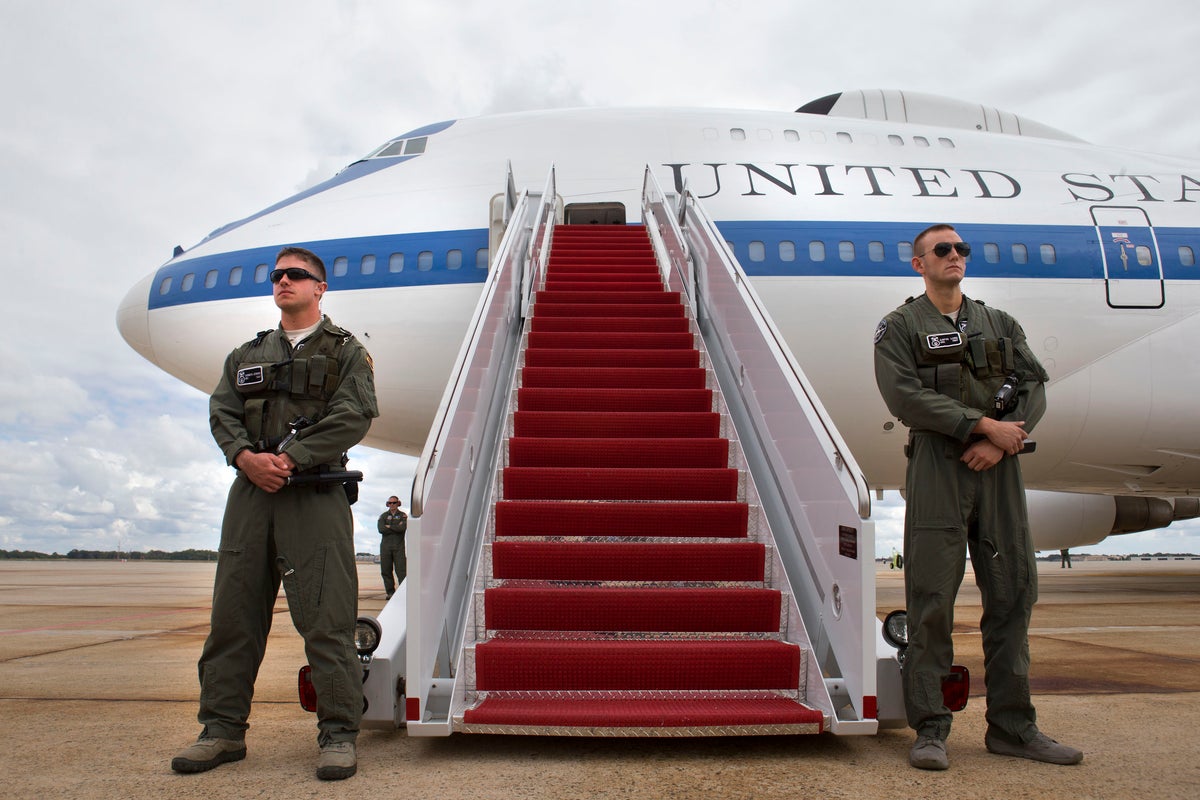
At Offutt, he was spotted with a telescopic lens aimed at the flight line. We're talking about the RC-135 reconnaissance plane and the E-4B "Nightwatch." If you aren't familiar, the E-4B is literally known as the "doomsday plane." It serves as a mobile command center for the President during a nuclear war. It’s the kind of tech you don't want foreign entities mapping out in detail.
According to the FBI affidavit, Liang admitted he knew it was illegal to photograph the planes on the ground. He claimed they were for his "personal collection." That’s a line investigators have heard a dozen times before. Even if he’s telling the truth and he’s just an obsessed aviation geek, the law is clear: Title 18 U.S. Code Section 795 prohibits photographing military installations without permission. It doesn't matter if you're on a public sidewalk; if your lens is pointed at defense assets, you're in the crosshairs.
The Pattern of "Innocent" Trespassing
If this were the first time, we could maybe chalk it up to a naive student. But the history of these arrests suggests something much more organized or, at the very least, a persistent intelligence-gathering tactic.
- Key West, Florida (2018-2020): Several Chinese nationals were caught at Naval Air Station Key West. One, Zhao Qianli, claimed he was "lost" after wandering past numerous warning signs. He ended up with a year in federal prison because his camera was full of photos of sensitive antenna arrays, not the "sunrise" he claimed to be shooting.
- Camp Grayling, Michigan (2023): Five University of Michigan students from China were confronted near a massive military exercise involving the National Guard. They claimed they were there to see "stars," but they were actually caught near a site where thousands of troops were training. They fled the country before charges could be fully processed.
- The "Tourist" Defense: Time and again, the defense is the same. "I didn't see the sign." "I just like planes." "I'm a tourist."
I’ve seen how these cases play out. Federal agents are tired of the excuses. The U.S. government views these incidents as "low-cost" intelligence gathering. Even if only one out of ten photos contains a piece of actionable data—a specific sensor, a tail number, or a maintenance schedule—it’s a win for a foreign adversary.
Why High-End Cameras Still Matter in the Age of Satellites
You’d think with high-resolution satellites, China wouldn't need a kid with a Nikon. That’s a common misconception. Satellites give you a top-down view. They don't give you the side profile of a new electronic warfare pod or the specific wear and tear on a landing gear that indicates high usage.
Ground-level photography provides a perspective that space-based assets simply can't replicate. When someone like Liang uses a telescopic lens from a "planespotting" vantage point, they can capture details about the airframe's configuration that satellites miss.
The Legal Reality You Need to Know
If you’re a photographer, don't assume that being on public property protects you. While the First Amendment generally protects filming in public, military bases fall under specific national security exceptions.
- Base Commander Rules: The law states that photographing a military installation requires the approval of the base commander. Period.
- The "Defense Installation" Label: Once an area is designated as a defense installation, your right to "snap a few pics" vanishes.
- Intent Doesn't Always Matter: While prosecutors often look for signs of espionage, you can be charged simply for the act of taking the photo itself.
Liang was caught because a witness saw something and said something. That’s how most of these "spies" or "spotters" get nabbed. People around these bases are hyper-aware of who belongs and who doesn't.
What Happens Next
Liang is currently facing federal charges. He was caught at the gate—literally—trying to board a flight to Frankfurt and then home to Scotland. He’s looking at significant prison time if the "personal collection" excuse doesn't hold up in court.
If you’re traveling near military sites, stay behind the signs. Don't assume your hobby is more important than national security protocols. The FBI is increasingly aggressive about these cases because they can't afford to guess which kid is a hobbyist and which one is a "runway watcher" for a foreign government.
If you see someone using professional-grade gear to document flight lines at a base like Offutt or Tinker, report it to base security immediately. Don't confront them yourself. Just let the authorities do their job. National security isn't a spectator sport, and as we've seen with the Liang case, the government is done playing games with "accidental" photographers.