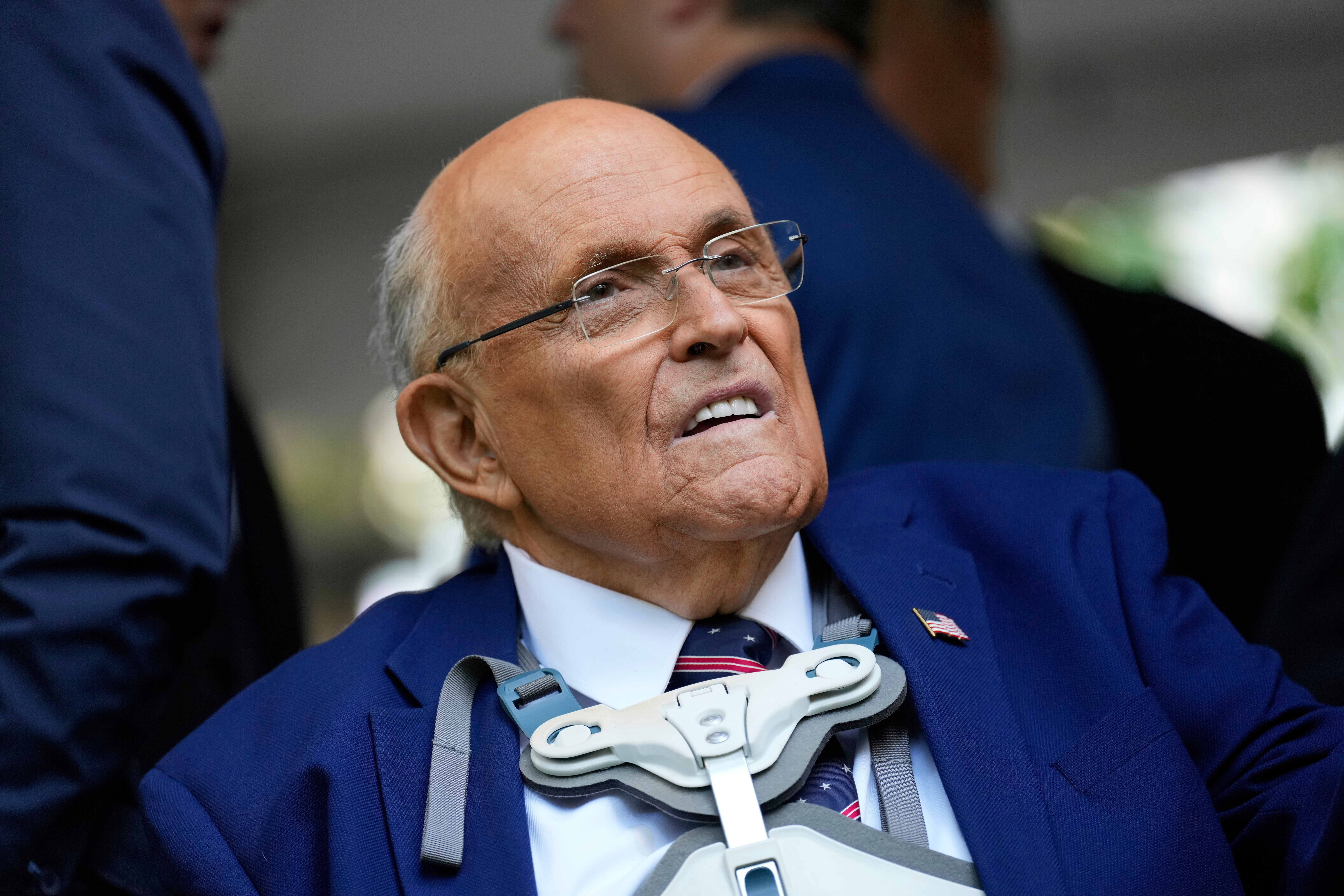
The hospitalization of a high-profile political figure under critical condition triggers a predictable sequence of information asymmetry, public health speculation, and institutional risk. When news broke regarding Rudy Giuliani’s admission to a medical facility in critical condition, the immediate vacuum of specific clinical data was filled by the conflicting pressures of HIPAA privacy protections and the public’s demand for transparency. Analyzing this event requires a structural deconstruction of the three variables that dictate the trajectory of such a crisis: the clinical threshold of "critical condition," the mechanics of medical reporting by proxy, and the systemic impact on legal and political timelines.
The Taxonomy of Clinical Status
The term "critical condition" serves as a specific medical designation that indicates a patient’s physiological state has moved beyond the "serious" threshold. In standard hospital protocols, this classification is characterized by unstable vital signs that frequently fall outside of normal physiological ranges.
The Instability Variable
A patient in critical condition typically exhibits failures in one or more organ systems, necessitating continuous monitoring and, in many cases, mechanical or pharmacological life support. The unpredictability of the prognosis is the defining trait of this status. Unlike "stable" patients whose recovery or decline follows a manageable curve, a critical patient exists in a state of high volatility where the probability of a sudden, adverse event remains elevated.
The Diagnostic Gap
Public statements issued by spokespeople often omit the etiology of the crisis. Whether the hospitalization stems from acute cardiovascular failure, neurological distress, or infectious complications, the operational result is the same: a total suspension of the individual’s professional and legal agency. The absence of specific diagnostic terminology—such as myocardial infarction or septic shock—forces analysts to look at the intensity of the care environment as a proxy for the severity of the underlying pathology.
The Mechanics of Information Control
The dissemination of health data for a public figure is rarely an objective transfer of facts. It is a curated output designed to balance legal requirements with the maintenance of a specific public image.
The Spokesperson Buffer
The reliance on a spokesperson creates a layer of insulation between the medical reality and the public record. This buffer allows for the use of qualitative descriptors ("fighting," "resting") that lack clinical meaning but serve to manage sentiment. From a strategic standpoint, the initial announcement of "critical condition" serves to lower expectations, preparing the market or the public for a range of outcomes including permanent incapacity or death.
Privacy Constraints and the HIPAA Wall
The Health Insurance Portability and Accountability Act (HIPAA) ensures that medical facilities cannot confirm or deny specific details without explicit authorization. Consequently, the public relies entirely on the patient’s inner circle for updates. This creates an environment where information is released tactically. If a recovery is expected, the narrative shifts toward "improvement" or "stability" within 24 to 48 hours. If the silence persists, the probability of a catastrophic physiological failure increases exponentially.
Systemic Disruptions to Legal and Political Timelines
The incapacitation of a figure like Giuliani, who is entangled in multiple high-stakes legal proceedings, introduces a profound "bottleneck effect" into the judicial system.
The Legal Stay Mechanism
A "critical condition" status functions as an automatic, albeit temporary, stay on all active litigation involving the individual. Courts cannot ethically or legally proceed with testimonies, depositions, or sentencing when a defendant lacks the physical or mental capacity to participate in their own defense. This creates a cascade of delays:
- Discovery Pauses: Data retrieval and witness scheduling are halted.
- Statutory Deadlines: Courts must frequently extend filing dates, disrupting the court’s own operational efficiency.
- Co-defendant Complications: In cases with multiple defendants, the absence of a primary figure can lead to severances or broad continuances that push resolutions back by months or years.
Political Continuity and Vacuum Management
In the political sphere, the hospitalization of a surrogate or advisor requires an immediate redistribution of their "influence capital." The tasks, connections, and responsibilities held by the individual are either frozen or transferred to subordinates. This transition is rarely efficient. The loss of a central node in a political network, even temporarily, causes a breakdown in communication chains and strategic execution.
The Cost Function of Age and Comorbidity
The physiological resilience of an individual in their eighth decade is significantly lower than that of a younger counterpart. When analyzing the recovery potential of a 79-year-old patient in critical condition, we must apply the principle of "frailty index" and cumulative stress.
Physiological Reserve
Medical outcomes in geriatric critical care are dictated by physiological reserve—the body's ability to restore homeostasis after a major stressor. As age increases, the margin for error in treating acute conditions narrows. Treatments required to stabilize one organ system (such as aggressive fluid resuscitation) often place an unsustainable burden on another (such as the heart or kidneys).
The Secondary Complication Cycle
The primary cause of admission is often not the ultimate cause of mortality in critical geriatric care. Instead, the "secondary cycle" takes over:
- Nosocomial Infections: The risk of hospital-acquired pneumonia or bloodstream infections increases with the duration of the ICU stay.
- Atrophy and Delirium: Prolonged immobilization and sedation lead to rapid muscle wasting and post-intensive care syndrome (PICS), which can permanently alter cognitive function even if the physical ailment is resolved.
- Organ Cross-Talk: Failure in the respiratory system can rapidly trigger acute kidney injury (AKI) through inflammatory pathways, creating a multi-organ failure loop that is difficult to reverse.
Strategic Asset Revaluation
For stakeholders—including legal teams, political entities, and media organizations—the hospitalization necessitates an immediate revaluation of the individual as a functional asset.
The Incapacity Threshold
If the critical condition leads to long-term neurological or physical impairment, the individual moves from an active participant to a "historical figure" in real-time. Legal strategies must shift from "active defense" to "estate management" or "competency challenges." Political movements must pivot their messaging to capitalize on the individual’s legacy rather than their current utility.
Probability of Return to Status Quo Ante
The statistical likelihood of a patient returning to their previous level of high-intensity professional activity after a "critical" hospitalization is low. Even with a successful stabilization, the recovery period for geriatric patients is measured in months, not days. This leads to a permanent shift in the power dynamics of any organization or legal case the individual was involved in. The "return to work" narrative is frequently a tool for morale rather than a realistic medical forecast.
The Protocol for Continued Observation
The next 72 hours are the critical window for determining the long-term viability of the patient’s recovery. During this period, the medical team will attempt to "wean" the patient from support systems. Failure to tolerate these transitions indicates a deeper level of systemic failure.
Observers should monitor for specific shifts in terminology from the spokesperson. A move from "critical" to "serious" indicates stabilization of vitals. A move toward "comfortable" or "surrounded by family" without mentioning "stable" often signals a shift toward palliative care and the cessation of aggressive intervention.
Stakeholders must operate under the assumption that the previous operational timeline is now defunct. Strategic planning should prioritize the "worst-case" scenario of permanent incapacity to ensure organizational and legal continuity. The focus shifts from the individual's recovery to the mitigation of the vacuum created by their absence.


