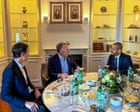
Political donations are messy. They get even messier when you throw a billionaire’s private jet, a high-profile Senator, and a state-wide ban on certain types of political gifts into the mix. Cory Bernardi is currently finding that out the hard way. The former Senator and current media commentator has found himself at the center of a storm regarding a flight he took on Gina Rinehart’s private plane alongside Pauline Hanson.
The situation is a classic example of how "favors" in the political world can quickly turn into legal and PR headaches. It’s not just about a free ride. It's about how those rides are disclosed and whether they violate the increasingly strict rules governing how money and influence flow through Australian democracy. In related news, read about: The Sabotage of the Sultans.
The flight that caused the friction
Bernardi and Hanson were spotted traveling on a jet owned by Hancock Prospecting, the mining giant controlled by Gina Rinehart. For most people, a lift from a friend is just a lift. In politics, a lift on a private jet is a "gift in kind." It has a specific monetary value. That value must be reported to the Australian Electoral Commission (AEC) or state-based equivalents if it crosses a certain threshold.
The confusion started when questions arose about whether this flight constituted a donation that breached South Australia's specific laws. South Australia has some of the toughest rules in the country regarding who can give what to whom. If you're a political actor in SA, you have to be incredibly careful. Bernardi has since vowed to pay for the flights to avoid any perception of a conflict or a breach of the law. USA Today has provided coverage on this fascinating issue in extensive detail.
Paying it back is a common tactic. It’s a "move along, nothing to see here" strategy designed to neutralize a story before it gains too much traction. But the fact that it happened at all highlights a massive gap in how politicians understand their own compliance requirements.
South Australia's confusing donation landscape
South Australia's electoral laws aren't exactly light reading. The state has moved toward banning certain types of donations and capping others to prevent "state capture" by wealthy individuals or corporations. The problem is that the definition of a "gift" can be surprisingly broad.
Is a seat on a plane a gift? Yes.
Is it a donation if the plane was going that way anyway? Usually, yes.
The confusion Bernardi cited isn't just a convenient excuse; the intersection between federal and state law is genuinely murky. Federal law often allows things that state laws have started to restrict. When a political figure operates across both levels, they're walking through a minefield. The South Australian Electoral Commission doesn't play around. They’ve been clear that the onus is on the individual to ensure they aren't taking "prohibited" gifts.
Why the billionaire factor changes everything
When Gina Rinehart is the one providing the jet, the stakes go up. She isn't just any donor. She is a massive force in the Australian economy and a vocal advocate for specific mining and economic policies. Any time a politician—or a former one with significant influence like Bernardi—accepts a luxury benefit from her, the public starts asking what was discussed between the clouds.
Bernardi’s defense is that he’s a private citizen now in many respects, but his ties to political movements and his influence on the right-wing of Australian politics keep him in the "politically exposed" category. You can't have it both ways. You can't be a power broker and then claim you're just a regular guy getting a lift from a mate.
The problem with retroactive payments
Bernardi says he'll pay for the flights. That’s fine, but it doesn't change the fact that the transaction started as a gift. If you get caught speeding and then offer to pay a "safety fee" to the police, you still broke the limit.
In the world of SEO and political reporting, we see this cycle constantly.
- Benefit is accepted.
- Media or opposition catches wind.
- The individual claims "confusion" or "oversight."
- A payment is made to "rectify" the situation.
This cycle undermines trust. It suggests that the rules are only followed when someone is looking over your shoulder. For voters in South Australia, this is a particularly sensitive point. They’ve been told their system is being "cleaned up," yet they still see these high-flying maneuvers happening.
What this means for future transparency
This isn't just a Bernardi problem. It’s a systemic issue. If a seasoned political operator like him can get "confused" by the rules, what hope does a first-time candidate have?
We need a system where these "gifts in kind" are declared in real-time. Waiting for an annual return or a media leak to find out who is flying on whose private jet is a relic of the 20th century. In 2026, there’s no reason digital logs can’t be updated instantly.
If you're a political figure or even a prominent commentator, you should assume every favor is a public record. The era of the "private" chat on a private jet is over, at least if you want to stay out of the headlines. Bernardi's vow to pay might settle his legal tab, but it won't erase the perception that there's one set of rules for the elite and another for everyone else.
Check your local state electoral commission website before accepting any gift over $200. If you're in South Australia, double-check that figure—it’s often much lower. Don't wait for a journalist to call you before you decide to pay your own way.