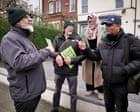
The assumption that the British Muslim vote is a monolith safely tucked in Labour's pocket has been shattered. While the conflict in Gaza acted as the immediate catalyst for the current exodus toward the Green Party and independent candidates, the friction began years ago. This is not a temporary protest. It is a fundamental realignment of political identity driven by a feeling of systemic neglect and a refusal to be treated as a "taken for granted" demographic.
For decades, the relationship between the Labour Party and Muslim communities was built on a simple, unspoken contract: Labour provided a platform for social justice and anti-discrimination, and in return, it received overwhelming loyalty at the ballot box. That contract has expired.
Beyond the Single Issue Narrative
To view the current shift solely through the lens of foreign policy is a mistake that Keir Starmer’s strategists are making at their peril. While the leadership’s initial response to the humanitarian crisis in Gaza sparked outrage, the resentment runs deeper into domestic territory. Muslim voters, particularly in urban hubs like Leicester, Birmingham, and East London, are grappling with the same cost-of-living pressures as everyone else, but with an added layer of disillusionment regarding how their specific concerns are addressed—or ignored—by the front bench.
The Green Party has positioned itself as the primary beneficiary of this fracture, not just by adopting a more radical stance on international law, but by speaking a language of localism and moral clarity that Labour has largely abandoned in its pursuit of the "median voter." This isn't just about the Middle East. It’s about air quality in inner cities, the lack of affordable social housing, and a perception that the Labour leadership has become indistinguishable from the establishment it seeks to replace.
The Mechanics of the Green Surge
The shift isn't happening by accident. It is the result of a sophisticated, grassroots effort to mobilize voters who have historically stayed home or voted Red out of habit. In recent local elections, we have seen the Greens making unprecedented gains in wards with high Muslim populations.
This isn't merely a "protest vote." It is an intentional move to build a new power base. The Greens have offered these communities a seat at the table that feels less transactional than the one offered by Labour. By focusing on social equity and environmental justice, they have found a surprising overlap with Islamic principles of stewardship and community care.
The Identity Crisis in Modern Labour
Labour’s problem is one of authenticity. Under the current leadership, the party has moved aggressively toward the center-right on issues of immigration and law and order. This strategy is designed to win back the "Red Wall" voters lost in 2019, but it has left a gaping hole in the party's traditional coalition.
Many Muslim voters feel that the party no longer represents their values. There is a sense that the party is embarrassed by its more radical elements, which often includes the very people who have been its most loyal canvassers in the North and the Midlands. When a party spends more time distancing itself from its base than engaging with it, the base eventually finds a new home.
The Rise of the Independents
While the Greens are the organized face of this movement, the rise of independent candidates is perhaps more dangerous for the status quo. In areas like Blackburn and Bradford, local figures are bypassing the party machinery altogether. These candidates aren't career politicians; they are community leaders, businessmen, and activists who carry more weight in their neighborhoods than any Westminster-appointed candidate ever could.
This localization of politics is a nightmare for party whips. It turns safe seats into battlegrounds and forces national parties to spend resources in areas they haven't had to worry about for forty years. The independent movement is a signal that the era of the "block vote" is over. Voters are looking for representatives who live in their streets, breathe their air, and share their specific grievances.
A Demographic Shift in Real Time
The demographics of the UK are changing, and with them, the political priorities of the youth. Young Muslim voters are not their parents. They are more likely to be university-educated, more active on social media, and far less likely to feel an ancestral debt to the Labour Party of the 1970s.
These voters are looking for a party that aligns with their global outlook. They see the climate crisis as an existential threat that is inextricably linked to global inequality. When the Green Party talks about climate justice, these voters hear a message that resonates with their worldview in a way that Labour’s cautious, focus-grouped messaging does not.
The Economic Disconnect
Labor’s economic platform is currently built on a foundation of "fiscal responsibility." For families in the bottom 20% of the income bracket—where a disproportionate number of Muslim households are situated—this sounds like a polite way of saying that the status quo will remain unchanged.
The Greens, by contrast, have leaned into a more interventionist economic policy. Their calls for a wealth tax and significant increases in public spending on the NHS and social care are finding a receptive audience. In the absence of a bold economic vision from the opposition, the most vulnerable are looking for radical alternatives.
The Strategy of Neglect
There is a growing suspicion among political analysts that the Labour leadership has made a cold, calculated decision: they believe these voters have nowhere else to go. The logic follows that in a first-past-the-post system, a vote for a third party is a wasted vote, or worse, a vote for the Conservatives.
This is a high-stakes gamble. It ignores the possibility that these voters will simply stay home, or that the Green surge will reach a tipping point where it becomes self-sustaining. We are seeing the limits of the "lesser of two evils" argument. When people feel that neither side is listening, they stop caring about the math of the electoral system and start voting with their conscience.
Lessons from the Local Level
If you want to see the future of British politics, look at the council chambers. In places like Bristol, the Greens are already the largest party. They have proven that they can govern, and they have done so by building a diverse coalition of students, environmentalists, and ethnic minorities.
This model is being exported to other parts of the country. The Green Party is no longer just the party of rural middle-class activists; it is becoming a party of the urban working class. This transition is the most significant development in British politics since the formation of the SDP in the 1980s, yet it is being largely ignored by the mainstream press.
The Breaking of the Two-Party Grip
The narrative that British politics is a binary choice between two major parties is failing to reflect reality on the ground. The fragmentation of the vote is a symptom of a deeper malaise. People are tired of the performative nature of Westminster, where debates are staged for the cameras and policy is dictated by donors.
The Muslim community's move toward the Greens and independents is the "canary in the coal mine." It is the first major group to move en masse, but it won't be the last. As more demographics realize that their loyalty is being exploited without being rewarded, the traditional pillars of support for the two main parties will continue to crumble.
The Problem of Representation
The issue of representation is not just about the number of minority MPs. It’s about the quality of that representation. Muslim voters are increasingly skeptical of "community leaders" who act as gatekeepers for the Labour Party. They want representatives who are willing to challenge the leadership when it deviates from the interests of the community.
The Greens have been smart enough to offer a platform where individual voices are not stifled by a rigid party line. This flexibility is attractive to people who have spent years feeling like they have to moderate their views to fit into the Labour tent.
The Road Ahead for the Opposition
If Labour wants to stop the bleeding, it needs to do more than offer platitudes. It needs to demonstrate a genuine commitment to the issues that matter to these communities. This means a more nuanced approach to foreign policy, certainly, but it also means a more ambitious domestic agenda that addresses the structural inequalities that have been exacerbated by fourteen years of austerity.
The current strategy of "strategic silence" on controversial issues is failing. It creates a vacuum that is being filled by more vocal, more principled alternatives. The party is trying to win an election by being as small a target as possible, but in doing so, it is losing its soul.
The Role of Digital Activism
We cannot ignore the role that digital organizing has played in this shift. WhatsApp groups, Telegram channels, and independent news outlets have become the primary source of information for many in the Muslim community. These networks operate outside the control of the traditional media and political parties.
This is where the momentum for the Green surge is being built. Information—and misinformation—travels at lightning speed, and the Labour Party's old-school communications department is ill-equipped to handle it. By the time a party spokesperson has drafted a carefully worded statement, the community has already moved on to the next grievance.
The End of Deference
The most significant change in the political landscape is the death of deference. Voters no longer feel they owe anything to the institutions that have failed them. The "Red Wall" didn't fall because of one bad campaign; it fell because of decades of neglect and a sense that the party had moved away from the people it was supposed to represent.
The same thing is happening now with the Muslim vote. The assumption of loyalty has been replaced by a demand for accountability. This is a healthy development for democracy, even if it is an uncomfortable one for the political establishment. It forces parties to actually compete for votes rather than just waiting for their turn to govern.
Labour is currently operating on the belief that they can win without this demographic. They may be right in the short term, given the current state of the Conservative Party. But building a government on a foundation of alienated and disillusioned voters is a recipe for instability. You cannot lead a country when a significant portion of the population feels that you have turned your back on them in their moment of greatest need.
The movement toward the Greens is a signal that the old ways of doing politics are over. The public is looking for something different—something that feels honest, even if it is radical. The parties that fail to recognize this will find themselves relegated to the history books, replaced by those who had the courage to listen when it mattered most.
The real story here isn't just about Gaza. It’s about the birth of a new, independent political consciousness that refuses to be ignored any longer. The ground is shifting, and those who don't move with it will be left behind in the dust of a changing Britain.