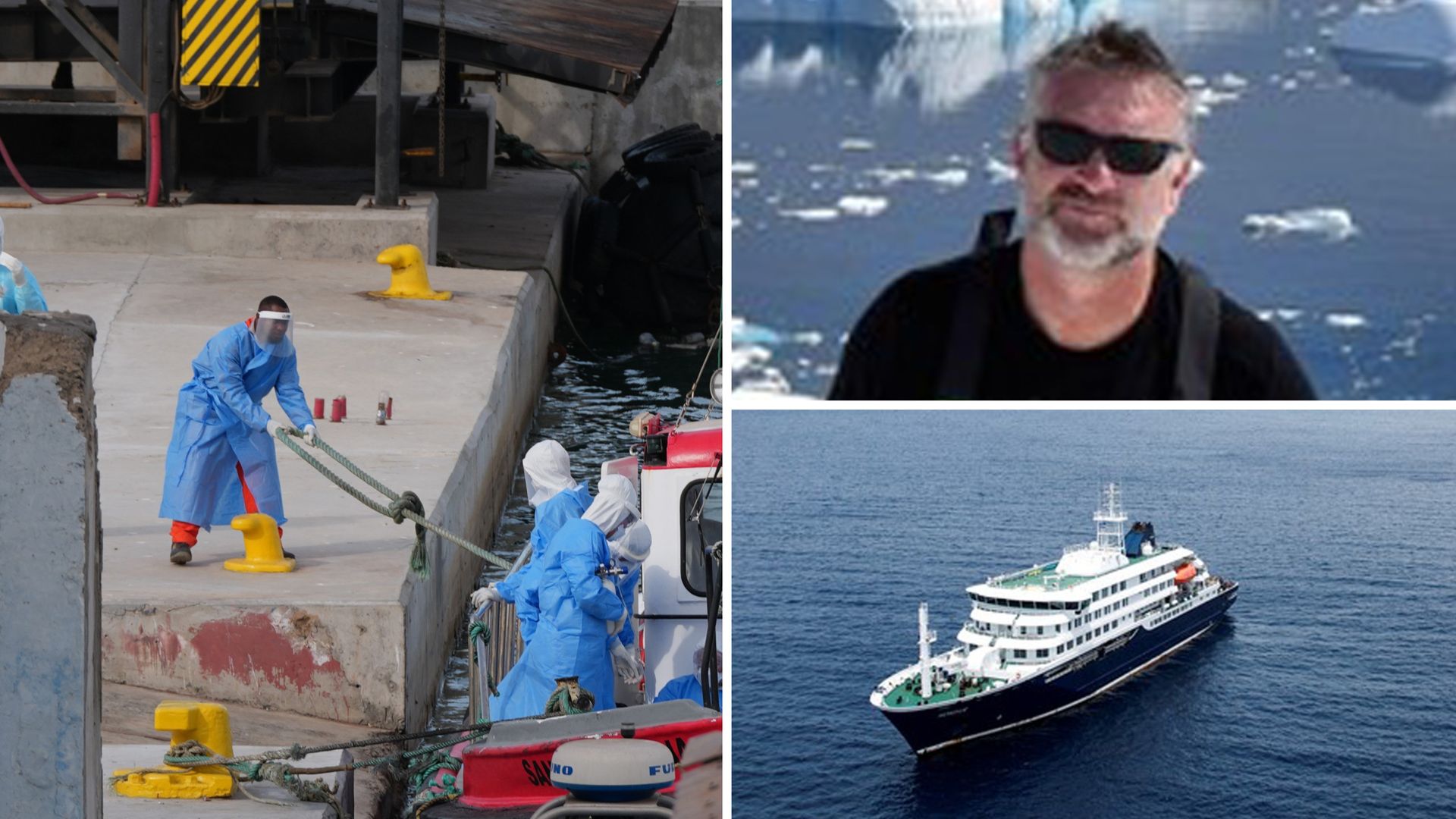
The emergency medical evacuation of a former British police officer from a cruise ship near the coast of Argentina has exposed a terrifying gap in maritime health protocols. While initial reports focused on the rare diagnosis of hantavirus, the real story is not about a single infected passenger. It is about how a high-end vacation vessel became the perfect vector for a pathogen that usually remains confined to the most remote corners of the wilderness.
Hantavirus is not a common sea-faring illness. Unlike norovirus, which thrives on handrails and buffet spoons, hantavirus is typically a respiratory death sentence found in the dust of abandoned sheds and rural outposts. The fact that a passenger required a high-stakes airlift to a hospital in Puerto Madryn suggests a failure of containment that the cruise industry is desperate to downplay.
The Anatomy of an Impossible Infection
To understand the gravity of this situation, you have to look at how hantavirus operates. It does not jump from person to person like a seasonal flu. Instead, humans contract it by inhaling aerosolized particles of droppings, urine, or saliva from infected rodents.
When a passenger on a luxury liner tests positive for this virus, it triggers a cascade of uncomfortable questions for the cruise line. How did a rodent population significant enough to shed viral loads find its way into the ventilation or food storage areas of a modern ship? The veteran officer’s isolation in an Argentine hospital is the symptom; the ship’s internal ecosystem is the disease.
The pathogen causes Hantavirus Pulmonary Syndrome (HPS). It starts with fatigue and muscle aches, but it moves with brutal speed. Within days, the lungs fill with fluid, leading to severe shortness of breath. The mortality rate is roughly 38 percent. In the isolated environment of a ship at sea, those odds become even more grim.
Why the Maritime Industry is Vulnerable
Cruise ships are floating cities, but they are also closed loops. When an exotic virus enters that loop, the mechanical infrastructure of the ship—specifically the HVAC systems—can become an enemy. If a nesting site exists in a cargo hold or behind a bulkhead, the very air being pumped into luxury cabins can carry the microscopic threat.
The industry relies on a "clean ship" image, but the logistics of restocking these vessels provide ample opportunity for hitchhikers. Ships docking in South American ports often take on local produce and supplies. In regions where hantavirus is endemic among wild long-tailed pygmy rice rats, a single contaminated crate can breach the most expensive security.
The Problem with Port Side Inspections
Standard health inspections at international ports are designed to catch visible infestations. They are looking for cockroaches, flies, and obvious signs of rats. They are not, however, testing for viral shedding in the dust of a storage container.
- Supply Chain Gaps: Local suppliers in rural ports may not adhere to the same rigorous pest exclusion standards as those in major European or American hubs.
- Delayed Incubation: The incubation period for hantavirus can be up to eight weeks. A passenger could board in London, feel fine through the Atlantic crossing, and only collapse once the ship reaches the tip of South America.
- Diagnostic Lag: Most shipboard doctors are trained for trauma, cardiac events, and norovirus. They are rarely looking for a rare hemorrhagic fever.
The Logistics of a Deep Sea Evacuation
When the former officer’s condition deteriorated, the ship’s medical team faced a nightmare scenario. You cannot treat HPS in a ship’s infirmary. It requires a level of intensive care and mechanical ventilation that only a specialized mainland hospital can provide.
The Argentine Coast Guard’s involvement highlights the sheer cost and risk of these operations. A helicopter extraction at sea is a violent, precise maneuver. For a patient already struggling for oxygen, the physical toll of the evacuation itself can be fatal. This incident was successful, but it serves as a warning of what happens when the "safety" of a cruise becomes a prison of geography.
The Economic Pressure to Stay Silent
There is a massive financial incentive for cruise operators to characterize these events as isolated, "freak" occurrences. A single confirmed case of a rare, deadly virus can lead to a ship being quarantined, which costs millions in refunds and lost future bookings.
By framing the story around the individual—the "ex-police officer"—the narrative shifts away from the vessel. It becomes a story about a man’s survival rather than a ship’s sanitation failure. This is a classic PR pivot. If the public starts to view cruise ships as potential reservoirs for wilderness diseases, the entire business model of "exotic" expeditions begins to crumble.
The Reality of South American Viral Strains
In the Southern Cone, particularly Argentina and Chile, the "Andes" strain of hantavirus is the dominant threat. Unlike the strains found in North America, there is some evidence that the Andes virus can, in very rare circumstances, spread through person-to-person contact.
If this officer was carrying the Andes strain, the isolation protocol in the hospital wasn't just for his benefit; it was a desperate measure to prevent a localized outbreak on the mainland. The cruise line has not publicly disclosed the specific strain, a move that keeps the "person-to-person" panic at bay while leaving health experts in the dark.
The Limits of Shipboard Medicine
The medical facilities on even the largest ships are designed for stabilization, not long-term survival against aggressive viral pneumonia.
- Oxygen Supplies: Ships carry a finite amount of medical-grade oxygen.
- Specialized Staff: Finding a pulmonologist or an infectious disease expert among a ship's crew is almost impossible.
- Bio-Containment: Most shipboard "quarantine" rooms are just standard cabins with better locks. They lack the negative pressure environments needed to truly contain an airborne or aerosolized pathogen.
Beyond the Headline
The media often treats these stories as human interest pieces. "Heroic rescue of a decorated veteran." But the investigative reality is found in the logs of the ship's maintenance crew and the contracts of the food suppliers.
We are seeing a convergence of factors: luxury travel pushing deeper into untouched environments and a global supply chain that is increasingly porous. When you bring 3,000 people into a remote ecosystem, you aren't just looking at the scenery; you are inviting that ecosystem's pathogens to dinner.
The former officer remains in critical but stable condition, but the questions he leaves behind are far more contagious than the virus itself. The industry must move beyond basic sanitation and begin treating viral bio-security with the same intensity they apply to fire safety or navigation.
The sea provides a false sense of isolation. This case proves that the most remote wilderness is only one ventilation duct away from the captain’s table.
Check your cabin’s air vents for dust accumulation before you unpack. If you see signs of rodent activity in a high-traffic area, don't just complain to the steward—demand a log of the last professional pest inspection and the ship's most recent health certificate from a major port authority. Your life depends on the answer.