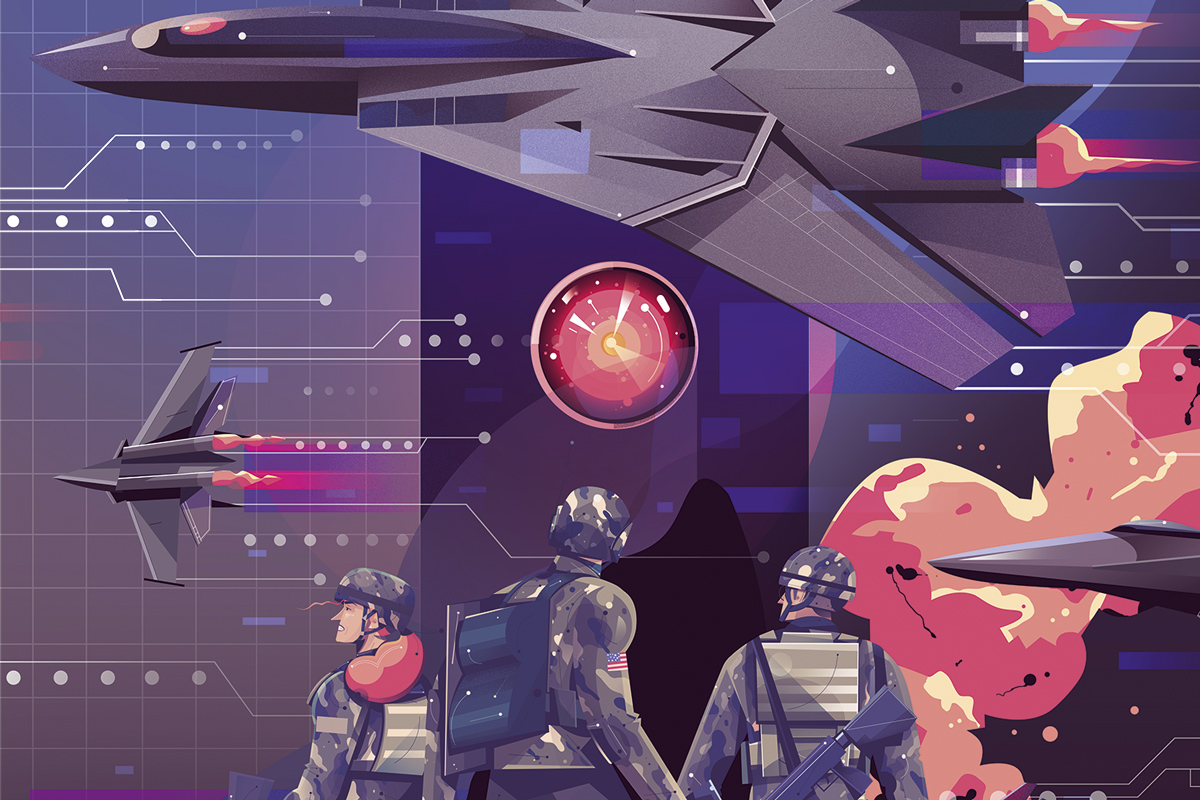
Physical borders don't mean what they used to. In the current escalation involving Iran and its neighbors, the most valuable territory isn't a mountain pass or an oil field. It’s a nondescript concrete building filled with humming server racks. We've entered an era where bits and bytes carry as much weight as bullets and bombs. If you think your cloud data is safe just because it’s "digital," you're missing the terrifying reality of modern kinetic warfare.
Data centers have become high-priority military targets. This isn't just about hackers sitting in dark rooms. It's about cruise missiles and suicide drones aimed at the physical infrastructure that keeps the modern world spinning. When a data center in a conflict zone goes dark, it doesn't just mean you can't check your email. It means hospitals lose patient records, logistics chains for food and medicine collapse, and government command-and-control systems vanish.
The Middle East is currently the testing ground for this doctrine. As tensions with Iran fluctuate, the strategic value of regional data hubs in places like Israel, the UAE, and Saudi Arabia has skyrocketed. These facilities are the nervous systems of their respective nations. Taking them out is the 21st-century equivalent of bombing a power plant or a bridge, but with much wider systemic consequences.
The physical vulnerability of the cloud
We often talk about the cloud as this ethereal, invincible thing. It’s not. It’s a collection of very fragile, very hot machines that require massive amounts of electricity and constant cooling. They’re incredibly easy to find. You can’t hide a data center that pulls 50 megawatts from the grid and glows like a beacon on thermal imaging.
Modern drone technology has changed the math for military planners. A cheap, one-way "suicide" drone costs a fraction of a Patriot missile interceptor. If Iran or its proxies launch a swarm of these toward a primary data hub, they don't need all of them to hit. One lucky strike on a cooling tower or a backup generator farm can trigger a thermal shutdown. Once those servers overheat, the hardware is fried. You don’t just "reboot" from that. You’re looking at weeks or months of physical replacement in the middle of a war zone.
The geography of the Middle East makes this even more precarious. Much of the region’s connectivity relies on a few concentrated landing points for undersea cables. If you hit the data center where those cables terminate, you effectively cut off entire populations from the global internet. It’s a digital siege.
Why Iran sees silicon as a soft target
Iran’s military strategy has long favored asymmetric warfare. They know they can’t win a traditional head-to-head naval or air battle against a coalition backed by Western tech. So, they look for the "force multipliers."
Targeting data infrastructure is the ultimate force multiplier. It creates chaos. It tanks the economy. Most importantly, it creates a psychological "blackout" for the civilian population. Imagine waking up and finding that your banking app is dead, your GPS doesn't work, and the news sites are all offline. Panic sets in fast.
The Iranian government has also seen how effective these strikes are in other theaters. Look at the early days of the Russian invasion of Ukraine. One of the first moves was a strike on the Viasat satellite network. It didn't just hurt the military; it blinded wind farms in Germany and disrupted internet for thousands across Europe. The lesson was clear: digital infrastructure is the soft underbelly of the West.
The failure of traditional redundancy
Standard IT wisdom says redundancy is the answer. If one data center goes down, the traffic just shifts to another. That works fine for a localized power outage or a fiber cut in a peaceful suburb. It doesn't work when an entire region is under fire.
In a high-intensity conflict, "failover" systems often fail too. If Data Center A is bombed, and Data Center B is overwhelmed by the redirected traffic—or also targeted—the whole network collapses. We're seeing a shift where companies have to think about "geopolitical redundancy." It’s no longer enough to have two sites in the same city. You need sites in different jurisdictions, under different air defense umbrellas.
The cost of this is astronomical. Many smaller nations and regional businesses simply can't afford to build that kind of resilience. They’re left exposed, praying that they aren't on the target list for the next round of escalations.
Digital sovereignty is a matter of life and death
Nations in the Middle East are starting to realize that relying on foreign-owned "hyperscalers" like Amazon, Google, or Microsoft is a double-edged sword. While these giants offer world-class security, they also centralize risk. A single massive facility in Riyadh or Tel Aviv becomes a "super-target."
We're seeing a push for "sovereign clouds"—locally owned and operated infrastructure that can be air-gapped from the global web if necessary. This isn't just about data privacy anymore; it’s about national survival. If the global internet goes dark because of a regional conflict, a country needs its internal systems—power, water, emergency services—to keep running on a local loop.
The shift toward underground or "hardened" data centers is also accelerating. Building deep into a mountain or under layers of reinforced concrete is expensive, but it’s the only way to protect against modern bunker-buster munitions or persistent drone strikes.
Moving beyond simple cybersecurity
If you're running a business with assets in or near a conflict zone, your CISO's job just got a lot harder. You have to stop thinking about just firewalls and encryption. You have to start thinking about physical security, supply chain integrity, and disaster recovery that assumes the worst-case scenario.
- Audit your physical dependencies. Know exactly where your data sits. If it’s in a region seeing increased military activity, move it. Now.
- Diversify your cloud providers. Don't put everything in one basket. Use different providers with physically disparate regions.
- Invest in satellite backup. When the fiber is cut or the data center is leveled, Starlink or similar LEO (Low Earth Orbit) satellite arrays might be your only link left.
- Test for "Black Start" scenarios. Can your business function if the internet is gone for a week? If the answer is no, you have a massive strategic hole.
The line between the digital world and the physical world has evaporated. In the Middle East, that’s not a theoretical concept—it’s a daily reality for engineers and military planners alike. The servers are the new high ground, and everyone is fighting for control.
Don't wait for the next headline about a missile hitting a server farm to realize your data is vulnerable. Start shifting your critical workloads to safer jurisdictions and invest in localized, hardened infrastructure. The era of the "safe" cloud is over; we're in the age of the combat-ready cloud.