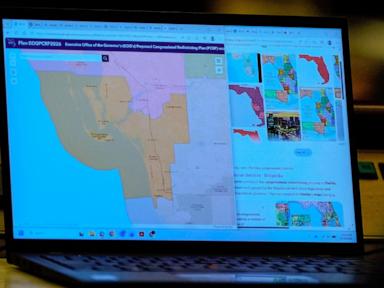
The supreme court just detonated the status quo of American map-making. By upholding the core tenets of the Voting Rights Act (VRA) in recent rulings, the justices have forced a frantic, mid-cycle redrawing of congressional districts across the Deep South and beyond. This is not a simple administrative adjustment. It is a fundamental shift in the mechanics of power. While surface-level reporting treats this as a victory for representation, the ground reality is a brutal scramble for partisan survival where both parties are weaponizing race to protect their incumbents.
The central tension lies in Section 2 of the VRA. For decades, map-makers have danced on a razor's edge, trying to balance "compactness" with the requirement that minority voters have a fair shot at electing their preferred candidates. The recent High Court intervention clarifies one thing: states cannot hide behind "race-blind" algorithms if the result effectively dilutes the collective power of Black or Latino communities. This has sent shockwaves through statehouses in Alabama, Louisiana, and Georgia, where decades of Republican dominance are suddenly under siege by their own boundary lines. If you enjoyed this piece, you might want to read: this related article.
The Alabama Precedent and the Collapse of Defiance
Alabama tried to call the Court's bluff. After the Allen v. Milligan decision, state legislators essentially attempted to submit the same map with different colors, hoping the conservative supermajority would blink. They didn't. The court’s refusal to tolerate this defiance signaled that the legal floor for minority representation is higher than many GOP strategists anticipated.
The "Gingles Test" remains the gold standard for these disputes. To win a challenge, plaintiffs must prove that a minority group is large and compact enough to constitute a majority in a district, that the group is politically cohesive, and that the white majority votes as a block to defeat the minority’s candidates. In the past, states argued that if they didn't explicitly use race as a metric, they couldn't be guilty of discrimination. The Court has now rejected that "intentionality" loophole, focusing instead on the actual outcome of the map. For another angle on this story, refer to the recent coverage from Associated Press.
This creates a massive logistical headache. Redrawing one district in a state like Alabama isn't a surgical strike; it’s a domino effect. If you shift 50,000 voters to create a second Black-majority district, you are inevitably draining those voters from neighboring districts. In the zero-sum game of House politics, a win for representation is almost always a loss for a specific incumbent.
The Invisible Hand of Partisan Gain
While the public narrative focuses on civil rights, the backroom reality is about math. Democrats see these rulings as a lifeline. If federal courts force the creation of new minority-opportunity districts in three or four Southern states, the path to a House majority becomes significantly shorter for the left. This isn't because minority voters are a monolith, but because in the current geographic sorting of America, Black-majority districts in the South vote Democratic at rates exceeding 80%.
Republicans are counter-attacking with a "packing and cracking" defense. If they are forced to create a new minority district, they will try to "pack" as many Democratic voters as possible into that single district, effectively making the surrounding districts even "redder." It is a cynical but effective strategy. They concede the battle (one seat) to win the war (the rest of the state).
The Louisiana Power Play
In Louisiana, the fight over the 2nd Congressional District became a masterclass in political theater. The state was forced to create a second majority-Black district, which meant carving a path from New Orleans up to Shreveport. Critics call these "slither districts" because of their bizarre, elongated shapes.
Proponents argue that the shape is irrelevant if the community of interest is served. But this raises a deeper question that journalists often ignore: does a district that spans 300 miles of diverse geography actually represent a "community," or is it just a legal vessel for a specific demographic count? When geography is sacrificed for demography, the link between a representative and their local constituent's unique needs—be it a specific bayou or a specific urban neighborhood—often dissolves.
The Geographic Trap of Modern Sorting
The biggest obstacle to fair maps isn't actually a mustache-twirling villain in a smoke-filled room. It’s us. Americans are sorting themselves into cultural and political silos at an accelerating rate. Liberal voters are concentrating in urban cores, while conservative voters are spreading across exurbs and rural stretches.
This geographic concentration makes it incredibly difficult to draw "fair" districts without making them look like Rorschach tests. If 90% of Democrats live in one city, any map that gives them proportional representation must involve drawing long, spindly arms out of that city to capture enough voters to win multiple seats. If you draw compact, square districts, the Democrats get one "landslide" seat, and the Republicans sweep the rest of the state.
This is the "Proportionality Paradox." To achieve a result that looks fair on paper—say, a state that is 40% Democrat having 40% Democratic representatives—you often have to engage in the most extreme forms of gerrymandering. The Supreme Court is currently trying to navigate this without explicitly endorsing a right to proportional representation, which is not found in the Constitution.
The Shadow of the 2026 Midterms
The timing of these rulings is a nightmare for election officials. We are seeing maps redrawn less than two years before a major election cycle. This creates massive confusion for voters who may not know who their representative is, and for candidates who don't know which doors to knock on.
In North Carolina, the pendulum swung the other way. A conservative shift in the state Supreme Court allowed for a redraw that heavily favors Republicans, proving that while federal courts might protect minority groups, they have largely checked out of the fight against "purely" partisan gerrymandering. If you can prove you’re discriminating based on party rather than race, the federal courts currently say: "That’s a political question, not a legal one."
This distinction is the new frontier for legal warfare. Lawyers are now spending millions trying to find "proxies" for race. If you target voters who shop at a specific grocery store or live in a specific zip code that happens to be 90% minority, are you targeting them for their race or their likely voting habits? The line is invisible, and the Court has yet to provide a definitive test to separate the two.
The Technology of the New Gerrymander
We are no longer in the era of paper maps and highlighters. Modern redistricting uses sophisticated GIS (Geographic Information Systems) and massive datasets that include everything from your magazine subscriptions to your credit score.
Precision Engineering of the Vote
Map-makers can now predict the outcome of a district with 99% accuracy before a single vote is cast. They can move a boundary line by a single block to exclude a rival’s home or include a friendly donor base. This precision has turned redistricting into a form of incumbent insurance.
- Algorithm-driven maps: Software can now generate 10,000 "legal" maps in seconds, allowing partisans to pick the one that maximizes their advantage while still meeting basic legal criteria for compactness.
- The "Losing" Win: Strategists often draw districts they know they will lose by 52-48, forcing the opposition to spend millions of dollars defending a "safe" seat, thereby draining resources from more competitive areas.
This level of engineering makes a mockery of the idea that voters choose their representatives. In the vast majority of U.S. House seats, the representative chooses their voters. The Supreme Court’s recent rulings provide a check on the most egregious racial abuses, but they do nothing to stop the algorithmic hollowing out of American democracy.
The Myth of the Independent Commission
As a reaction to this chaos, several states have moved to independent redistricting commissions. The theory is simple: take the power away from the politicians and give it to "neutral" citizens.
The reality is more complicated. "Independent" is a relative term in a hyper-partisan society. These commissions often become proxy wars for the same interests they were meant to circumvent. In California and Michigan, these commissions have been praised for creating more competitive districts, but they have also been criticized for breaking up historical communities of interest in the name of "math."
Furthermore, commissions are still bound by the same Supreme Court mandates as legislatures. They still have to navigate the Section 2 requirements and the Gingles test. They are essentially being asked to solve a Rubik's Cube where every side is a different legal landmine.
The Impending Crisis of Legitimacy
When the rules of the game change every two years, the public’s trust in the outcome of elections craters. We are entering an era of "permanent redistricting," where the map is never settled. Every election is followed by a lawsuit, and every lawsuit is followed by a court-ordered redraw.
This perpetual motion machine serves nobody but the consultants and the lawyers. It leaves the average voter feeling like a pawn in a larger game of 4D chess. If a voter in Alabama is told their district was "illegal" for the last three elections, why should they believe the current one is any more legitimate?
The Supreme Court has opened the door to a more representative South, but it has also signaled that the courtroom, not the ballot box, is where the real power resides. Until there is a federal standard that addresses both racial and partisan gerrymandering, the American map will remain a battlefield, and the voters will remain the casualties. The fight isn't about whether the maps are fair; it's about who gets to define "fairness" for the next ten years.
The next round of litigation won't just be about Black and white; it will be about the very definition of a political community in a digital age. If we cannot agree on what constitutes a neighborhood, we will never agree on who should represent it.