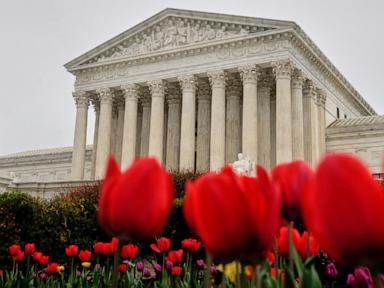
The American South is currently a legal demolition zone. On April 29, 2026, the U.S. Supreme Court effectively dismantled the engine room of the Voting Rights Act (VRA), handing down a 6-3 decision in Louisiana v. Callais that does more than just redraw a few lines in the bayou. It creates a vacuum where federal protection for minority voters once stood. Within twenty-four hours of the ruling, Louisiana’s Secretary of State took the unprecedented step of suspending the May 16 House primaries, signaling that the 2026 midterms will not be fought on the maps we expected.
This is the "why" that political analysts are missing: the Court has not just moved the goalposts; it has changed the game from a test of outcomes to a test of mind-reading. By requiring plaintiffs to prove "intentional discrimination" while "disentangling" race from partisanship, the Court has made it nearly impossible to win a VRA case in a region where race and party are almost perfectly correlated. Discover more on a connected topic: this related article.
The Callais Precision Strike
For decades, Section 2 of the VRA was the "crown jewel" of civil rights law because it focused on results. If a map diluted the power of Black voters, it was illegal. It didn't matter if the mapmakers were wearing hoods or Brooks Brothers suits; the effect was what counted. Under the Thornburg v. Gingles framework, if you could show a large, compact minority population and a pattern of racially polarized voting, the state had to draw a "fair" map.
The Callais decision flips this on its head. The majority now argues that using race to fix racial dilution is itself an unconstitutional racial gerrymander unless the state can prove it had no other choice. It is a legal catch-22. Louisiana followed a previous court order to create a second Black-majority district. Now, the Supreme Court says that very act of compliance was an illegal use of race. Further analysis by The Guardian highlights similar perspectives on this issue.
This creates a terrifying precedent for 2026. If a state draws a map that empowers Black voters, it can be sued for racial gerrymandering. If it doesn't, it can be sued under the VRA—but the VRA just had its teeth pulled.
The Midterm Domino Effect
The immediate fallout is a scramble for power that will reshape the House of Representatives before the first ballot is even cast. The CBS News analysis suggesting a shift of one to nine GOP-friendly districts is likely conservative. When you look at the states already moving to capitalize on Callais, the numbers tell a story of strategic consolidation.
- Louisiana: The second Black-majority district is effectively gone. The state is scrambling to implement a map that will likely revert to a 5-1 Republican advantage.
- Alabama: After being forced to add a second Black-opportunity district in Allen v. Milligan, GOP leadership is already signaled a "re-evaluation" of those lines.
- Georgia and Tennessee: Legislative leaders have called for emergency sessions to "align" their maps with the Callais standard, which is code for protecting incumbent power by diluting concentrated minority blocks.
The "Purcell Principle"—the idea that courts shouldn't change election rules close to an election—is being tested to its breaking point. In Louisiana, the suspension of the primary proves that the principle is now a suggestion, not a rule. If a map is declared unconstitutional in May, and the election is in November, the chaos of redrawing lines, re-registering candidates, and educating voters becomes a tactical advantage for the party in power.
The Disentanglement Trap
The most sophisticated part of the Callais ruling is the requirement to "disentangle" race and partisanship. In the Deep South, Black voters lean Democratic at rates often exceeding 90%. When a Republican legislature cracks a Black community into three different districts, they claim they are doing it because those voters are Democrats, not because they are Black.
The Court has now accepted this defense as a get-out-of-jail-free card. Since "partisan gerrymandering" was ruled non-justiciable in Rucho v. Common Cause (2019), states can admit to extreme partisan bias to mask racial bias. If you can’t prove the mapmaker had a specific racial animus—an almost impossible standard in the era of sophisticated, "race-blind" data modeling—the map stands.
This isn't just about high-level politics; it hits the ground in school boards and city councils. These local bodies are often the only places where minority communities have a direct hand in governance. With Section 2 eviscerated, the legal cost of challenging a discriminatory local map will skyrocket, leaving small-town activists with no federal recourse.
The Invisible Architecture of the 2026 Map
We are entering an era of "Zombie Districts." These are areas where the demographics suggest a competitive race or a minority-led outcome, but the internal architecture of the map makes that outcome impossible.
States are no longer just looking at where people live; they are looking at how they move, where they shop, and what they post. Data firms are now selling "neutral" metrics that correlate so highly with race that they function as a digital proxy. By the time a civil rights group gathers the funding to sue, the election is over, the incumbent is seated, and the Callais standard ensures the case will languish in discovery for years.
The reality of the 2026 midterms is that the "battleground" has moved from the stump to the chamber. The "Blue Wall" or "Red Wave" narratives are secondary to the "Ink Line." If you can control the software that draws the boundaries, you don't need to win the hearts and minds of the voters; you just need to choose which voters to include in your heart.
Justice Elena Kagan’s dissent was not hyperbole when she noted that this "threatens a half-century's worth of gains." The VRA was designed to be a permanent guardrail against the structural tendency of the majority to suppress the minority. By removing that guardrail, the Court hasn't just allowed for more "partisan" maps; it has signaled that the multiracial democracy envisioned in 1965 is now a voluntary project for the states, rather than a federal mandate.
The true test of the American experiment in 2026 won't be who wins the most seats, but whether the seats themselves still represent the people who live in them. As the primaries stall and the maps are shredded, the answer looks increasingly like a "no."
Demand a transparent, data-backed audit of every mid-decade map revision before the November 2026 deadline.