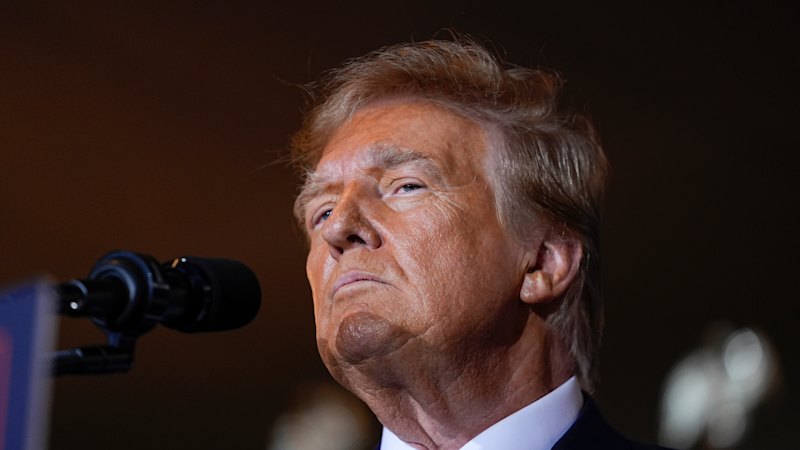
The phrase "do your own research" has transformed from a plea for civic engagement into a mechanical wedge driven through the center of American public life. What began as a populist rallying cry against perceived gatekeepers has curdled into a fragmented reality where major national events, such as the assassination attempts on Donald Trump, are no longer treated as objective facts but as choose-your-own-adventure narratives. This shift didn't happen by accident. It is the result of a multi-decade erosion of institutional trust met with a technological infrastructure designed to reward skepticism over verification.
When a public figure tells their audience to bypass traditional media and "find the truth" for themselves, they aren't just suggesting a trip to the library. They are inviting millions of people to enter a digital ecosystem where the loudest, most sensational theory wins the battle for attention. In the aftermath of the Butler, Pennsylvania shooting and subsequent threats, the immediate reaction for a significant portion of the electorate was not shock, but a reflexive search for "the play." For these citizens, the event was a script, the blood was a prop, and the official record was a lie.
This brand of skepticism is the new baseline. It is a defense mechanism for a population that feels repeatedly burned by traditional sources of authority. When people lose faith in the referee, they start making their own calls.
The Architecture of Infinite Doubt
The process of "doing your own research" sounds noble in theory. In practice, it involves navigating an algorithmic funnel that prioritizes engagement. If you search for "Trump rally staging," the platforms will not provide a balanced historical overview of political violence. They will provide more content that matches the searcher’s existing suspicion. This creates a feedback loop where the individual feels they are discovering hidden gems of information, unaware that they are being fed a custom-tailored diet of doubt.
Technology has democratized investigative tools while stripping away the professional standards required to use them accurately. High-definition video, slow-motion playback, and social media threads allow any amateur with a smartphone to play detective. They look for "glitches" in the matrix—a Secret Service agent’s facial expression, the timing of a photograph, or the trajectory of a bullet—and present these anomalies as "proof" of a grand conspiracy.
The problem is that real life is messy. Real life contains coincidences, human errors, and jagged edges that don't fit perfectly into a narrative. To the DIY researcher, however, there are no coincidences. Every stray detail is a clue. This mindset treats the world like a cinematic universe where every frame is intentional. When reality fails to look like a polished Hollywood production, the modern skeptic assumes it must be a poorly executed fraud.
The High Cost of the Knowledge Monopoly Breakup
For most of the 20th century, a handful of news organizations acted as the central nervous system of the country. They decided what was news and what was noise. While this system was far from perfect—often ignoring marginalized voices or pushing state-sanctioned narratives—it provided a common floor for debate. You could argue about whether a policy was good or bad, but you generally agreed that the event in question actually happened.
That floor has collapsed. The decentralization of information means there is no longer a shared set of facts. When Trump tells his followers to do their own research, he is encouraging them to occupy a space where his word is the primary anchor. By casting the press as the "enemy of the people," he ensures that any correction or fact-check issued by those outlets is viewed as further evidence of the conspiracy.
This creates a vacuum. Human nature abhors an information vacuum, and the internet is more than happy to fill it with noise. The result is a population that is hyper-informed on trivia but fundamentally disconnected from reality. They can tell you the exact make and model of the rifle used in an attack, but they cannot agree on the basic motivations or consequences of the event itself.
Professional Skepticism vs. Personal Paranoia
There is a vital distinction between being a skeptic and being a nihilist. A skeptic demands evidence before believing a claim; a nihilist believes that evidence itself is a tool of deception. The current "do your own research" culture leans heavily toward the latter. It is built on the assumption that anything official is automatically false.
Consider the speed at which conspiracy theories developed following the events in Pennsylvania. Within minutes—before a motive was known or a shooter identified—the internet was flooded with claims of "inside jobs" from both the left and the right. On the left, the claim was that the event was staged to boost Trump's polling numbers. On the right, the claim was that the "Deep State" had finally tried to take him out.
Neither side waited for facts. Facts were irrelevant. The event was immediately processed through the filter of pre-existing tribal identities. This is the ultimate victory of the "research" mandate: it allows people to feel intellectually superior while they are actually just reinforcing their own biases. They aren't looking for the truth; they are looking for a version of the truth that makes them feel safe and correct.
The Profit in Perplexity
We cannot ignore the economic incentives behind this fragmentation. Uncertainty is profitable. Every time a major event occurs, a fleet of content creators, "independent" journalists, and influencers rush to provide the "alternative" perspective. These individuals rely on the "do your own research" crowd for their livelihoods.
If an influencer confirms the official story, they are boring. They aren't adding value. To maintain their audience, they must find the "hidden angle." They must suggest that what you saw with your own eyes wasn't the whole story. This creates a market for manufactured mystery. The more complex and labyrinthine the theory, the more hours of video content can be produced, and the more advertising revenue can be generated.
The audience, in turn, feels like they are part of an exclusive club. They are the ones who "get it." They aren't the "sheep" who believe the nightly news. This sense of belonging is a powerful drug. It turns the act of consuming misinformation into a core part of a person's identity. Correcting them isn't just about facts; it's perceived as an attack on who they are.
The Irreparable Tear in the Social Fabric
Where does this leave a democracy? A functioning republic requires a baseline of trust. It requires the ability to have a conversation based on a shared reality. If we cannot agree that an assassination attempt happened, or that an election was legitimate, or that a virus is real, we cannot govern ourselves.
The "do your own research" era has made every citizen an island. We are now a nation of 330 million private investigators, each looking at the same footage and seeing completely different worlds. This is not a problem that can be solved with a better fact-checking app or a new media literacy program. The trust has been broken at the cellular level.
When Trump uses this rhetoric, he is tapping into a pre-existing vein of resentment. He didn't invent the distrust, but he has mastered the art of weaponizing it. By telling people to find their own truth, he ensures they will never find a truth that contradicts him. They will simply keep digging deeper into the digital rabbit holes, convinced that the next click will finally reveal the grand design, oblivious to the fact that they are just digging their own graves in the soil of a dying public square.
The danger isn't that people are thinking for themselves. The danger is that they have forgotten how to think with others. We have traded the uncomfortable complexity of a shared world for the curated comfort of a private hallucination. There is no easy way back from that. You can't argue someone out of a reality they spent thousands of hours building for themselves. You can only watch as the gap between those realities grows wider, until there is nothing left to bridge the divide.